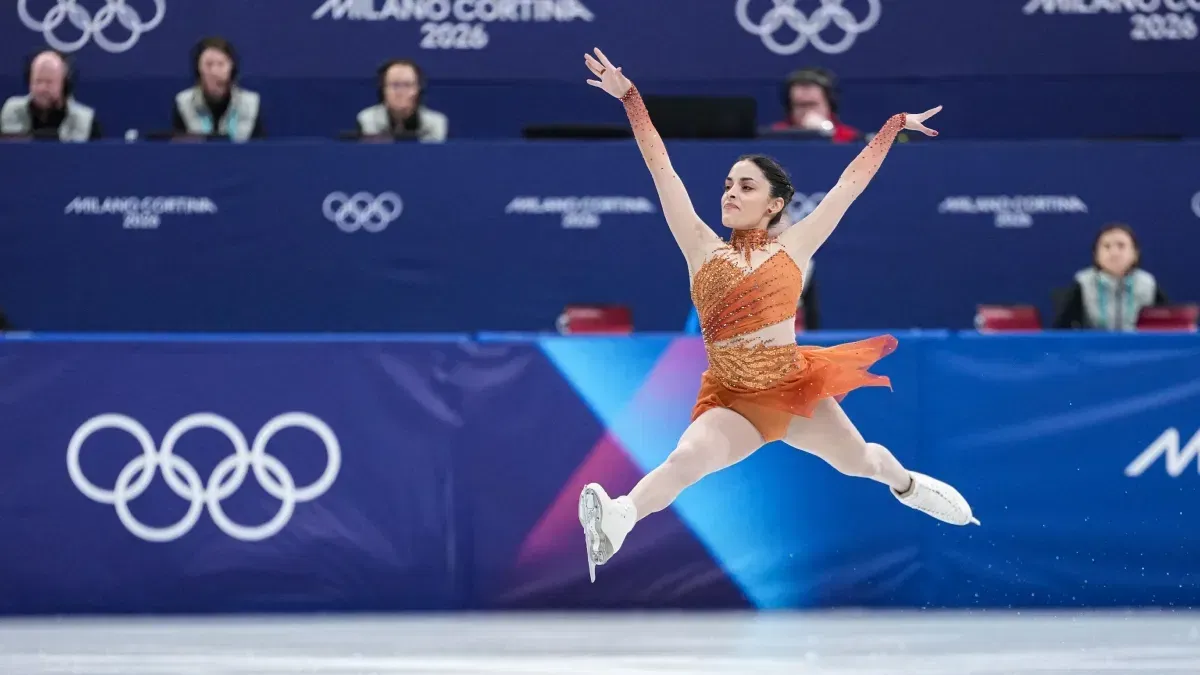
Madeline Schizas had a problem most college students never face: she was competing at the Winter Olympics while also trying to finish her assignments.
The 22-year-old figure skater for Team Canada arrived in Milano Cortina with her focus locked on the competition. But she was also a full-time student, and the homework didn't stop just because she was competing on one of sport's biggest stages. When she needed an extension on an assignment, she did what any responsible student would do—she emailed her professor.
What happened next became a small internet moment. Madeline posted about her situation on social media, and people started paying attention. One X user, Devin Heroux, summed it up: "Of all the reasons to ask for an extension on an assignment, this is a pretty good one." The story circulated enough that The Female Quotient picked it up on Instagram.
We're a new kind of news feed.
Regular news is designed to drain you. We're a non-profit built to restore you. Every story we publish is scored for impact, progress, and hope.
Start Your News DetoxBut her professor's response was the part that stuck with people. He didn't just approve the extension. He created a brand new Instagram account—something he'd never done before—just to post a photo of himself watching her compete. The caption was simple: "So proud of you Maddie."
For a student juggling Olympic-level training and coursework, that moment mattered. As one person wrote about the situation, "Competing at the Olympics while finishing a degree and her professor made an Instagram to cheer her on. That's the kind of support that changes everything." Another commenter noted the deeper point: "Support comes in the smallest of forms. Seriously though having to worry about homework can undo a whole mindset... This teacher is THE best."
The story resonated beyond Madeline's experience. Other educators started sharing their own moments of going the extra mile—rescheduling exams for job interviews, adjusting deadlines for life circumstances. One teacher wrote about doing exactly that for a student and said simply, "I feel so accomplished."
What made this story land wasn't just that a professor was kind. It was the specificity of it: the new Instagram account, the public declaration of pride, the professor stepping into his student's world rather than asking her to fit into his. It acknowledged something real—that Madeline's achievement wasn't just about landing jumps or executing routines. It was about holding two demanding things at once and having someone in her corner recognize that.
That kind of support, when it shows up at the right moment, can shift how a person sees themselves and what they think is possible.