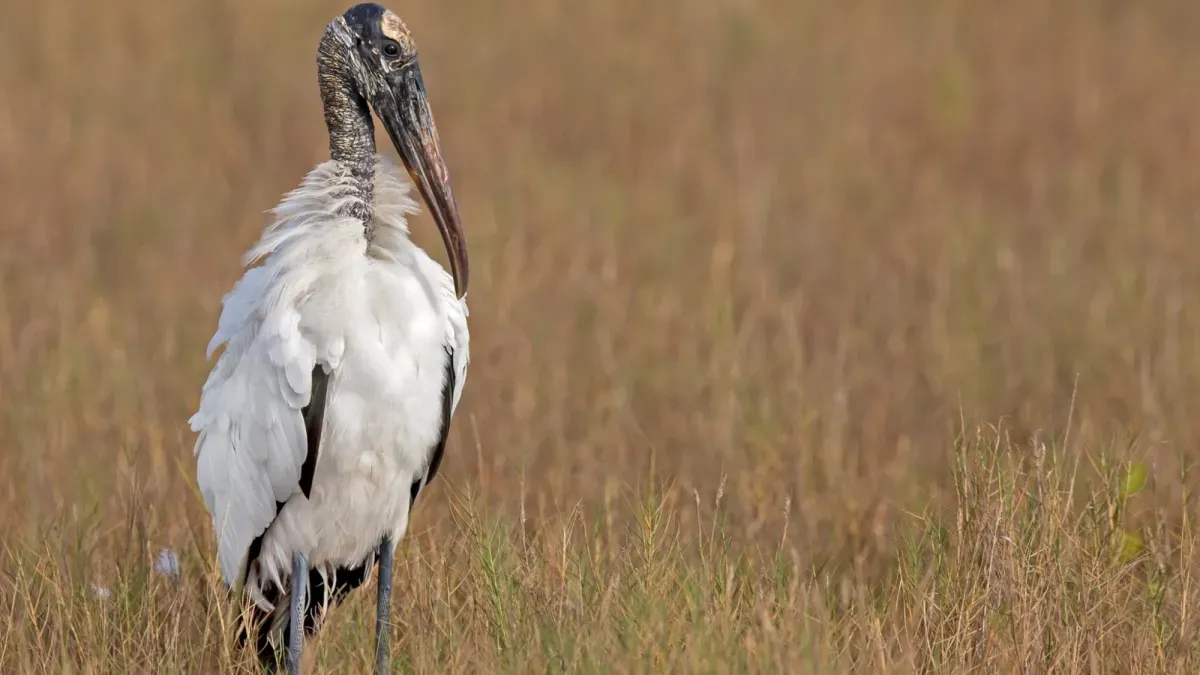
After 40 years of recovery work, the wood stork is no longer considered endangered. The U.S. Fish and Wildlife Service has determined that one population of these massive wading birds—standing up to 45 inches tall with wingspans reaching 65 inches—has rebounded enough to come off the federal endangered species list.
In 1984, wood storks were listed as endangered when their population had collapsed to roughly 5,000 nesting pairs, down more than 75% from the 20,000 pairs that existed before. Wetland loss was the primary culprit, destroying the shallow freshwater habitats where these birds hunt fish across the southeastern United States.
The turnaround has been substantial. Today, the breeding population has grown to between 10,000 and 14,000 nesting pairs spread across roughly 100 colony sites along the coastal plains of Mississippi, Alabama, Florida, Georgia, South Carolina, and North Carolina. That's a doubling of the population from its lowest point.
We're a new kind of news feed.
Regular news is designed to drain you. We're a non-profit built to restore you. Every story we publish is scored for impact, progress, and hope.
Start Your News DetoxWhat makes this recovery particularly striking is how adaptable the birds proved to be. Wood storks didn't just return to their original wetland homes—they learned to nest in coastal salt marshes, flooded rice fields, floodplain forests, and even human-made habitats like golf courses and retention ponds. "Even when they're in odd habitats, it's still exhilarating to see these wild birds doing what they do in a natural marsh," noted Dale Gawlik, an endowed chair for conservation and biodiversity at Texas A&M University's Harte Research Institute.
This recovery reflects decades of dedicated conservation work, from wetland protection to habitat restoration across the Southeast. The removal from the endangered species list doesn't mean the work is finished—wood storks will remain protected under the Migratory Bird Treaty Act—but it marks a genuine milestone in restoring a species that nearly disappeared.