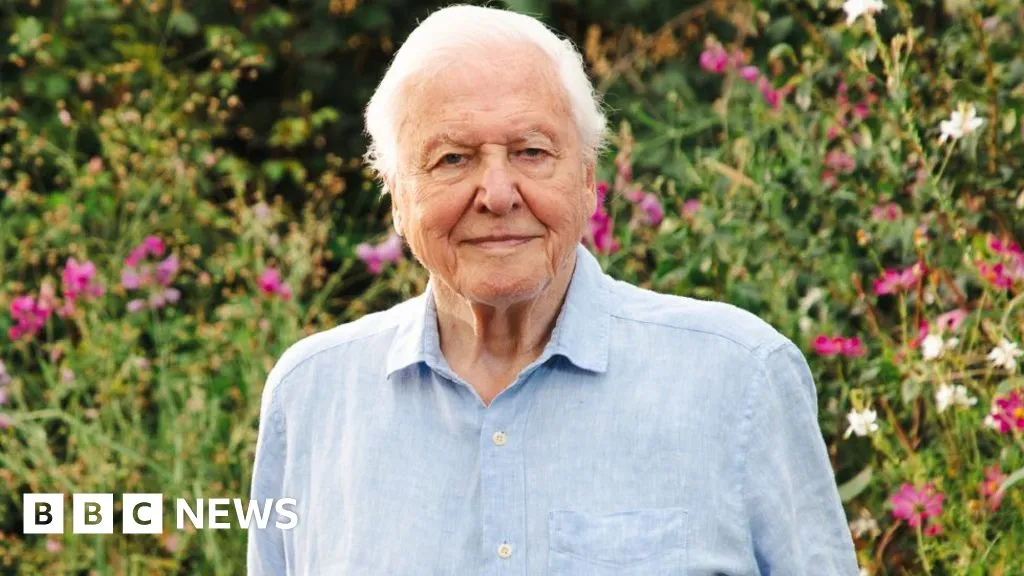
David Attenborough will turn 100 on May 8th, and the BBC is marking the milestone with a week of programming that doubles as a love letter to five decades of nature broadcasting.
Three new shows anchor the celebration. The first revisits Life on Earth, the 1979 series that helped define modern wildlife television. Behind-the-scenes interviews with Attenborough and the original crew will walk through what it took to film across 40 countries and capture 600 species—including the logistical chaos of a coup in the Comoros and the moment Attenborough came face-to-face with mountain gorillas in Rwanda. These weren't sterile nature documentaries. They were expeditions, with all the uncertainty that entailed.
Secret Garden, a new five-part series, shifts the lens to something closer to home: the hidden ecosystems thriving in British gardens. It's a reminder that you don't need to fly to Rwanda to witness nature's complexity. The series also explores practical ways people can help struggling species in their own backyards—turning observation into action.
We're a new kind of news feed.
Regular news is designed to drain you. We're a non-profit built to restore you. Every story we publish is scored for impact, progress, and hope.
Start Your News DetoxThe third program is a live event from the Royal Albert Hall featuring the BBC Concert Orchestra and guest tributes, a formal recognition of what Attenborough has meant to how we see the natural world.
Why this matters now
Attenborough's career spans a particular historical arc. He began broadcasting when nature was something to be conquered or exploited. He's spent a lifetime showing it as something to be understood, cherished, and protected. That shift in how millions of people think about the planet isn't accidental—it's the cumulative effect of one person choosing, again and again, to tell stories that make distant ecosystems feel urgent and intimate.
The BBC will also rebroadcast episodes from Planet Earth, Blue Planet, and Frozen Planet—the series that cemented Attenborough as the voice through which an entire generation learned to care about climate and biodiversity.
Jack Bootle, head of commissioning for specialist factual at the BBC, framed it simply: "It's a moment for all of us to say thank you to David—for his generosity, for his brilliance and for a lifetime spent bringing the wonders of nature into our homes."
At 100, Attenborough remains active. He's still narrating, still observing, still convinced that showing people the world's beauty is the first step toward protecting it. This week of programming isn't nostalgia. It's a checkpoint in an ongoing mission.