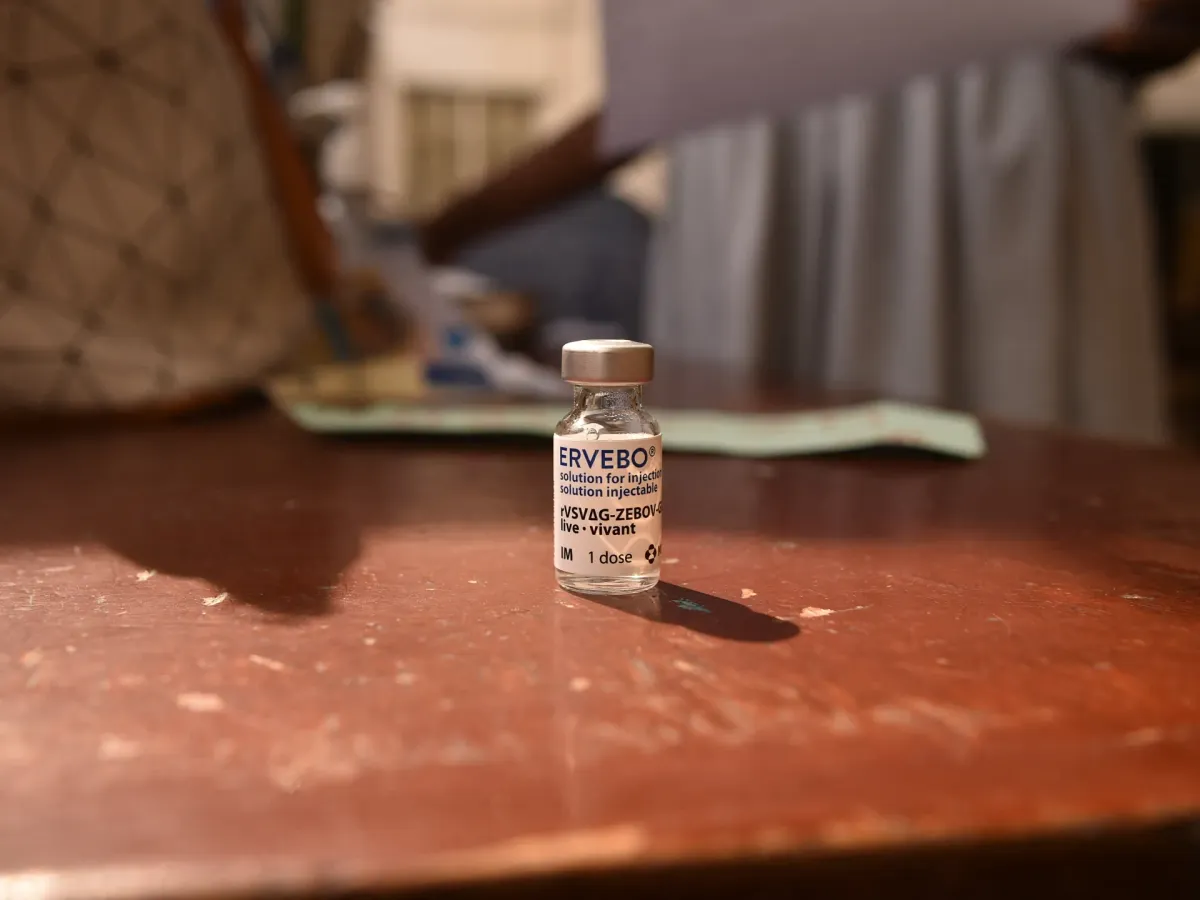
The Democratic Republic of Congo (DRC) will receive 70,000 doses of the Ervebo vaccine. This comes as the country faces its largest Ebola outbreak. The vaccine has been effective in past epidemics.
The World Health Organization (WHO) announced the doses on Thursday. They are from the global Ebola vaccine stockpile.
Battling the Bundibugyo Virus
Twenty thousand of the doses will be used in a trial. This study aims to understand how the vaccine impacts the Bundibugyo virus. This virus is causing the current outbreak. So far, it has killed 2,476 people out of 5,208 confirmed cases.
We're a new kind of news feed.
Regular news is designed to drain you. We're a non-profit built to restore you. Every story we publish is scored for impact, progress, and hope.
Start Your News DetoxThe Ervebo vaccine is approved for the Ebola virus. However, it is not approved for Bundibugyo. The WHO noted that it's unknown if Ervebo protects against Bundibugyo in humans. Clinical trials are important to find new evidence. Currently, there is no approved vaccine or treatment for the Bundibugyo virus.
![Health workers stand in a new Ebola treatment center during a visit of Tedros Adhanom Ghebreyesus, Director-General of the World Health Organization (WHO), in Bunia, in the northeastern Democratic Republic of the Congo. [May 31: AFP]](https://www.aljazeera.com/wp-content/uploads/2026/08/afp_6a874510dda1-1787249936.jpg?w=770&resize=770%2C513&quality=80) Health workers in a new Ebola treatment centre in the north east of the DRC [File: AFP]
Health workers in a new Ebola treatment centre in the north east of the DRC [File: AFP]
Last week, the Congolese government asked for Ervebo vaccines. The request went to the International Coordinating Group on Vaccine Provision.
The remaining 50,000 shots will go to front-line and health workers. This follows recommendations from the Strategic Advisory Group of Experts on Immunization.
Funding and Response Efforts
Gavi, a global vaccine alliance, will provide $7 million to fund the shipment to the DRC. They will also give another $6 million to help with vaccination efforts in high-risk areas.
WHO Director-General Tedros Ghebreyesus said earlier this week that the Ebola outbreak in eastern DRC is still a global emergency.
Stephane Dujarric, spokesman for the United Nations secretary-general, said humanitarian agencies are warning of the outbreak's continued spread. Authorities are working to manage it.
Julian Harneis, the senior Ebola coordinator on the ground, outlined five priorities. These include tripling safe care capacity and strengthening community engagement. They also involve doubling safe burial teams, expanding disease surveillance, and increasing support for vulnerable people.
The Congolese government, with UN support, also launched the "Congo River Without Ebola" initiative. This aims to boost their response by improving disease surveillance and preparedness.
The current outbreak was officially declared in mid-May. However, some experts believe it may have started as early as February.