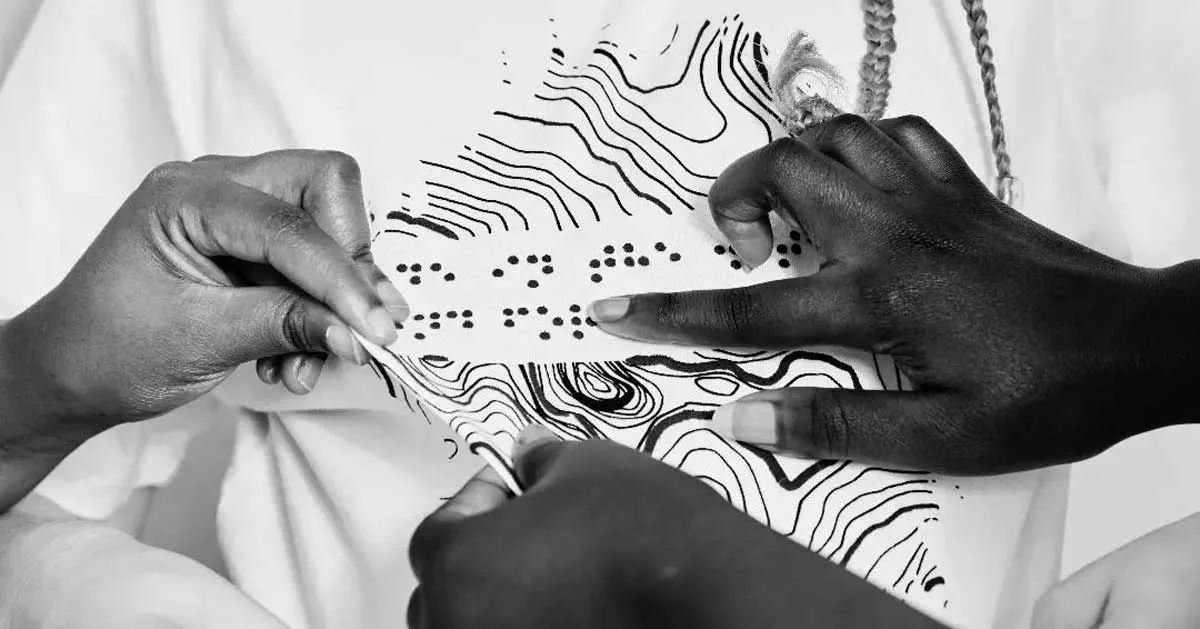
Angela Wanjiku started with a simple question: why should fashion be off-limits to blind and visually impaired people?
That question became Hisi Studio, a Nairobi-based fashion label that sews beaded Braille patterns directly into garments. A shirt might spell out a phrase in tactile letters. A skirt could carry a designer's name woven into the fabric itself. It's functional design that doesn't apologize for existing — the Braille becomes part of the aesthetic.
Wanjiku founded the studio as her senior project at the University of Nairobi, but it's evolved into something more deliberate. Each piece comes with a QR code tag that reads aloud clothing details and care instructions through tools like Google Talkback. A leather belt bag was designed with a close-fitting holster to reduce theft and help wearers keep track of their belongings. These aren't afterthoughts or accessibility add-ons tacked onto existing designs. They're built in from the start.
We're a new kind of news feed.
Regular news is designed to drain you. We're a non-profit built to restore you. Every story we publish is scored for impact, progress, and hope.
Start Your News DetoxPhoto courtesy of Hisi Studio
"I believe fashion plays an important role as a communicator of information in social interactions and as an aid in establishing self-identity," Wanjiku said. "Fashion designers and clothing manufacturers should choose to be intentional about their consideration for disabled consumers."
For Julius Mbura, a visually impaired customer, the difference is personal. He can now independently know what his T-shirts say instead of asking someone else to read them. "This is one brand that ensures people who are blind and visually impaired appreciate textile and fashion and clothes that represent who they are and what they are," he noted.
It's a shift in how design gets made — not designing for disabled people, but designing with them in mind from the first sketch. Hisi Studio shows what happens when that intentionality becomes the default.