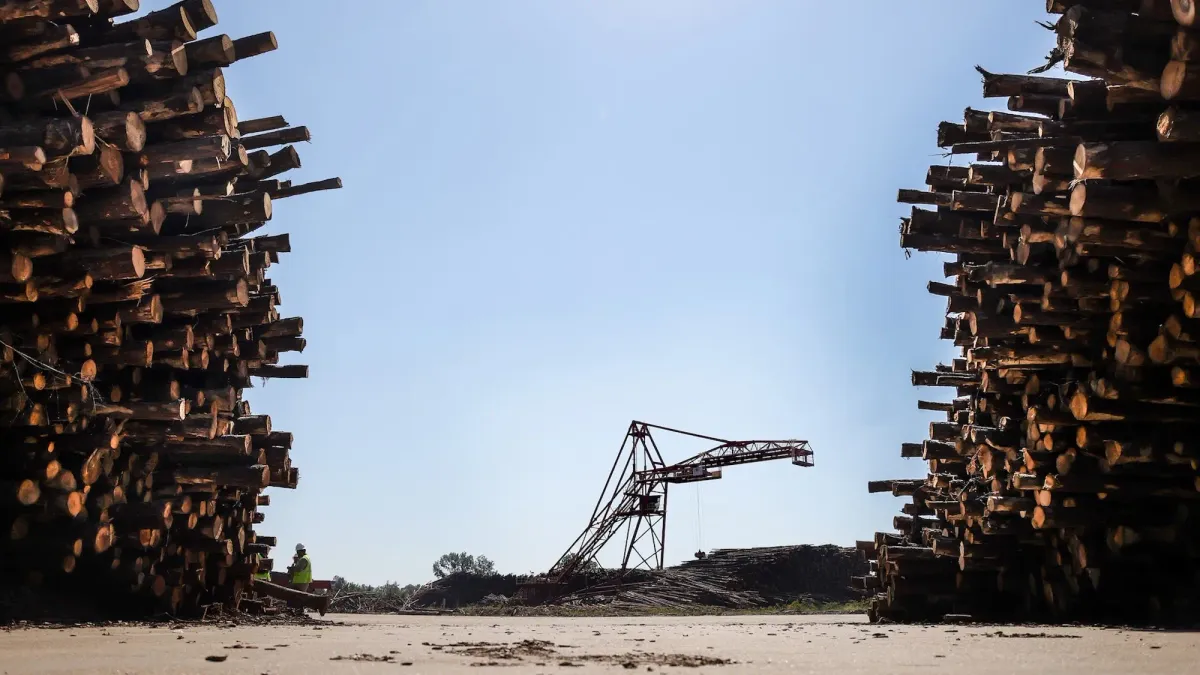
Robert Weatherspoon used to garden and jog through his Mississippi town. Now, at 67, he stays mostly indoors, reaching for an inhaler just to breathe. The culprit is a wood pellet mill that arrived in Gloster in 2014—one of three operated by British energy company Drax across the Deep South, churning out billions of pellets annually to feed Europe's appetite for what it calls "sustainable biomass" electricity.
For the predominantly Black, low-income residents of Gloster, Urania, and Bastrop, the mills have delivered something other than promised prosperity: formaldehyde, methanol, acrolein, and particulate matter that settles in lungs and triggers cancer, birth defects, and neurological damage. Testing shows Drax's Gloster mill emitting far more of these toxins than its permits allow. The company has racked up millions in fines. Its profits have soared anyway, buoyed by government subsidies.
The Pattern
This isn't random geography. Researchers studying 32 wood pellet mills across the South found that 18 operate in counties with poverty rates above their state median. "It's like there's an algorithm that tells you where vulnerable communities are, and where people are not going to ask questions," epidemiologist Erika Walker observed. In all three Drax towns, the population exceeds 30% poverty and is majority Black.
We're a new kind of news feed.
Regular news is designed to drain you. We're a non-profit built to restore you. Every story we publish is scored for impact, progress, and hope.
Start Your News DetoxHelen Reed, a Gloster native, puts it plainly: "Everything is worse since Drax came here." Carmella Wren-Causey, who has COPD, describes watching her neighbors' health decline while the company argues it's still learning to estimate emissions accurately—even as violations pile up.
What's Shifting
The silence is breaking. Gloster residents have filed a federal lawsuit against Drax for unlawfully exposing them to toxic pollution. Researchers secured a $5.8 million federal grant to fund a five-year health impact study in the community. "Now people are making a ruckus," Wren-Causey says. "People are starting to open their eyes."
The growing evidence—both scientific and lived—is building pressure on a company that has long relied on distance and demographic invisibility. For Weatherspoon and his neighbors, that momentum offers something concrete: the possibility that documenting harm might finally force accountability, and that these towns might get a chance to breathe easier.