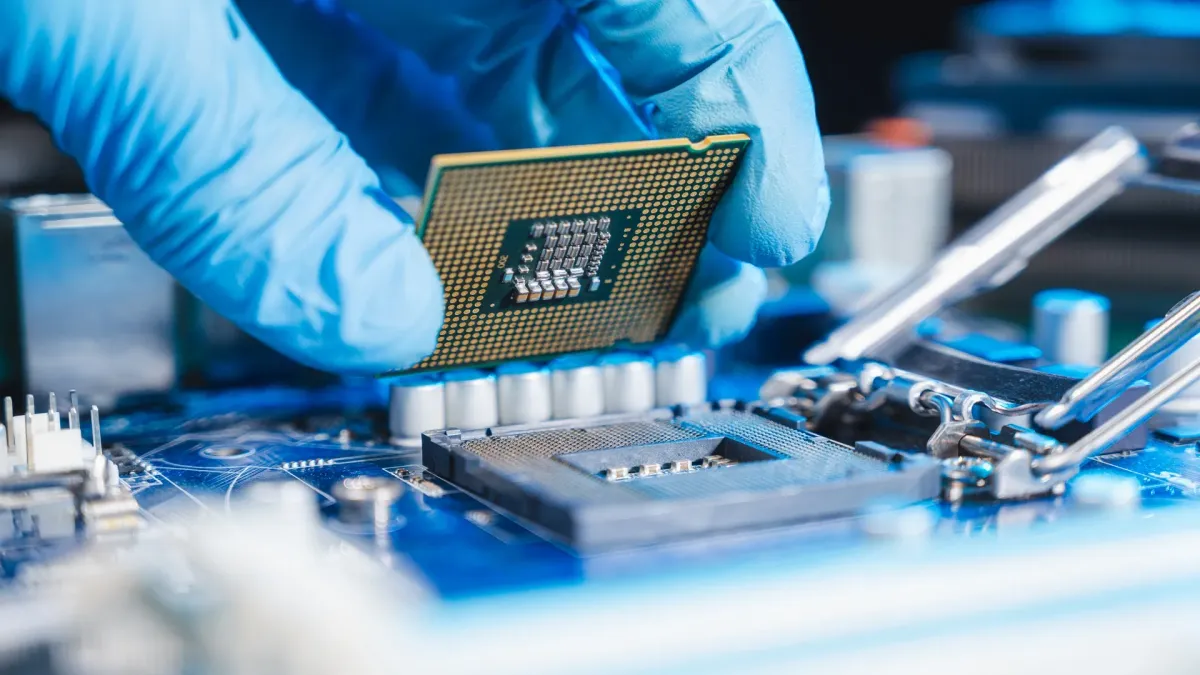
In 2023, Meta created the Meta Training and Inference Accelerator (MTIA). This is a family of custom-built silicon chips. They help power Meta's AI tasks efficiently.
Now, Meta is developing and deploying four new generations of these chips. This will happen within the next two years. This pace is much faster than typical chip cycles. These new chips will support ranking, recommendations, and generative AI (GenAI) tasks.
Meta is using a portfolio approach to scale its infrastructure. This means sourcing silicon from many industry leaders. However, Meta's own MTIA custom silicon remains central to its AI strategy.
We're a new kind of news feed.
Regular news is designed to drain you. We're a non-profit built to restore you. Every story we publish is scored for impact, progress, and hope.
Start Your News DetoxA Custom Solution
Meta uses hundreds of thousands of MTIA chips. They handle inference tasks for both organic content and ads on Meta's apps. These chips are made specifically for Meta's needs. They are part of a custom, full-stack solution. This helps create a highly optimized system.
This system is more compute-efficient than general-use chips for Meta's purposes. This makes MTIA much more cost-efficient.
Four Chips in Two Years
Meta is pushing its MTIA roadmap forward. It is developing four new generations of chips. Each new chip will bring big improvements in computing power, memory bandwidth, and efficiency.
MTIA 300 is already in production. It will be used for training ranking and recommendation systems. MTIA 400, 450, and 500 will handle all types of tasks. Soon, these chips will mainly support GenAI inference production. This will continue into 2027.
The chips are modular. This means new chips can fit into existing rack systems. This speeds up how quickly they can be put into use.
Meta's MTIA Strategy
Meta has a competitive strategy for MTIA. It focuses on fast, iterative development. It also prioritizes inference tasks first. Finally, it ensures easy adoption by building on industry standards.
Rapid, Iterative Development
The industry usually releases a new AI chip every one to two years. Meta has developed a way to release its chips every six months or less. This is possible by using modular, reusable designs. This fast pace helps Meta adapt quickly to new AI techniques. It also allows them to use the latest hardware. This minimizes costs for developing and deploying new chips.
Inference-First Focus
Most mainstream chips are built for the toughest task: large-scale GenAI pre-training. Then, they are used for other tasks, often less cost-effectively. Meta takes a different approach. MTIA 450 and 500 are optimized first for GenAI inference. Then, they can be used for other tasks as needed. These tasks include training and inference for ranking and recommendations, and GenAI training. This keeps MTIA well-suited for the expected growth in GenAI inference demand.
Building on Industry Standards
MTIA is built on industry-standard software and hardware. These include PyTorch, vLLM, Triton, and the Open Compute Project (OCP). This allows for easy adoption of MTIA chips. MTIA's system and rack solutions also follow OCP standards. This means MTIA can be deployed smoothly in data centers.
Our Portfolio Approach
No single chip can meet all of Meta's varied needs. That's why Meta is deploying many different chips. Each one is optimized for a specific task. Meta believes this portfolio approach will help them innovate at an unmatched pace. This brings them closer to their goal of creating personal superintelligence for everyone.
Deep Dive & References
Meta Training and Inference Accelerator (MTIA) - Meta AI Blog, 2023 Introducing Our Next-Generation Infrastructure for AI - Meta News, 2024 Meta MTIA: Scaling AI Chips for Billions - Meta AI Blog