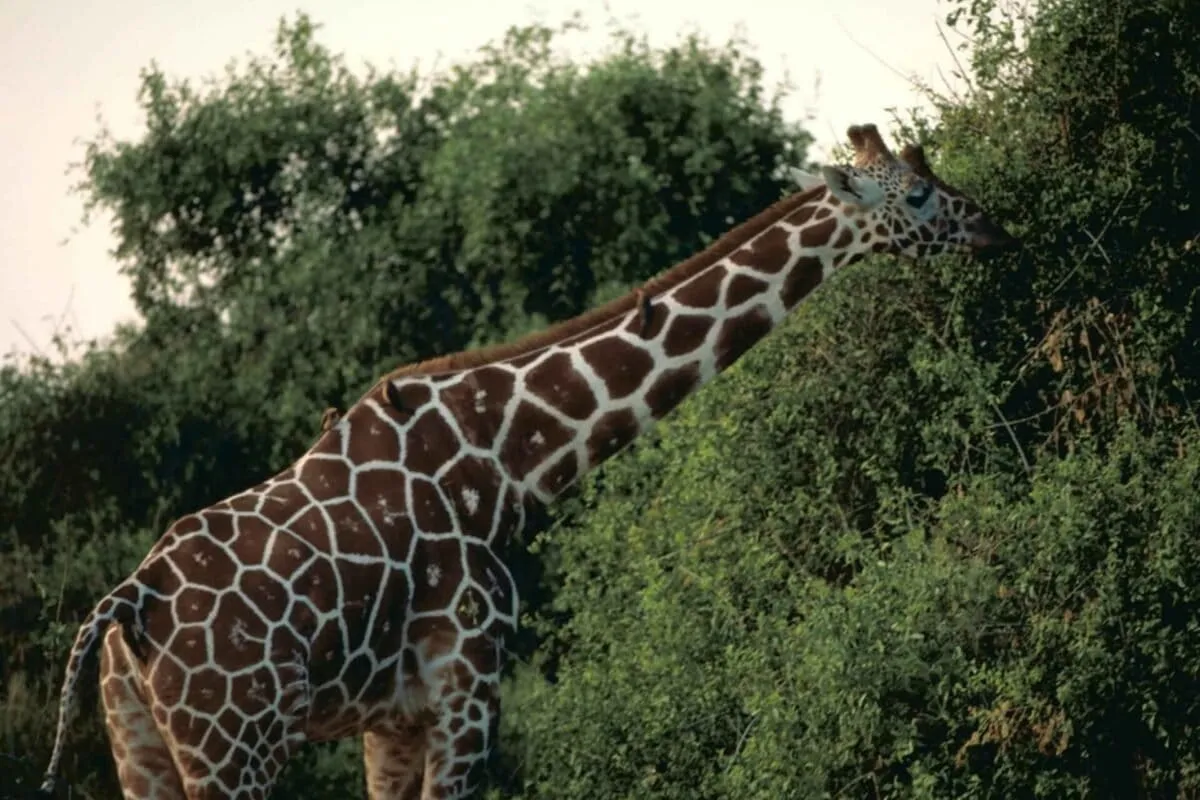
Reticulated giraffes, those leggy, spotted marvels, are in a bit of a pickle. Their numbers have plummeted by more than half in the last three decades, leaving fewer than 20,000 ambling around the wild. Habitat loss? Poaching? Yep, those too. But also, sometimes, they just really want your mangoes.
Turns out, giraffes occasionally develop a taste for human crops and, like any thirsty neighbor, compete for water. This has led to a simmering conflict in some parts of Kenya, where these endangered giants live.

So, researchers did what researchers do: they asked the people living closest to these towering herbivores how they really felt. And the answer? Mostly, they're pretty chill about it.
We're a new kind of news feed.
Regular news is designed to drain you. We're a non-profit built to restore you. Every story we publish is scored for impact, progress, and hope.
Start Your News DetoxThe study focused on northeastern Kenya, specifically around the Bour-Algy Giraffe Sanctuary. This place wasn't some government initiative; it was set up by volunteers from Bour-Algy village way back in 1995 to protect their local giraffe population. Which, if you think about it, already suggests a certain level of commitment.
Before this deep dive, scientists didn't really have a handle on the human side of the giraffe equation. So, they knocked on 400 doors, asking about everything from perceived risks to the best ways to coexist. What they found was a community that, despite the occasional snack raid, was surprisingly tolerant.
Abdullahi Ali, the study's lead author, noted that most locals saw giraffes as pretty low-risk. More than half reported zero damage to their land or property. Which, for an animal that stands up to 18 feet tall and weighs over a ton, is a rather impressive feat of self-control. Or maybe just good fence-building.