Our oceans are basically giant sponges for roughly 25-30% of the CO2 we pump into the atmosphere. Which sounds great, until you realize that sponge action is turning the seawater into a slightly more acidic cocktail. This isn't just a chemistry lesson; it's a direct hit on marine life, especially the shell-builders like oysters, corals, and even some plankton. They rely on calcium carbonate to literally build their homes. But with all that extra CO2, the water's chemistry shifts, making it harder for them to get the building blocks they need.
MIT professor Kripa Varanasi points out that this isn't some distant future problem. Hatcheries and coastal ecosystems are already feeling the pinch. Lose the shellfish, and you lose good water quality, protection from erosion, and, oh, about $60 billion in the global shellfish farming industry. So, yeah, it's a big deal.
The Carbon-Sucking Solution
Varanasi and fellow MIT professor T. Alan Hatton have been working for years on a way to pull CO2 directly out of seawater and restore its alkalinity. Instead of buffering with chemicals, which is a common but limited approach, their method is electrochemical. Think of it as a high-tech water filter that specifically targets dissolved carbon.
We're a new kind of news feed.
Regular news is designed to drain you. We're a non-profit built to restore you. Every story we publish is scored for impact, progress, and hope.
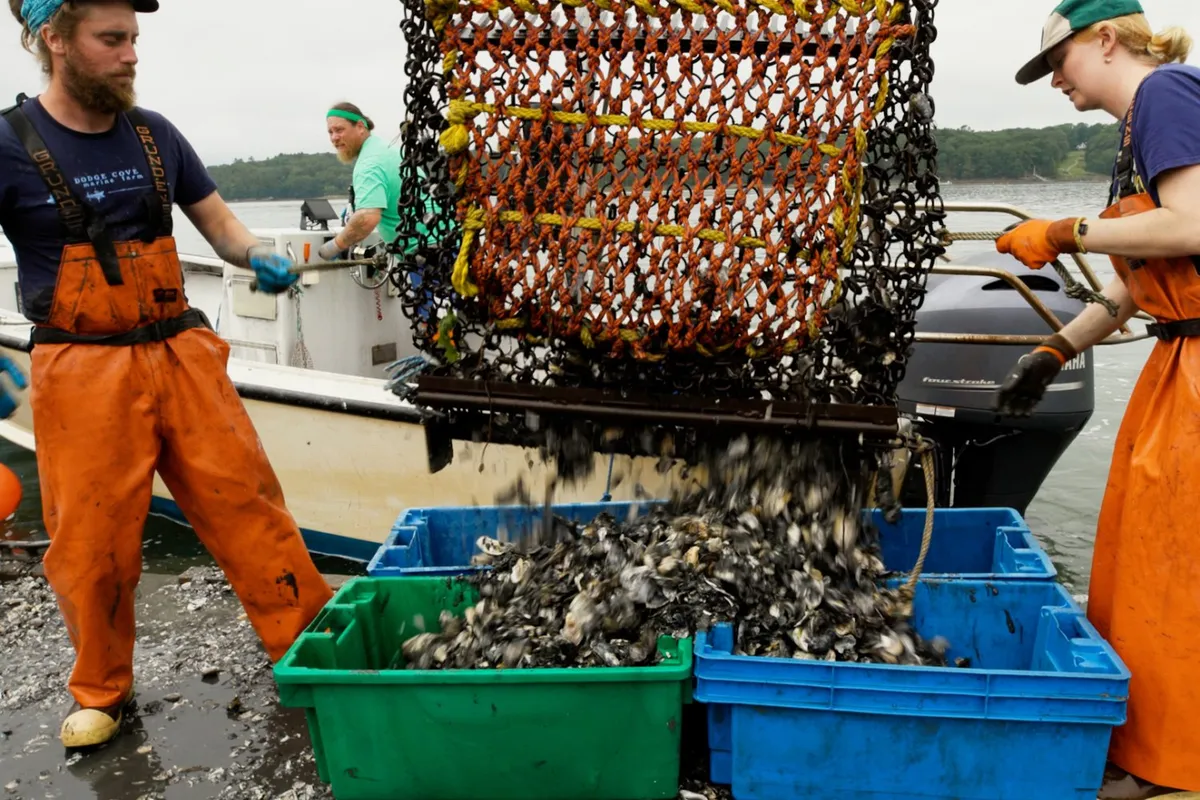
Start Your News DetoxThey teamed up with the University of Maine's Darling Marine Center and, crucially, with Bill Mook of Mook Sea Farm. Mook knows the problem firsthand. Around 2009, his oyster larvae started dying off, costing him hundreds of thousands of dollars. The culprit? Acidic water.
Here’s how the MIT tech works: Seawater flows through special cells with electrodes. These release protons, which cause dissolved CO2 to convert into gas that can be collected. That water, now more acidic, then goes through a second set of cells with reversed voltage. This recovers the protons and, crucially, makes the water alkaline again before it's returned to the sea. No chemicals, no waste, just ocean water in, CO2 out. And that captured CO2? It could even be used to grow algae, which, delightfully, can feed shellfish.
Early trials showed the system was safe for larvae, and later, oysters treated with the MIT approach actually fared better than those treated with traditional chemical buffers. Because, as Simon Rufer, a former student in Varanasi's lab, puts it, when the water is alkaline, it's just plain easier for oysters to build and keep their shells.
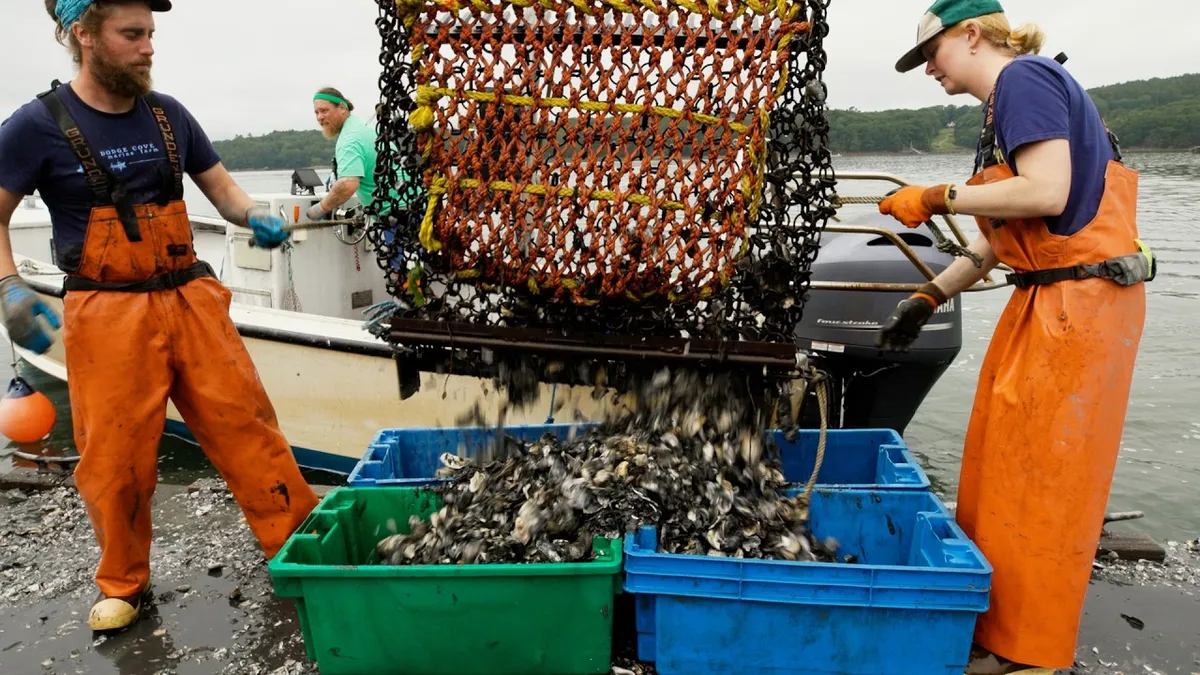
Maine's Damariscotta River Estuary, home to Mook Sea Farm, produces a whopping 70% of the state's oysters. Damian Brady, an oceanography professor at the University of Maine, calls it an "oyster-producing powerhouse." And this MIT collaboration could be what keeps it that way.
This project isn't just about fighting climate change, though it does advance a new way to remove CO2 from our oceans. It's also about creating jobs and bolstering the "blue economy" — those local economies that rely on aquaculture. Mook himself sums it up: "The industry cannot continue without science." And apparently, science is now building carbon-sucking machines to keep the oysters happy. Which, if you think about it, is a pretty delicious win-win.