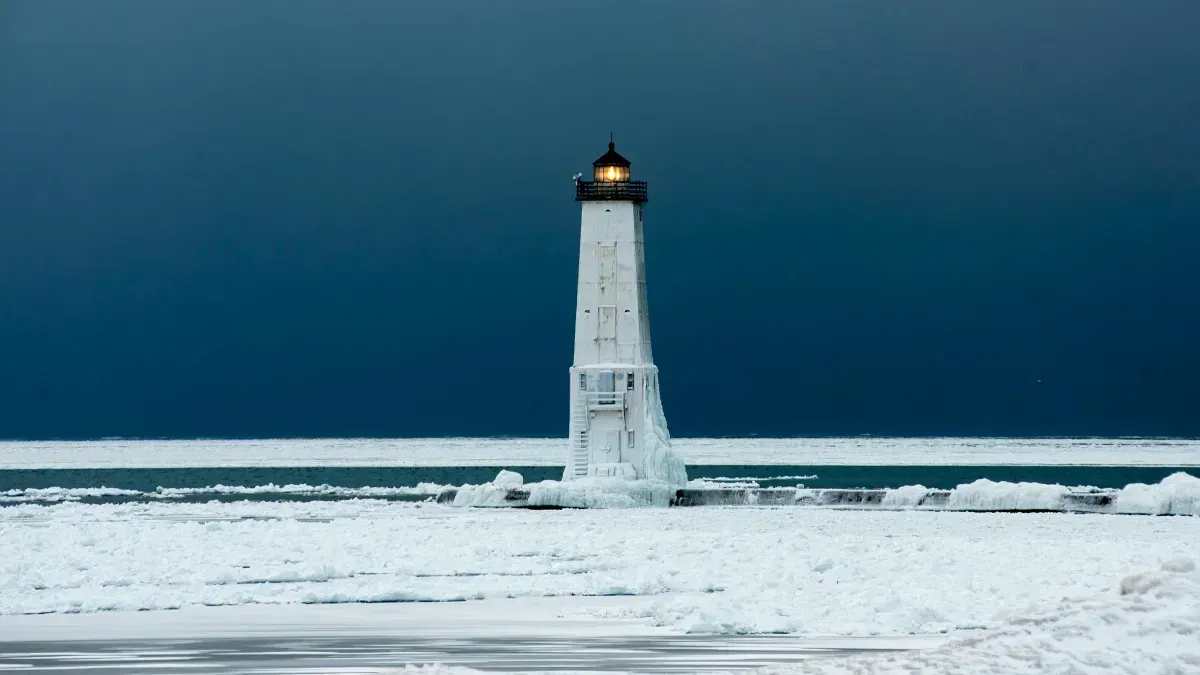
When temperatures plunge to -25°F, Lake Michigan doesn't just freeze—it transforms. Spray from the lake coats the shoreline infrastructure in thick layers of ice, turning lighthouses, bridges, and breakwater structures into something between a natural sculpture and a winter landscape painting.
Aerial footage from the past week shows what this looks like: lighthouse towers encased in white, their red paint barely visible beneath the accumulation. The effect is almost surreal—the kind of image that makes people pause and wonder if they're looking at reality or a render.

This happens because of a specific meteorological process. When frigid air moves over relatively warmer water, the spray freezes on contact with cold surfaces. In Lake Michigan's case, wave action combined with sustained sub-zero temperatures creates the conditions for this rapid ice buildup. It's a natural phenomenon that occurs most winters in the Great Lakes region, but the severity and visual drama depend entirely on how cold it gets and how long it stays that way.
We're a new kind of news feed.
Regular news is designed to drain you. We're a non-profit built to restore you. Every story we publish is scored for impact, progress, and hope.
Start Your News DetoxFor residents in Michigan's coastal communities, the beauty comes with genuine hardship. When temperatures hit -25°F, staying warm becomes the priority. Heating systems work overtime. Exposed skin can suffer frostbite in minutes. The ice formations, while visually striking, are also a sign that the region is gripped by dangerous cold that keeps people indoors and strains infrastructure.
Local residents understand the tradeoff. One Michigan resident captured it plainly: "It's beautiful but this weekend we're talking -15 to -25 below zero. I'm holed up making soup." The ice sculptures are real, the danger is real, and so is the need to respect both.
These freeze-over events have become more variable in recent decades—some winters produce dramatic ice formations, others don't, depending on the specific pattern of cold snaps and lake conditions. What remains consistent is that Lake Michigan's winter face, however beautiful, demands respect.