Indonesia bet big on Flores. In 2017, the government designated the mountainous East Nusa Tenggara island a "geothermal island," identifying 21 potential sites to tap underground heat for electricity. International lenders backed it. National planners celebrated it as a showcase for clean energy. Eight years later, most projects sit suspended.
The reason: the Manggarai communities who live there say the transition is happening on their terms, not theirs.
The Energy Problem (and the Proposed Solution)
Flores faces a real constraint. Large parts of the island still lack grid connection. Those that have it rely on imported diesel and coal—expensive, polluting, and dependent on subsidies that cost Indonesia nearly 1 trillion rupiah ($59 million) annually. Geothermal power could theoretically solve this. The island's geology offers genuine potential. The math looked good on paper.
We're a new kind of news feed.
Regular news is designed to drain you. We're a non-profit built to restore you. Every story we publish is scored for impact, progress, and hope.
Start Your News DetoxBut paper doesn't account for what happens when you drill into land that communities consider inseparable from their survival and identity.
What Resistance Looks Like
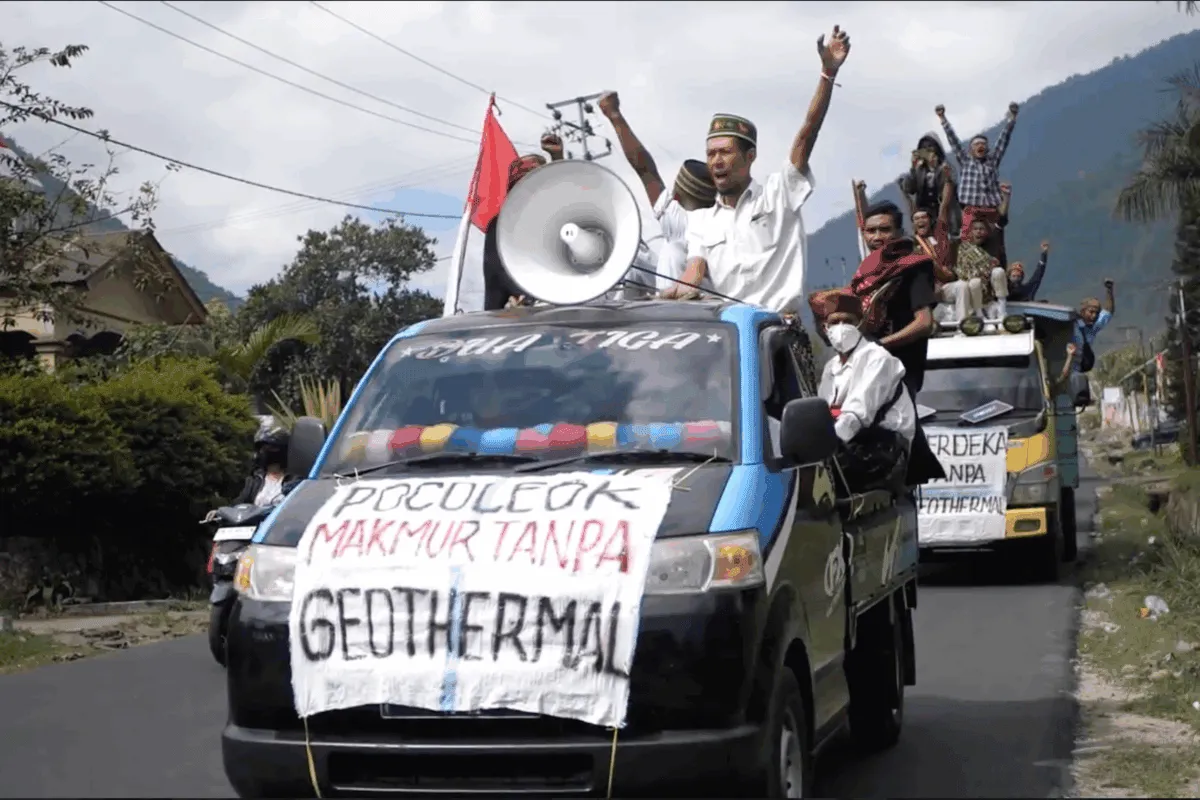
A study published in November in Environment and Planning E: Nature and Space documents what's been happening on the ground. Manggarai communities have staged protests, filed legal challenges, and engaged in sustained nonviolent resistance. Yohanes Tukan, a leader from Wae Sano village, articulated the concern plainly: "The geothermal projects have disrupted our lives and our connection to the land. We are worried about the impact on our water sources, our forests, and our sacred sites."
This isn't abstract environmental concern. It's about whether communities get a say in how their land is used, whether their water stays clean, whether the spiritual practices woven into daily life survive.
The resistance has gained allies—environmental groups, human rights organizations, and some local officials have backed the communities' position. That coalition matters. It's made it harder for projects to proceed without reckoning with the opposition.
The Bigger Picture
Cypri Jehan Paju Dale, a social anthropologist at Kyoto University and University of Wisconsin-Madison who led the research, frames Flores as a crucial test case. "It may even be unprecedented globally, as an entire island has been designated a 'geothermal island,' with exploration occurring simultaneously across multiple sites," Dale said. What happens here shapes how Indonesia—and other countries—approach renewable energy on indigenous lands.
The tension is real: Flores needs reliable, clean electricity. The Manggarai need their land, water, and cultural continuity respected. These aren't easily reconciled if the conversation starts with drilling permits rather than community consent.
Researchers are calling for what sounds simple but remains rare in practice: an energy transition that actually listens to the people living where the transition happens. Not as an afterthought, but as the starting point.
Study: "Geothermal Energy Transition and Local Resistance in Flores, Indonesia" - Environment and Planning E: Nature and Space, 2024