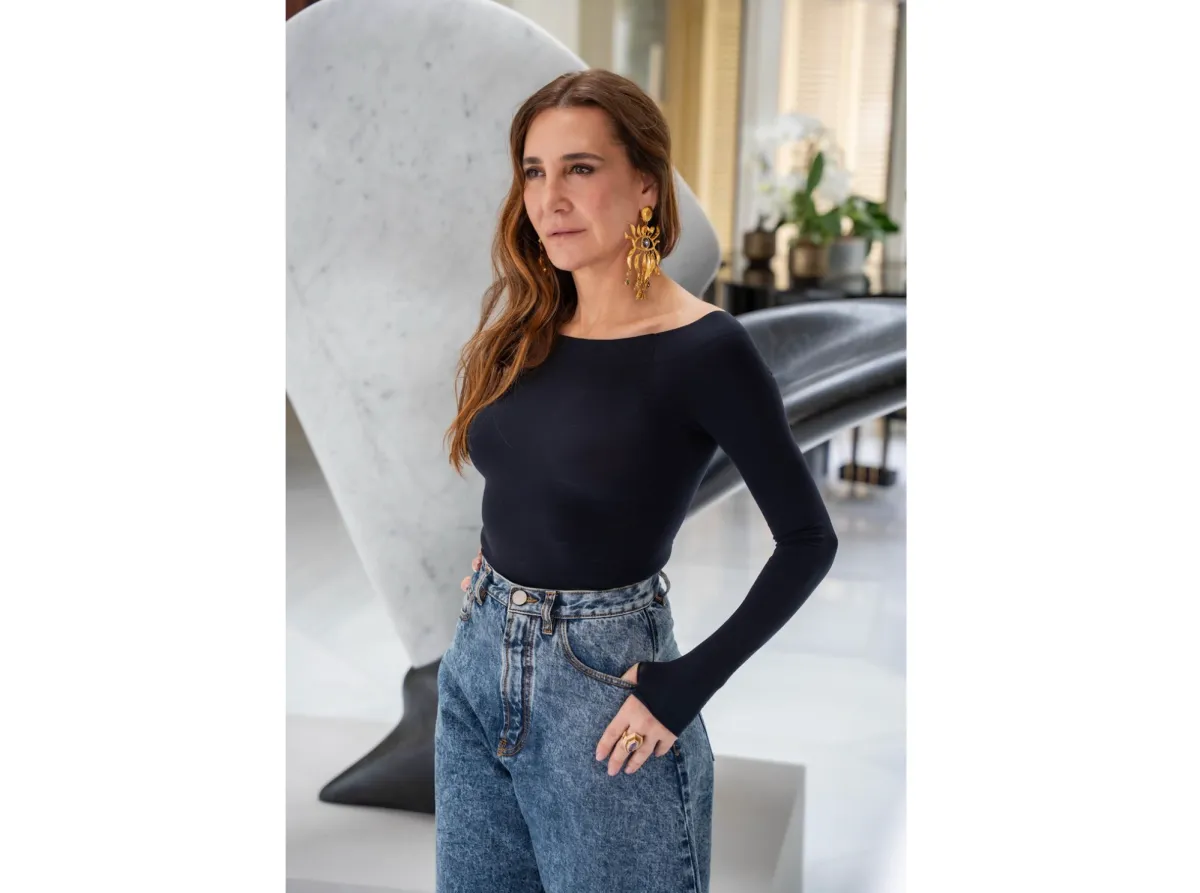
For two decades, Vuslat Doğan Sabancı lived a life that would make most superheroes feel under-scheduled. By day, she was the CEO of Hürriyet, Turkey's largest newspaper, wielding significant influence in the media world. By night, she was a sculptor, a ceramicist, a drawer — secretly creating art in her studio, showing it to absolutely no one.
No galleries, no ambitions, just pure, unadulterated creation. Then, in 2022, she finally had her first exhibition. Four years later, her art career has officially exploded like a glitter bomb in a quiet library. Which, if you think about it, is a pretty good metaphor for her life.
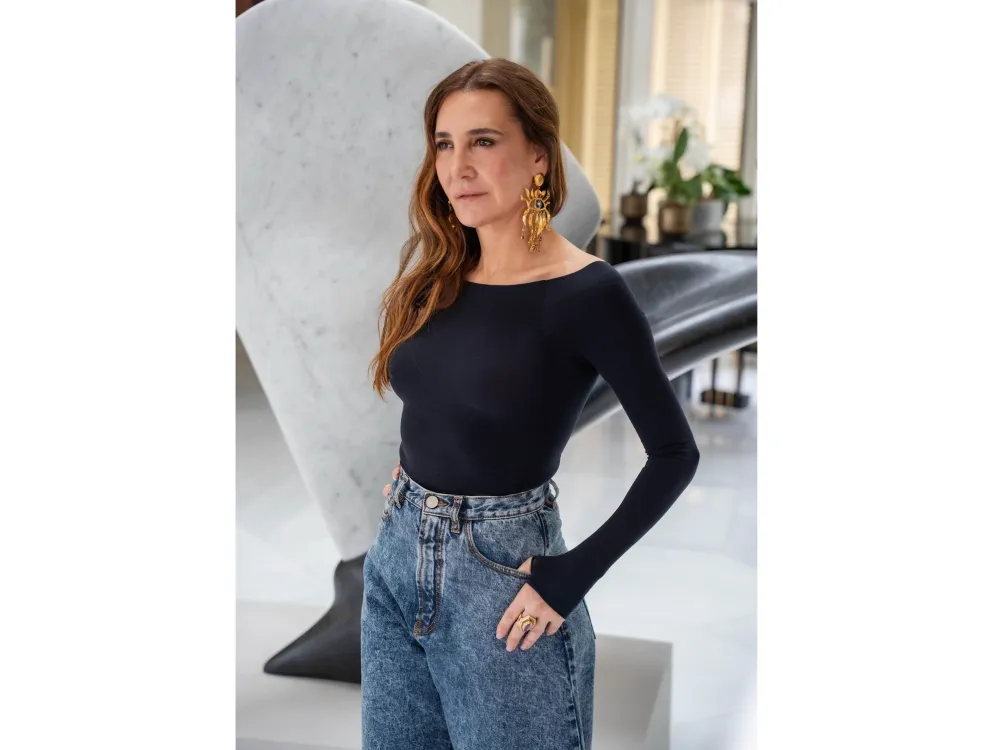
This summer alone, her work graced New York and Rhodes. She debuted a room-sized installation called House of Silence at the Conductor art fair in NYC, and dozens of her clay sculptures popped up in a medieval church in Rhodes. Her first book, May We Meet in the Silence of Our Souls, also hit shelves. It's a dizzying ascent for someone who spent most of her life actively avoiding the spotlight.
We're a new kind of news feed.
Regular news is designed to drain you. We're a non-profit built to restore you. Every story we publish is scored for impact, progress, and hope.
Start Your News DetoxThe Art of Not Talking
The irony isn't lost on Vuslat, who uses only her first name professionally. The contrast between her very public media life and her intensely private art practice, coupled with the theme of silence, is central to her work. She's a big proponent of listening – to others, to materials, to the quiet hum of your own thoughts. A concept, she dryly observes, that isn't exactly trending in today's always-on, always-talking world.
Her experience at Hürriyet taught her a lot about that. She championed free expression and human rights, trying to carve out space for diverse voices. But as politics grew more polarized and media became obsessed with clicks, she noticed a shift: everyone was talking, but fewer people were actually hearing. Art, she realized, offered a different path.
She calls this concept "emanet," a Turkish word without a neat English equivalent. It's like something entrusted to your care, a temporary loan – a memory, an object, a story, even children or nature. The responsibility isn't just to keep it safe, but to nurture it before passing it on. A kind of cosmic lending library, if you will.
Silence, for Vuslat, isn't always peaceful. It’s not just a serene void; it can be a noisy room filled with judgment, guilt, and criticism. The trick, she says, is to stick with it. With patience, clarity eventually emerges, "like clear water."
Her materials often mirror this journey. She works with marble, bronze, clay, felt, and even plants electroplated in silver. For her Tower of Babel (2025), she used trees charred in the Los Angeles wildfires – a rather direct way of making art out of silence and destruction. In Rhodes, her installation uses just earth, water, and air, with small clay forms guiding visitors into a former church. She describes them as "the formless shape of breath."
A Not-So-Sudden Arrival
Sure, Vuslat's entry into the art world seems sudden, especially given her background as Vuslat Doğan Sabancı, a member of a prominent Turkish family with a successful business and charity career. Most artists spend decades toiling in obscurity, begging for a curator's eye. Vuslat, it seems, just decided it was time.
But that's where the twenty-year secret comes in. She didn't leave media, then discover art. The art came first, quietly developing alongside her high-profile career. By the time her first exhibition opened in London in 2022, she was already a seasoned artist. As art critic Andrew Graham-Dixon put it in her book, she's "a novice and an old hand rolled into one." Which, for someone who spent two decades leading a double life, sounds about right.