Glass, a material used by humans for thousands of years, is now set to become a key component in the AI chips powering the world's largest data centers. This shift could make future computing hardware more powerful and energy-efficient.
This year, Absolics, a South Korean company, plans to begin making special glass panels for next-generation chips. Intel and other companies are also working on this technology. If successful, glass could lower the energy use of high-performance computing chips in AI data centers. Eventually, it could do the same for laptops and mobile devices if production costs drop.
Why Glass Matters for Chips
The idea is to use glass as a base layer, or substrate, to connect multiple silicon chips. This method, called "packaging," lets engineers combine specialized chips into one system. However, powerful chips get very hot, which can warp current substrates. This warping can misalign parts and make cooling less effective, potentially damaging chips.
We're a new kind of news feed.
Regular news is designed to drain you. We're a non-profit built to restore you. Every story we publish is scored for impact, progress, and hope.
Start Your News DetoxDeepak Kulkarni, a senior fellow at AMD, notes that as AI workloads grow, mechanical limits like warpage are a big challenge for high-performance computing. Glass can handle this heat better than current materials. It also allows engineers to make chip packages smaller, leading to faster and more energy-efficient designs. Kulkarni says glass "unlocks the ability to keep scaling package footprints without hitting a mechanical wall."
Momentum for this change is growing. Absolics has built a factory in the US for glass substrates and expects to start commercial production this year. Intel is also working to use glass in its next-generation chip packages. This research has encouraged other companies in the chip supply chain to invest in glass. Bilal Hachemi, an analyst at Yole Group, points out that while glass has been considered before, "this time, the ecosystem is more solid and wider; the need for glass-based [technology] is sharper."
Fragile but Powerful
Since the 1990s, chip packaging has used organic substrates like fiberglass-reinforced epoxy. Rahul Manepalli, Intel's vice president of advanced packaging, explains that these materials limit how closely designers can place connections. They also shrink and distort unpredictably with temperature changes. Intel realized about a decade ago that organic substrates would have limitations.
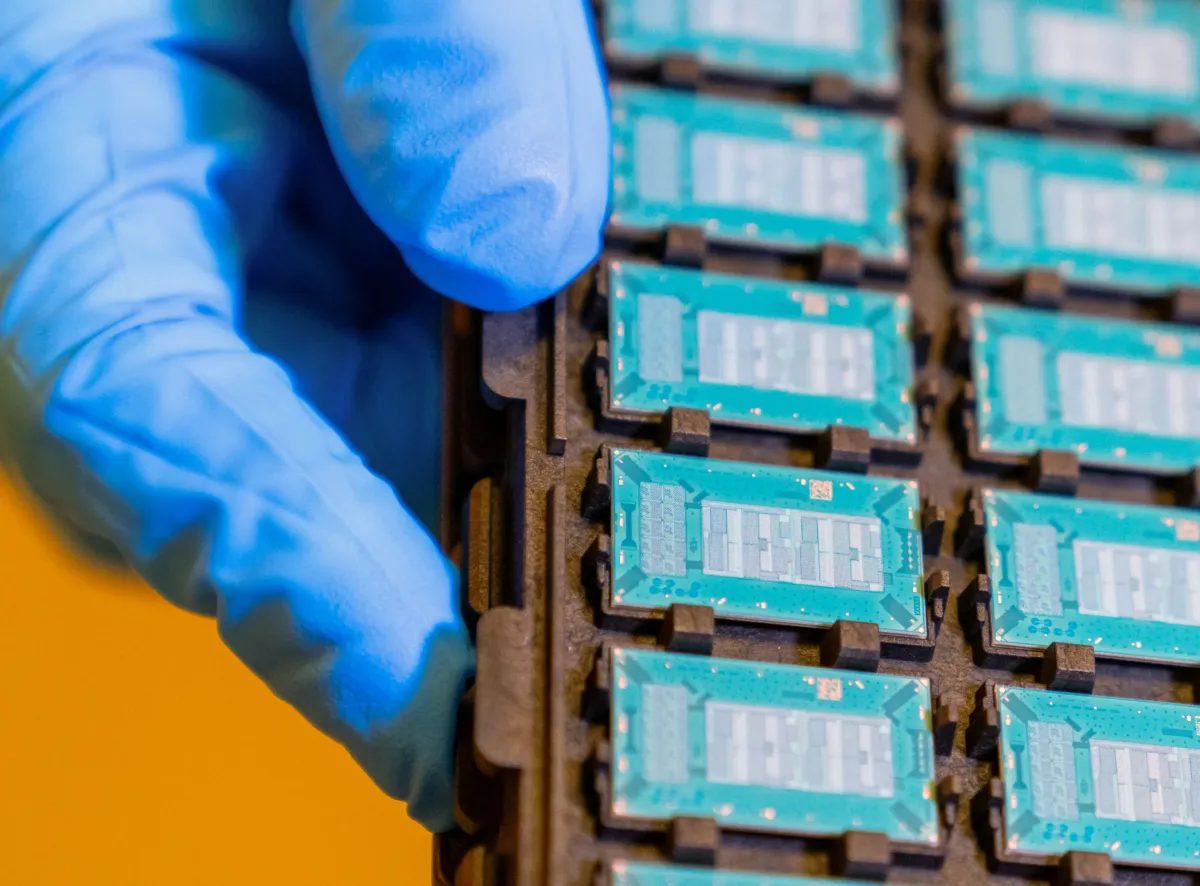
Glass could solve many of these problems. Its thermal stability means engineers could create 10 times more connections per millimeter than with organic substrates. More connections allow Intel designers to fit 50% more silicon chips into the same package area, boosting computing power. Denser connections also improve power delivery and heat dissipation, reducing overall power consumption.
Manepalli calls the benefits of glass core substrates "undeniable." He believes these benefits will push the industry to adopt glass sooner.
However, glass also brings challenges. It's fragile. Glass substrates for data centers are only about 700 micrometers to 1.4 millimeters thick, making them prone to cracking. Researchers at Intel and other organizations have spent years finding ways to safely integrate glass panels into manufacturing.
Manepalli says Intel's teams are now reliably making glass panels and test chip packages. In early 2025, they even showed a functional device with a glass core substrate booting up Windows. This is a big step from early testing, when hundreds of panels cracked regularly.
The market for glass substrates is expected to grow significantly. IDTechEx estimates it could increase from $1 billion in 2025 to $4.4 billion by 2036.
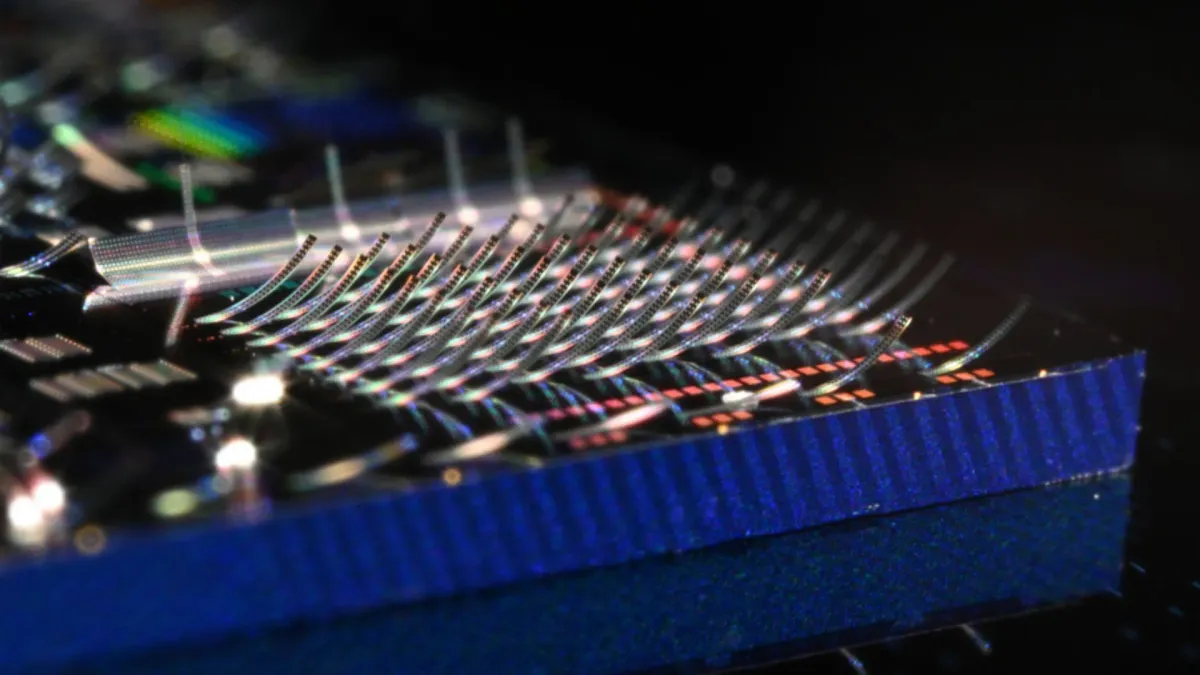
Glass offers other advantages too. It can be incredibly smooth, 5,000 times smoother than organic substrates. This smoothness can prevent defects that occur when metal layers are added to semiconductors, which can hurt chip performance.
Glass can also guide light, allowing designers to build high-speed, light-based signal pathways directly into the substrate. Kulkarni at AMD says this "holds enormous potential for the future of energy-efficient AI compute," as light-based systems use much less energy than current copper pathways.
A Panel Pivot
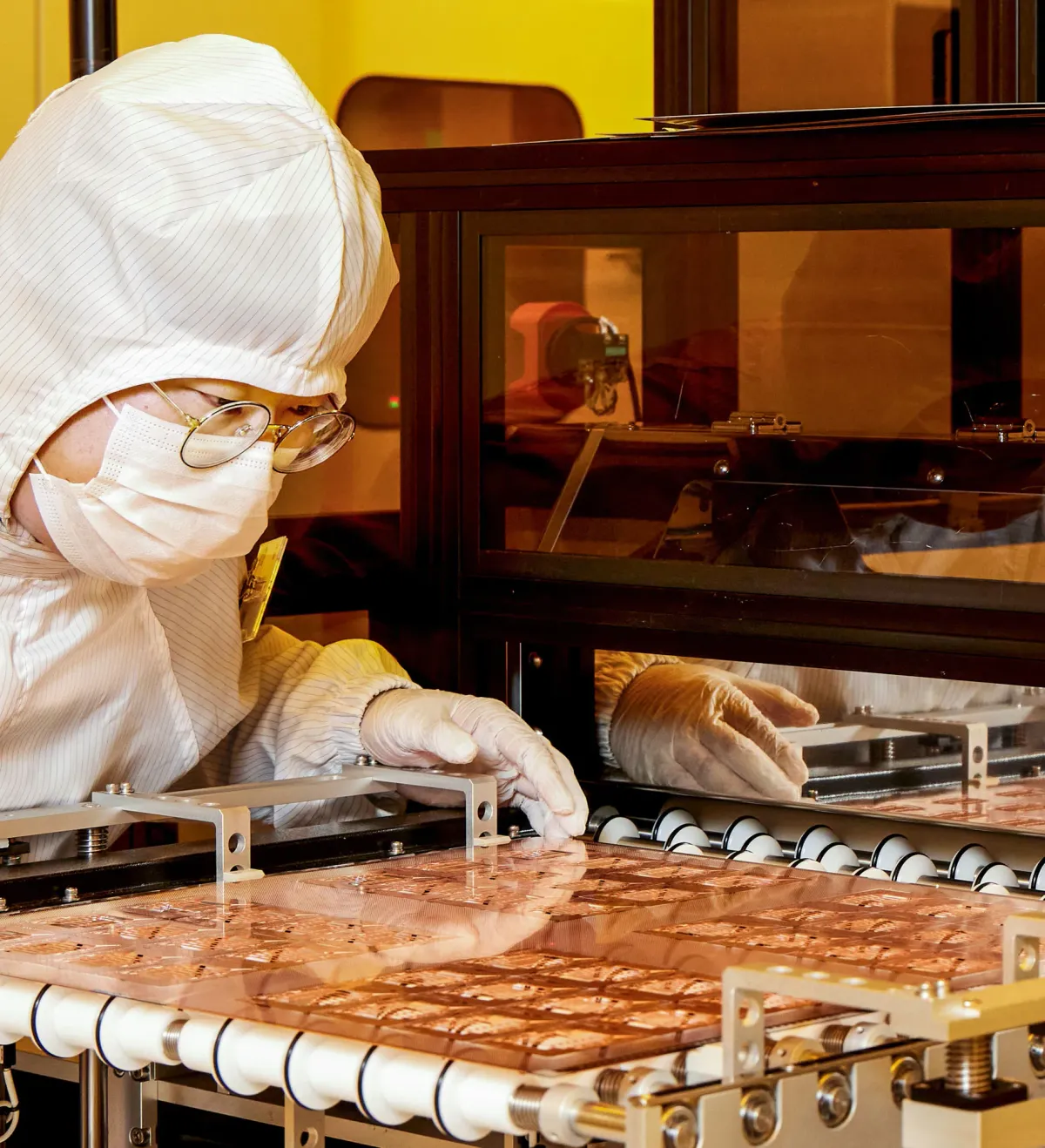
Early research on glass packaging began in 2009 at the Georgia Institute of Technology. The university later partnered with Absolics, a subsidiary of SKC. SKC built a manufacturing facility for glass substrates in Covington, Georgia, in 2024. The partnership received $175 million in grants from the US government's CHIPS for America program.
Absolics is now moving towards commercial production, planning to start making small quantities of glass substrates for customers this year. Yongwon Lee, a research engineer at Georgia Tech, notes that Absolics has led the way in commercializing glass substrates.
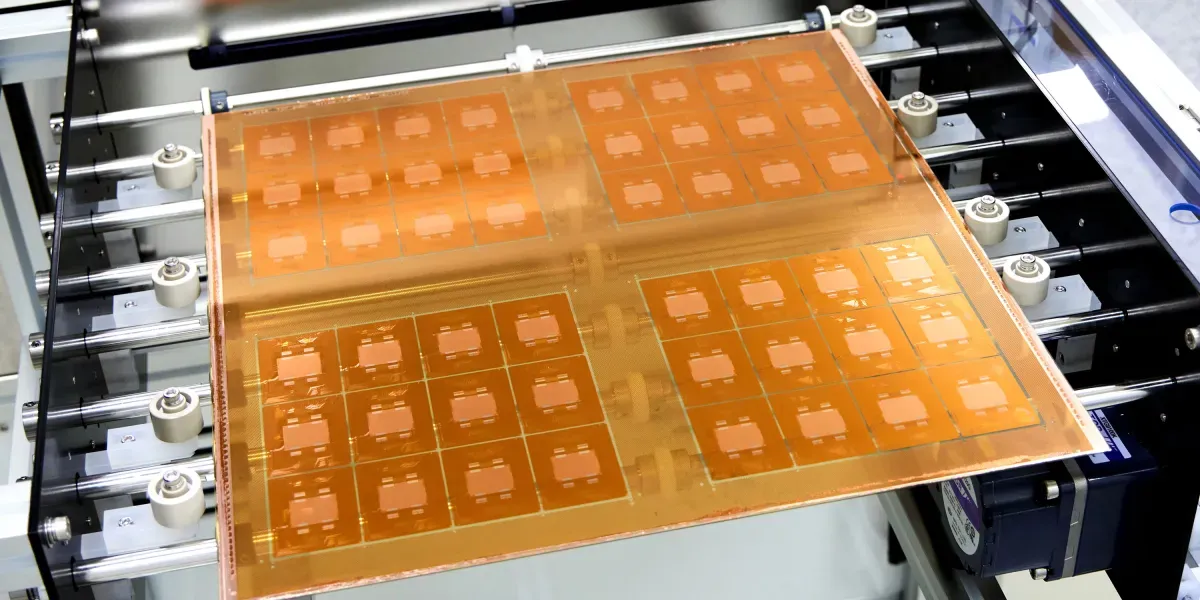
Absolics' facility can produce up to 12,000 square meters of glass panels annually. Lee estimates this is enough for 2 million to 3 million chip packages, similar in size to Nvidia's H100 GPU.
Absolics is not alone. Lee says that major manufacturers like Samsung Electronics, Samsung Electro-Mechanics, and LG Innotek have "significantly accelerated" their research and pilot production in glass packaging. This suggests the glass substrate ecosystem is becoming a broader industrial race.
Other companies are taking on specialized roles. In 2025, JNTC, a company making electrical connectors and tempered glass, opened a facility in South Korea. It can produce 10,000 semi-finished glass panels per month. These panels have drilled holes and thin metal layers but need more work before being installed in chip packages.
Last year, JNTC's facility began supplying these panels to substrate companies and semiconductor manufacturers. The company plans to expand production in 2026 and open another manufacturing line in Vietnam in 2027. These industry actions show how quickly glass substrate technology is moving from prototype to commercialization. Many tech players are betting that glass will be a surprisingly strong foundation for the future of computing and AI.
Deep Dive & References
- Foundry Glass Core Substrates - Intel, 2024
- Glass in Semiconductors: The Next Inflection in Semiconductors - IDTechEx
- Georgia Tech Packaging Research Center Collaboration with SKC Leads to $600 Million - Georgia Tech, 2023