For years, quantum computers and ultra-secure communication systems have relied on a clunky workaround: using special crystals to split photons into pairs. The problem? These crystals are unpredictable. Fire a laser at them and you might get one pair, multiple pairs, or nothing at all. It's like trying to flip a coin and getting exactly heads every time — theoretically possible, practically frustrating.
Now researchers in China have cracked something that's been stubbornly difficult: using quantum dots to reliably pump out pairs of entangled photons — particles so perfectly linked that changing one instantly affects the other, even across vast distances.
The breakthrough matters because entangled photons are foundational to the next wave of quantum tech. They're what makes unhackable communication possible. They're what could enable imaging so precise it spots disease before symptoms appear. But you need a reliable way to make them first.
We're a new kind of news feed.
Regular news is designed to drain you. We're a non-profit built to restore you. Every story we publish is scored for impact, progress, and hope.
Start Your News DetoxHow quantum dots changed the game
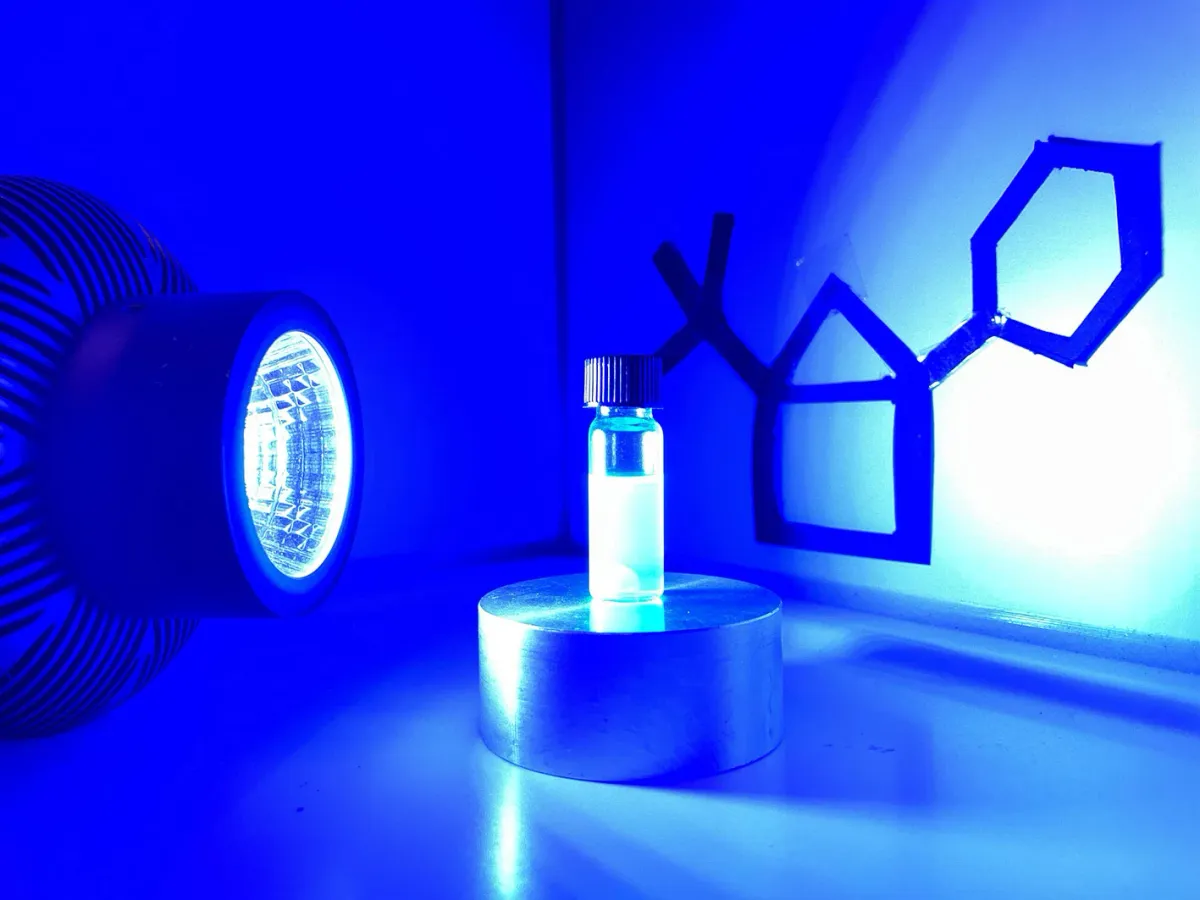
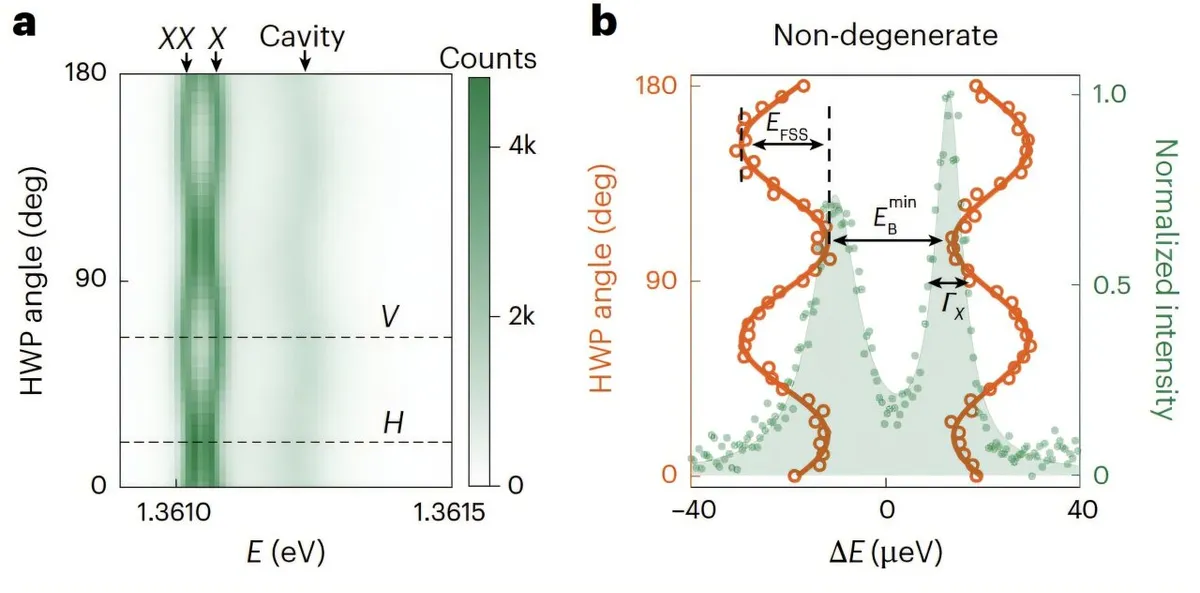
Zhiliang Yuan's team at the Beijing Academy of Quantum Information Sciences engineered a tiny semiconductor crystal — a quantum dot just nanometers across — and placed it inside a specially designed optical cavity made of mirrors stacked to bounce light in specific ways. By carefully tuning the dot's material composition and the arrangement of those mirrors, they created conditions where the dot, when hit with laser light, would emit two photons in rapid succession, perfectly correlated and ready to use.
The results were striking. Under pulsed laser excitation, the quantum dot produced photon pairs with 98.3% reliability. That's not just better than the crystal approach — it's a different category of control entirely. The photons also emerged in a well-defined optical mode, meaning they're already shaped to slot into quantum devices without extra processing.
For context, that level of consistency is the difference between a prototype and something you could actually build a product around. The old crystal method felt like gambling. This feels like engineering.
What comes next
The team published their work in Nature Materials, and the implications ripple outward quickly. With reliable entangled photon sources, quantum communication networks could finally move beyond lab demonstrations. Quantum sensing — the kind that could detect gravitational waves or measure magnetic fields with unprecedented precision — becomes more practical. Even biomedical imaging, where you need to see fine detail without damaging tissue, gets a powerful new tool.
The researchers are already working on further improvements. When they do, the quantum technologies that have felt perpetually five years away might actually start showing up in the real world.