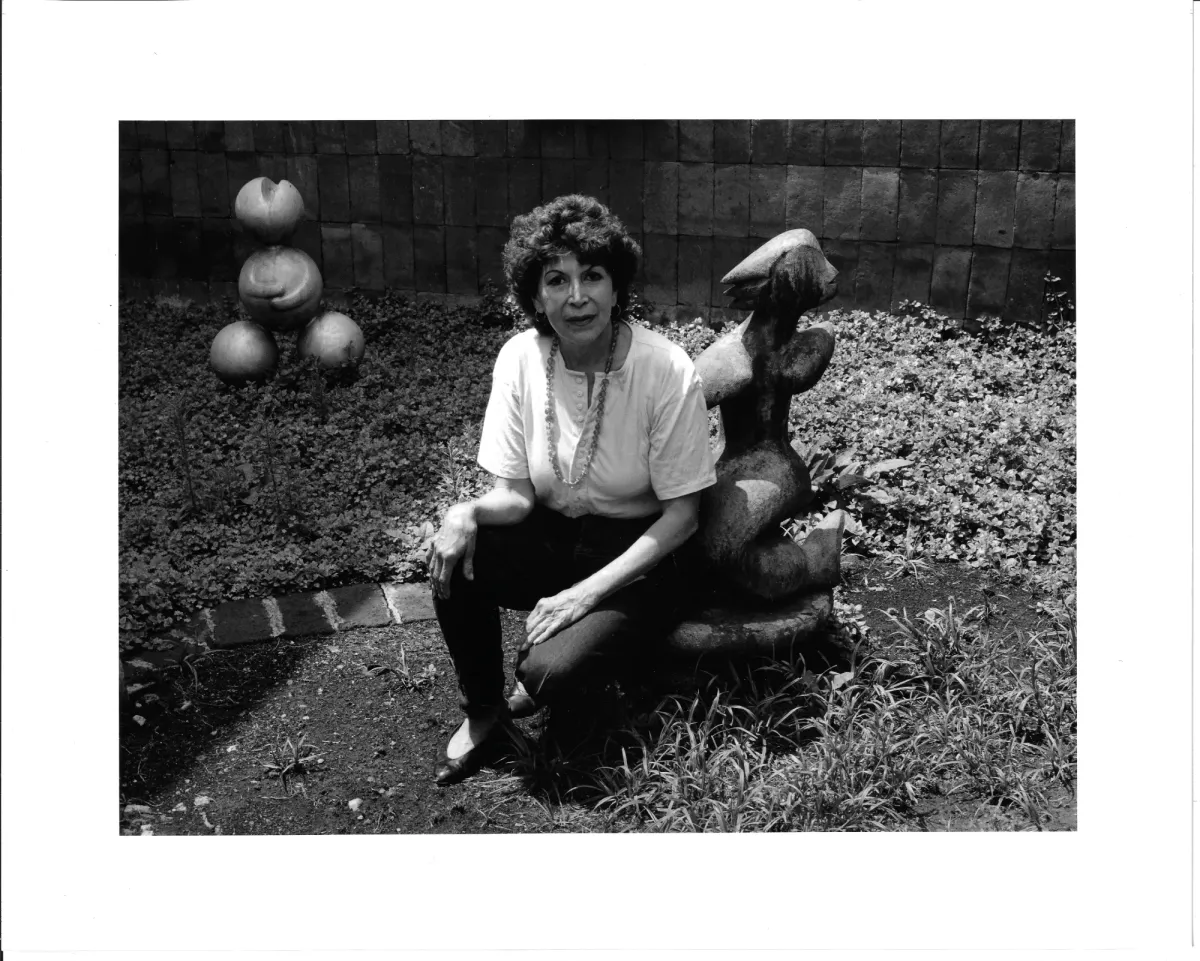
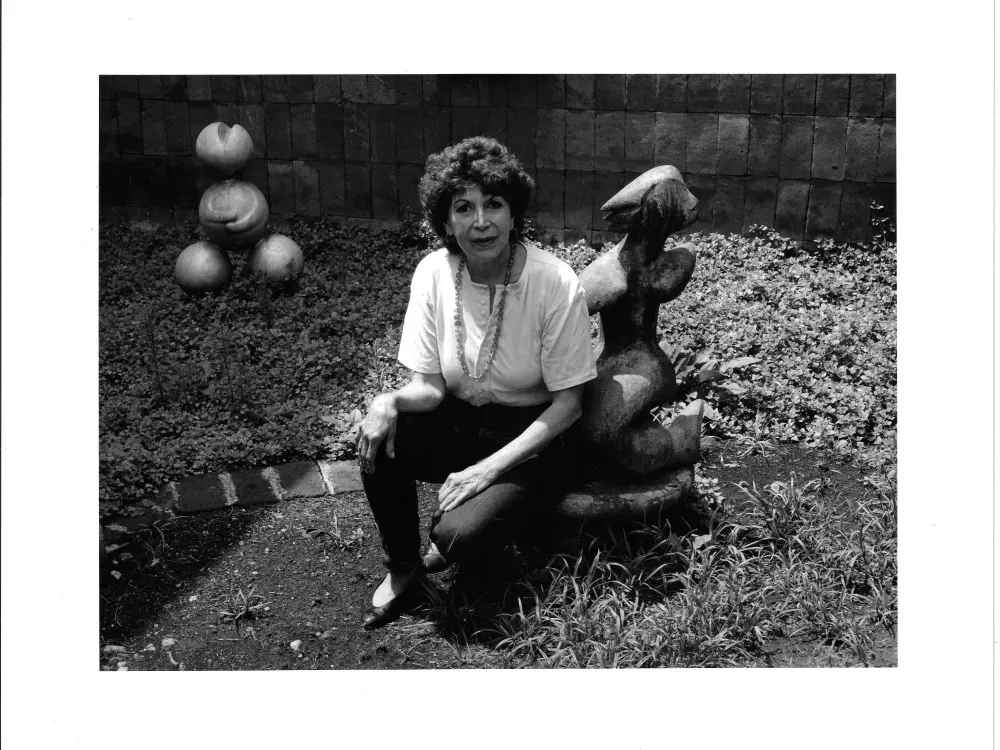
Geles Cabrera, the trailblazing Mexican artist who quite literally shaped her own world, passed away on September 1st at the impressive age of 100. Known as Mexico's first professional female sculptor, Cabrera spent over seven decades proving that the human form could be both abstract and deeply powerful, often chiseling her visions from rough volcanic stone.
She was also linked to the Generación de la Ruptura, or Breakaway Generation, a group of artists who, much like Cabrera herself, weren't content with the status quo. The OMR gallery in Mexico City, which championed her work, called her a pioneer who redefined body, movement, and space. Because apparently, when you're Geles Cabrera, you're not just an artist; you're your own muse, too.
Breaking Barriers, One Sculpture at a Time
When Cabrera started her career, the art world, especially sculpture, was a boys' club. Few women were taken seriously, and a chisel was definitely considered a man's tool. Yet, at just 22, she became the first Mexican sculptor to have a solo show at Mont-Orendáin Gallery in 1949. Major institutions? They took a little longer to catch on to her pioneering genius.
We're a new kind of news feed.
Regular news is designed to drain you. We're a non-profit built to restore you. Every story we publish is scored for impact, progress, and hope.
Start Your News DetoxCabrera, a mother of five, never sugarcoated the struggle. In a 2018 interview, she candidly called the Mexican art system sexist, noting that museums were built for male artists while women struggled for support. And yet, she didn't just break barriers; she built new structures, too.
In 1949, she co-founded the Salón de la Plástica Mexicana to promote modern Mexican art. Then, in 1966, she opened the Museo Escultórico in Coyoacán. This wasn't just a museum; it was Mexico's first independent, artist-run museum by a living artist, operating without admission fees until 2006. She funded it with her art teacher's salary, because some things are just too important not to exist.
The Raw Beauty of Recinto
Born in 1926, Cabrera's artistic DNA had deep roots. Her father, a civil engineer, worked on archaeological digs, exposing her to pre-Hispanic artifacts that would echo in her work's pagan and prehistoric leanings. Her aunt, Rosario Cabrera, was also an artist, proving that creativity ran in the family.
Cabrera studied dance and art, with her dance experience clearly informing the strong, almost dancer-like figures in her sculptures. She experimented with wood, plant fibers, and bronze, but her signature material became recinto — a black or gray porous volcanic stone also used in Indigenous buildings. "I left them like that on purpose. I don’t like to polish them," she told an interviewer, embracing the raw, unpolished dimension of the stone.
Her abstract style was a deliberate departure from the nationalist motifs popular with Mexican muralists, drawing her to the Generación de la Ruptura and other avant-garde collectives. She wasn't just breaking away; she was forging her own path, one unpolished, powerful sculpture at a time.
Late in life, the world finally began to catch up. In 2022, she had her first U.S. solo exhibition in New York. A major retrospective is slated for 2025 in Mexico City. And in 2023, she received Mexico's highest honor for lifetime artistic achievement, the Medal for Fine Arts. A century of living, decades of creating, and a lifetime of proving that sometimes, you just have to sculpt your own recognition.