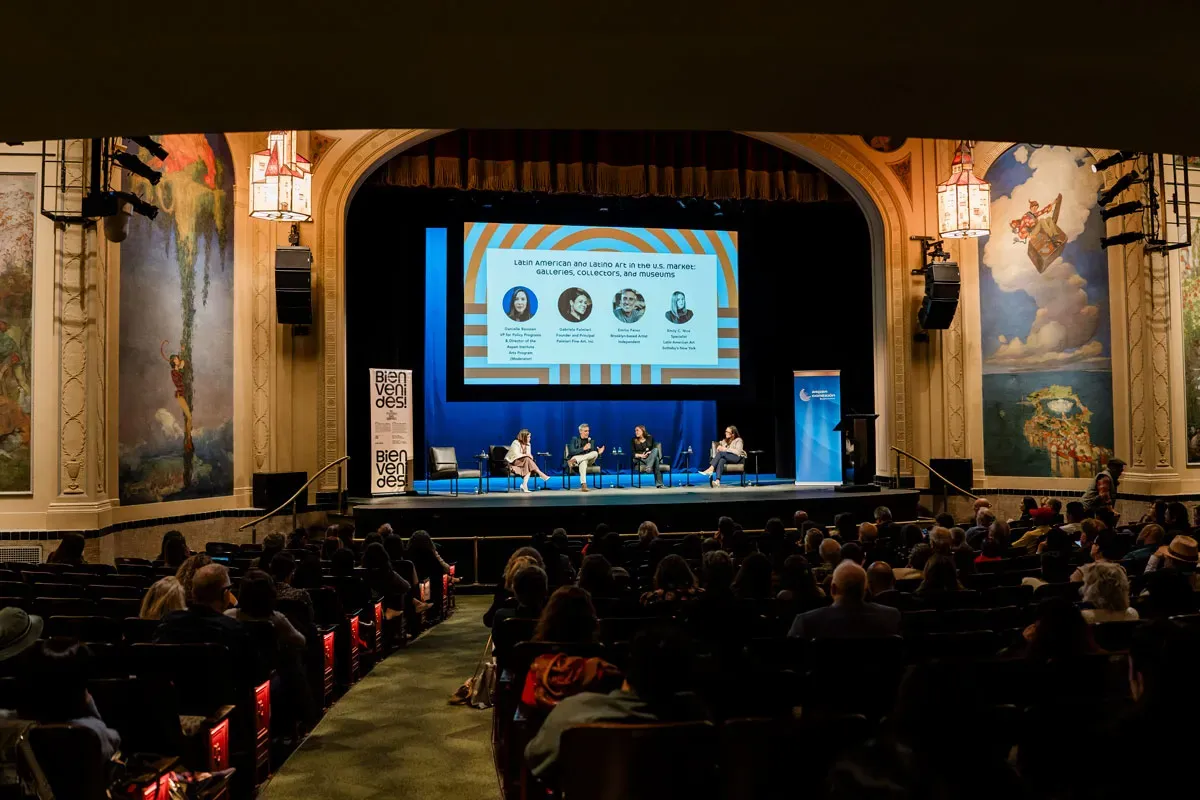
The art world has a new main character, and it's not just another fleeting trend. This spring, at El Museo del Barrio in New York, a room full of art pros gathered to ask a crucial question: How do we take the surging visibility of U.S. Latinx art and turn it into a permanent fixture? And more importantly, how do we make sure everyone gets paid fairly along the way?
"The Rise of the U.S. Latino Art Market: Lessons from Latin America" was the rather formal title for a conversation tackling a very modern phenomenon. Organized by El Museo and Aspen Conexión, it brought together artists, curators, and market experts. Because apparently, even art needs a strategic growth plan.
From 'Bad Bunny Era' to Billion-Dollar Bids
According to Pilar Frank O’Leary of Aspen Conexión, Latinx influence isn't just a cultural wave; it's a tsunami hitting everything from finance to sports to, yes, the arts across the Americas. Karla Harwich, El Museo's board chair, called the increasing visibility of U.S. Latinx artists a "profound cultural shift." Frank O’Leary even dubbed it "the Bad Bunny era." Which, if you think about it, is both impressive and slightly terrifying.
We're a new kind of news feed.
Regular news is designed to drain you. We're a non-profit built to restore you. Every story we publish is scored for impact, progress, and hope.
Start Your News DetoxBut here's the rub: how do you go from a "moment of visibility" to "lasting recognition"? That was the core question posed by El Museo executive director Patrick Charpenel. The answer, it seems, might lie south of the border.
What Latin America Did Right
The symposium spent a good chunk of time dissecting the intentional, decades-long rise of Latin American art. Diego Deleersnyder of Aspen Conexión pointed out that it wasn't an accident. It was built with institutions, collectors, galleries, and steady investment. Latinx art, he noted, is "still in an earlier chapter of that story."
Take Diego Costa Peuser, founder of the Pinta Group, who detailed how his organization deliberately cultivates local art scenes in places like Santo Domingo and Panama City through fairs and art weeks. His conclusion? It's "sustained work," not blind luck.
Then there's the money. Sotheby’s specialist Emily C. Nice shared that their Latin American art auctions started way back in 1977. The auction record for Leonora Carrington's work more than quadrupled from $3.3 million in 2022 to a cool $25.8 million in 2024. And Frida Kahlo? Her El Sueño (La cama) pulled in a staggering $54.7 million in November 2025. Yes, you read that right: $54.7 million. As Gabriela Palmieri put it, that's "something to get excited about."
Artist Emilio Perez, whose work is currently featured in an exhibition, reminded everyone that while labels can be limiting, showing up every day and seizing opportunities is what truly matters. Because even in the Bad Bunny era, you still have to do the work.
Decolonizing, Displaying, and Disrupting
The conversation also veered into the idea of "decolonizing the art system." Patricia Hanna, director of the Jorge M. Pérez Collection, emphasized that art needs to be seen. Her organization, El Espacio 23, hosts annual exhibitions specifically to push artists into the global conversation. El Museo’s own La Trienal has seen works from featured artists acquired by major institutions. Which is precisely the point.
But Silvia Cubiñá offered a dose of reality, cautioning against simply copy-pasting Latin America's roadmap. The populations are different, the ecosystems unique. The real lesson, she suggested, is building infrastructure. Which, conveniently, El Museo del Barrio is rather good at.
E. Carmen Ramos, chief curatorial and conservation officer of the National Gallery of Art, summed it up with a hopeful keynote: "equal opportunity, curiosity, pride, and joy can help advance Latinx art." She acknowledged the underrepresentation and overlooked leadership that still plagues the field. But she also stressed the power of conviction, collaboration, and the courage to imagine something better.
So, while this symposium might have been the end of a conversation, as Aspen Conexión's Deleersnyder noted, it's really just the beginning of many more. Because if there's one thing we can all agree on, it's that undeniable talent and cultural influence deserve more than just a moment in the sun.