When European ships started pulling up to Australian shores, bringing all the… complexities of colonization with them, Aboriginal artists didn't just paint what they saw (though they did that too). They went bigger. Much, much bigger.
A new eight-year study, led by archaeologist Paul Taçon of Griffith University, found that after European contact, Aboriginal artists in Australia's Northern Territory started creating images of powerful ancestral beings on an unprecedented scale. Think: colossal Rainbow Serpents and giant men, all appearing when their world was being upended.
Art as a Cultural Shield
The study focused on Awunbarna, also known as Mount Borradaile, a site famous for rock paintings spanning 15,000 years. Before the 1800s, the art included local animals and human figures. Then came the Europeans, and suddenly the rock art got new subjects: painted hands, ships, and firearms. But it also saw a dramatic surge in massive depictions of ancestral beings.
We're a new kind of news feed.
Regular news is designed to drain you. We're a non-profit built to restore you. Every story we publish is scored for impact, progress, and hope.
Start Your News DetoxTaçon and his team, working with Charlie Mungulda, a senior Amurdak traditional owner, documented art at 165 sites. Their conclusion? These enormous paintings were a way for the Aboriginal people to reassert their power and protect their culture and land from the encroaching threat of colonization.
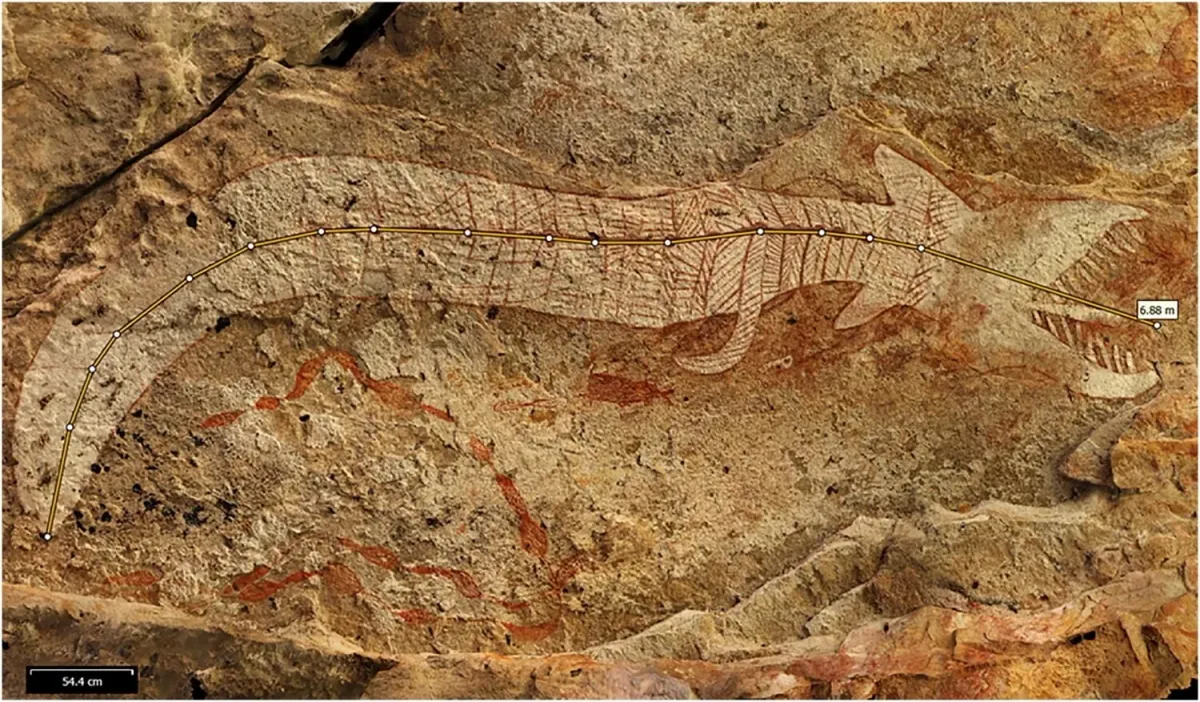
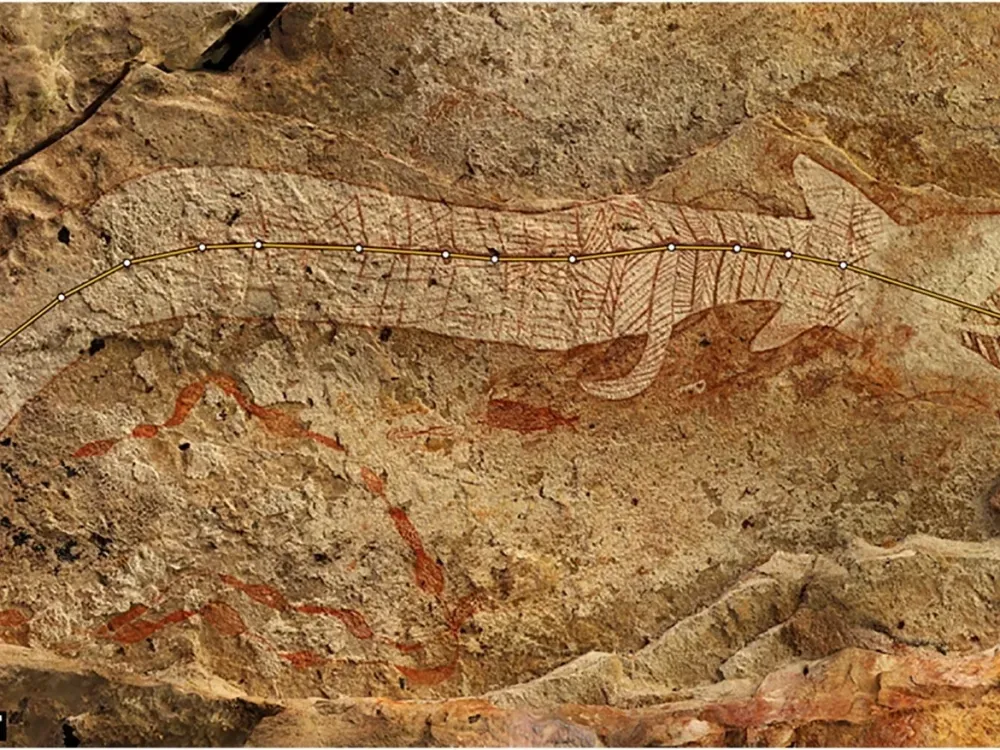
Imagine a 20-foot-long Rainbow Serpent with a crocodile head, a long tongue, and teeth sharp enough to give you nightmares. Or a giant man dominating a rock face. They even found the only known rock art image of a whale. And for good measure, a 125-foot serpent-shaped stone arrangement.
Dating rock art is tricky business, but many of these colossal Rainbow Serpents were painted over older works using white pipe clay — a pigment that fades within decades or centuries. That suggests these particular paintings were made after European contact.
Rainbow Serpents, in Aboriginal tradition, are ancestral beings believed to control time and embody change. Their stories are often about accepting and coping with it. So, in the face of immense, unwelcome change, these artists quite literally drew upon their most powerful cultural figures, making them larger than life.
It was, as the study authors put it, a powerful declaration of "the importance of maintaining Aboriginal tradition in the face of cultural change." Because sometimes, when the world gets small, your art needs to get huge.