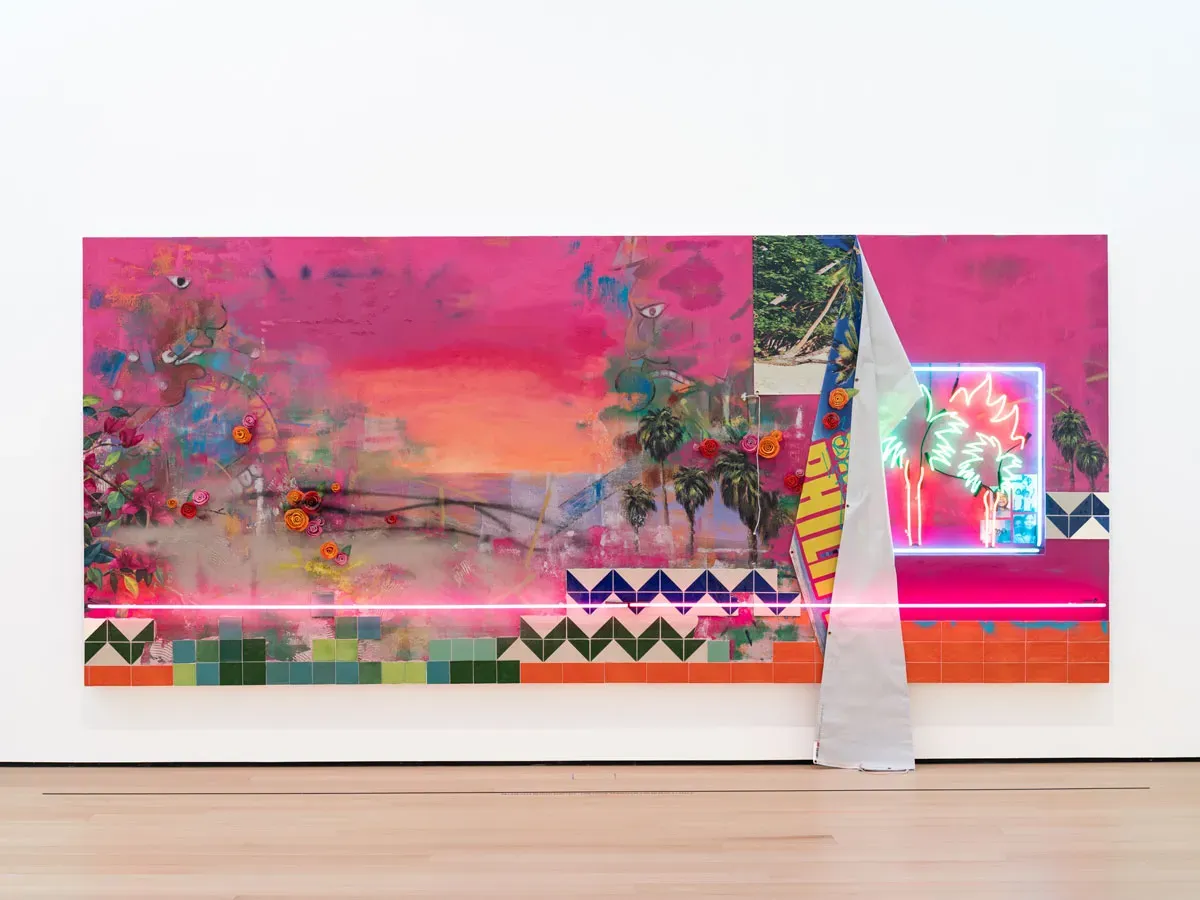
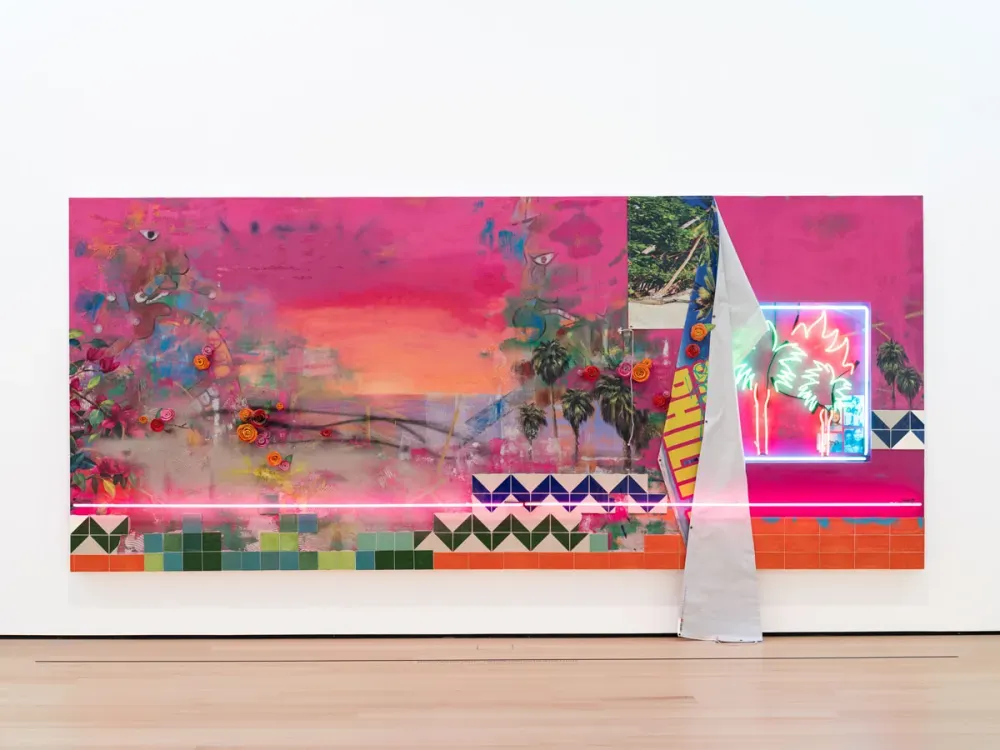
You know a painting when you see one, right? Canvas, brushstrokes, maybe a fancy frame? Well, the Buffalo AKG Art Museum would like a word. Their new exhibition, "Let Us Gather in a Flourishing Way," is here to delightfully mess with your expectations. Because apparently, painting can now involve floor mats, piñatas, and textiles sewn into diamond shapes.
Take Karla Diaz's Uncle's Crossing (2022). At first glance, it's two men, one carrying the other. Casual. Then you spot the coyote on a shirt, and the title clicks. Diaz painted her late uncle, a "coyote" — someone who helps undocumented people cross the border. It's a loaded term, a secretive profession. After her uncle passed and she recovered from a stroke, Diaz felt compelled to create the first art portrait of its kind, hoping to spark questions and humanize a complex role.
Rethinking What Art Can Be
This is where curator Andrea Alvarez steps in, challenging every preconceived notion of what "Latinx painting" should be. Forget the stereotypes of overly colorful, folkloric art. Alvarez went looking for breadth, for artists who push the very definition of the medium itself. And she found them.
We're a new kind of news feed.
Regular news is designed to drain you. We're a non-profit built to restore you. Every story we publish is scored for impact, progress, and hope.
Start Your News DetoxMoises Salazar Tlatenchi’s Cruising Queens (2024) sports a crocheted frame. Manuela Gonzalez’s Inanna (2024) uses painted textiles. Nery Gabriel Lemus's works are painted floor mats, installed on the floor. Sarah Zapata contributes textile pieces, arguing textiles are foundational to painting's history. Because why stick to canvas when you can use… well, anything?
Alvarez hopes visitors will see the sheer diversity and complexity of these artists, and understand that the Latinx population in the U.S. is culturally rich and deserves a full-blown celebration. Which, if you think about it, is both impressive and slightly terrifying for anyone who thought they had art all figured out.
With 58 artists, the exhibition is organized into seven themes, from "Identity/Place" to "Pinturx" (a gender-neutral term for painter, because language evolves, and so should art). You’ll find Eamon Ore-Giron’s abstractions, Kristopher Raos’s close-up of a laundry detergent logo (yes, really), and Salomón Huerta’s still lifes featuring a gun next to a glass of milk. These aren't just pretty pictures; they're portraits, stories, and quiet subversions.
Larry Madrigal’s massive Man on Trampoline (2023) blends El Greco with everyday scenes, aiming for "humor, earnestness, and humanity." Guadalupe Maravilla’s Pupusa Retablo (2023) shares his migration story from El Salvador, complete with a painted caption about pupusas and the fear of deportation. It's an "early lesson in assimilation," Alvarez observes, wrapped in delicious Salvadoran comfort food.
The exhibition’s title, "Let Us Gather in a Flourishing Way," comes from a Juan Felipe Herrera poem, a nod to abundance and community. The museum even commissioned Herrera to write a new poem in response to the show, So Many Years We Dreamed the Colors / Tantos años soñamos los colores (2024), which speaks of being seen and understood. And if that's not enough, there's Justin Favela's "piñata mural" series, started after a professor told him to "make something about being Mexican." He used the piñata to challenge those stereotypes.
In short, this is less an exhibition and more an invitation. An invitation to redefine, to explore, and to realize that Latinx painting is far more expansive, surprising, and wonderfully uncontainable than you ever imagined. And yes, it looks fantastic on a floor mat.