Some dogs can pick up a new toy's name just by overhearing two people chat about it — even if they've never seen the toy before. That's the finding from a new study in Science, and it reveals something unexpected about how language and learning work across species.
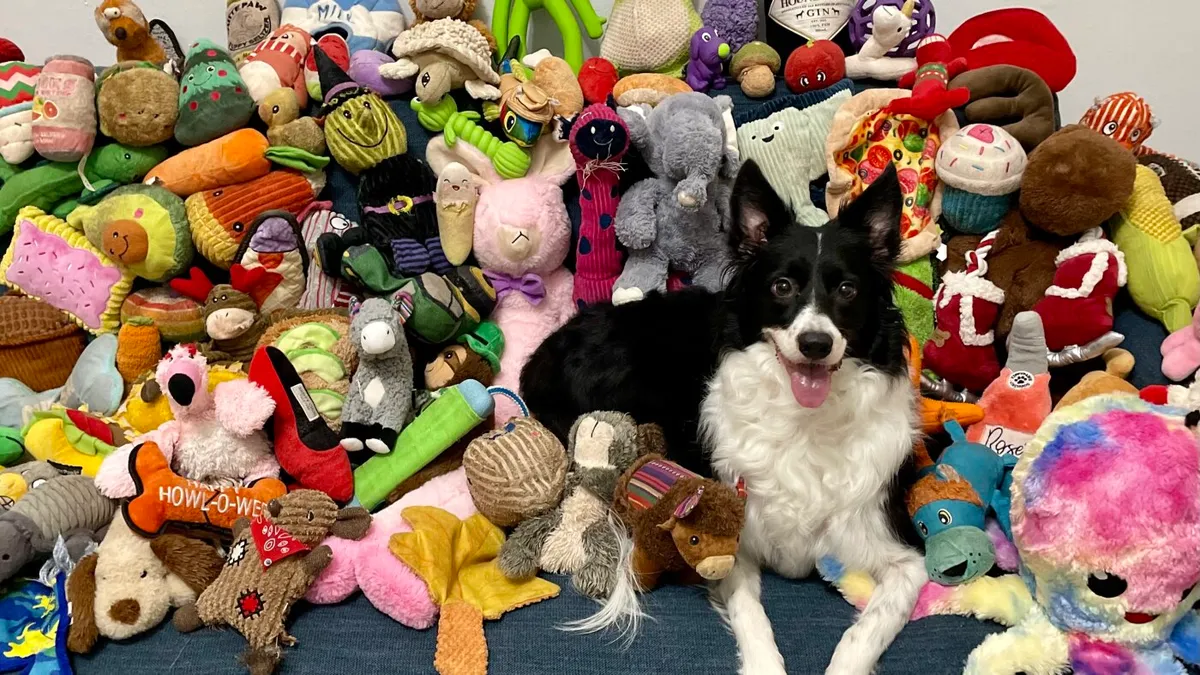
Researchers at Eötvös Loránd University and the University of Veterinary Medicine Vienna identified a small group of "gifted" dogs — mostly border collies, but also a Pekingese and several mixed breeds — who can do something most dogs cannot: learn that specific words refer to specific objects. For most dogs, "fetch the ball" and "fetch the frisbee" sound essentially the same. These dogs can tell them apart.
How They Learn Without Being Taught
Cognitive scientist Shany Dror and her team set up an experiment where two people would interact while a dog watched from nearby. One person would show the other a brand new toy and talk about it casually — the toy's name embedded naturally into conversation, never directed at the dog. Later, when asked to find that toy among others, the gifted dogs could do it. They'd learned the word entirely through overhearing.
We're a new kind of news feed.
Regular news is designed to drain you. We're a non-profit built to restore you. Every story we publish is scored for impact, progress, and hope.
Start Your News DetoxWhat's more striking: the dogs could learn even when they first saw the toy hidden away, as long as their owner was looking in that direction when saying its name. "This shows us how flexible they are able to learn," Dror says. "They can use different mechanisms and learn under different conditions."
The dogs themselves didn't come from special training programs. Their owners stumbled onto this ability by accident — playing with their dog, giving it toys, then one day realizing it knew the names. They started adding more toys, and the dogs kept learning. No formal instruction required.
What This Tells Us About Language
This matters beyond dog trivia. Dror's broader research question is about human language evolution. Why do humans have such outsized language abilities compared to other animals? One clue: these gifted dogs are using social cues to understand meaning. They're reading where their owner is looking, picking up on tone and context, using the same social intelligence that probably predates human language itself.
"Language was kind of hitchhiking on these social abilities," Dror explains. Humans likely had the capacity to read social signals long before we developed spoken words. Language built on top of that foundation.
It's worth noting the limits here. These are exceptional dogs — not the norm. Studies with regular pet dogs haven't found the same abilities. And the conversations the genius dogs overheard were still dog-directed speech in tone and structure, just aimed at another person instead of at them.
But the ability itself — to learn from observation, to pick out meaning from context, to connect a sound with an object you've never directly been taught about — that's still remarkable. And it suggests that the building blocks of language might be more widespread in the animal kingdom than we assumed. We're just usually looking for it in the wrong place.
Dror's team continues searching for more of these gifted dogs, inviting owners who suspect their dogs have unusual word-learning abilities to get in touch. Each one adds another data point to an increasingly clear picture: the roots of human language run deeper than we thought.