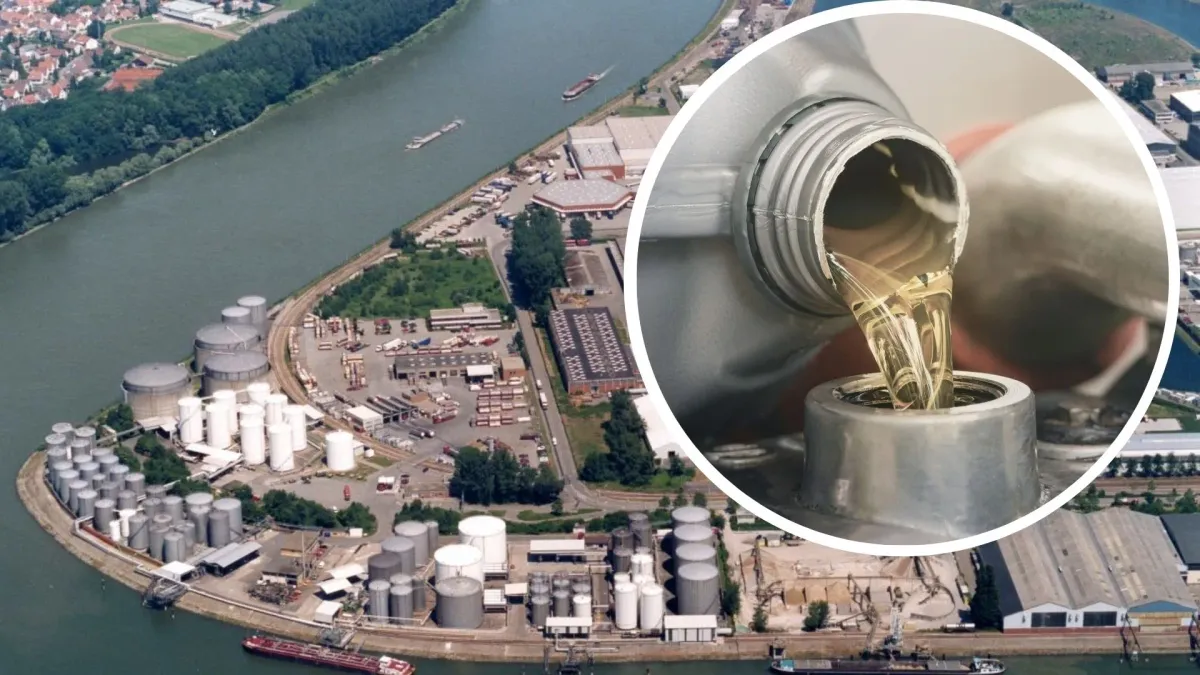
A tank farm in Mannheim, Germany just solved a problem that's been holding back renewable fuels: proof. For the first time, a pilot plant can mix fossil and renewable fuels on demand, then document exactly how much carbon each batch saves—down to the individual delivery.
The Exolum Mannheim facility, supported by researchers at the Karlsruhe Institute of Technology, uses precise sensors and software to blend three different fuel types in exact proportions. As each batch leaves the plant, the system calculates its CO₂ reduction compared to pure fossil fuel and generates an official report. It's tracking what was previously invisible.
Why this matters: renewable fuels—made from agricultural waste, forestry residue, and sustainably produced hydrogen—have the same energy density as conventional fuel. They work in existing engines without modification. But they've struggled to scale because nobody could prove their climate benefit at the point of sale. A truck company didn't know if their tank actually contained the cleaner fuel they paid for. A consumer had no way to verify their choice made a difference.
We're a new kind of news feed.
Regular news is designed to drain you. We're a non-profit built to restore you. Every story we publish is scored for impact, progress, and hope.
Start Your News DetoxThis plant changes that. "For the first time, we can mix precisely measured quantities and immediately document the climate impact transparently," says Prof. Thomas Hirth, Vice President for Transfer at KIT. That transparency creates a feedback loop: companies can now demonstrate real carbon reductions to customers, which gives customers a reason to choose renewable blends, which gives fuel producers an incentive to scale production.
The path forward
The German government is backing this with roughly €325,000 in funding as part of its broader "Roadmap reFuels" strategy. The pilot is deliberately small—it's designed to prove the concept works before larger facilities adopt the same approach. Dr. Olaf Toedter, who coordinates the project, frames it plainly: "This will allow renewable reFuels to find their way into the tanks of end consumers for the first time."
That's the real shift. Renewable fuels aren't new. What's new is the ability to verify them at scale, to make the climate benefit visible and measurable. Once that infrastructure exists in one tank farm, it can spread to others. Once customers can see the actual CO₂ reduction on their receipt, the economics change. The plant isn't revolutionary—it's the missing piece that lets a promising technology actually work in the real world.