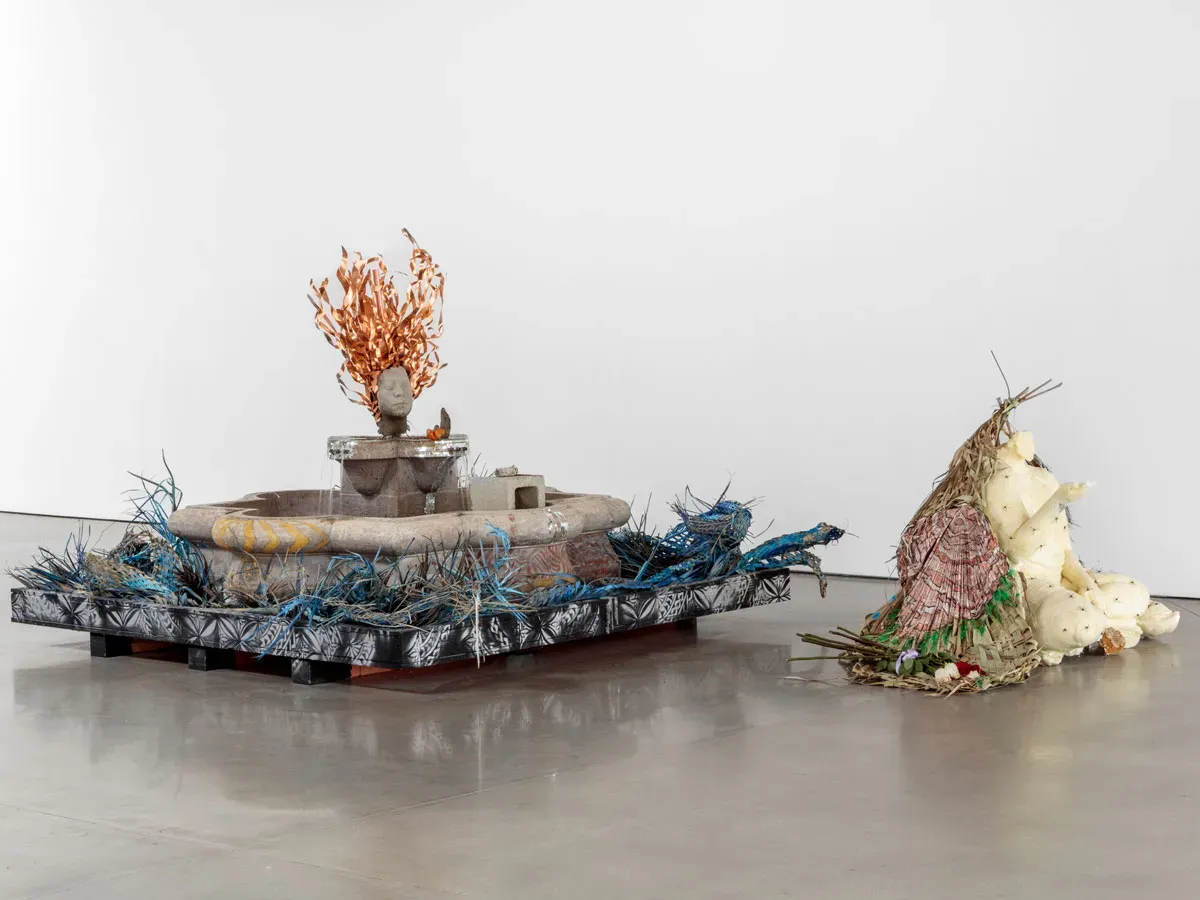
The Getty Foundation just announced what it's been building toward for two decades: a massive, region-wide art initiative that traces how Los Angeles became Los Angeles through its deep connections to the Pacific Rim. Starting in September 2030, dozens of cultural institutions across Southern California will open exhibitions exploring everything from Chinese porcelain in Spanish missions to Korean pop culture's grip on contemporary design—a shift that matters because it rewrites whose stories get told in art history.

This is the fourth edition of PST ART, a program that's distributed nearly $50 million since 2002 to reshape how museums think about their own collections and communities. Justine Ludwig, the initiative's creative director, spent months talking to stakeholders across LA before landing on this focus. "All of our conversations were pointing to this as being the right time," she told ARTnews. "The Pacific Rim has really been integral in forming culture in Southern California."
What makes this moment significant isn't just the money or the scale—it's what it signals about whose art gets centered. The first PST ART in 2011 brought "Now Dig This! Art and Black Los Angeles 1960–1980" to the Hammer Museum. The 2017 edition, "LA/LA," spotlighted Latinx and Chicanx artists' contributions. This time, the focus lands on transpacific exchange: the dialogue between Los Angeles artists and their Asian counterparts after World War II, the influence of Japanese visual culture on modern architecture, the seismic impact of Korean popular culture today.
We're a new kind of news feed.
Regular news is designed to drain you. We're a non-profit built to restore you. Every story we publish is scored for impact, progress, and hope.
Start Your News Detox
Clara Kim, chief curator at MOCA, describes PST ART's effect plainly: it "single handedly reshaped the institutional culture in Southern California." That's not hyperbole. Before PST, smaller museums and cultural organizations competed for attention in a fragmented landscape. The initiative created a framework where institutions of any size could collaborate, share research, and collectively tell stories that no single museum could hold alone.
Ann Burroughs, president of the Japanese American National Museum in Little Tokyo, frames the timing differently—as urgent. "Art creates powerful entry points into shared histories and collective futures," she said. She points to a harder reality: as immigrant communities face renewed targeting, amplifying AAPI voices through art becomes a form of resistance and connection. PST ART, in this reading, is cultural infrastructure at a moment when diverse perspectives are being actively erased from some institutional spaces.
The research phase begins now. Any nonprofit cultural organization in Southern California's eight counties can submit a Letter of Inquiry by June 1, 2026—no prior PST experience required, no size minimum. Ludwig emphasizes the openness: "We don't know who's going to come forward with exciting proposals and what ideas we're going to learn." That's worth noting because it means the final shape of this initiative depends on who applies, not on a predetermined curatorial vision handed down from above.
What's emerging here is a different model for how art institutions can work together: not as competitors for prestige or funding, but as a distributed network asking shared questions about identity, influence, and belonging. By 2030, that network will be visible across the region—in big museums and neighborhood galleries, in research centers and artist studios. The Pacific Rim didn't just shape Los Angeles culture. It shaped Los Angeles itself. The Getty's bet is that showing that story, thoroughly and widely, changes how people understand where they live.