This week's stories have something in common: women who refused to accept the world as they found it.
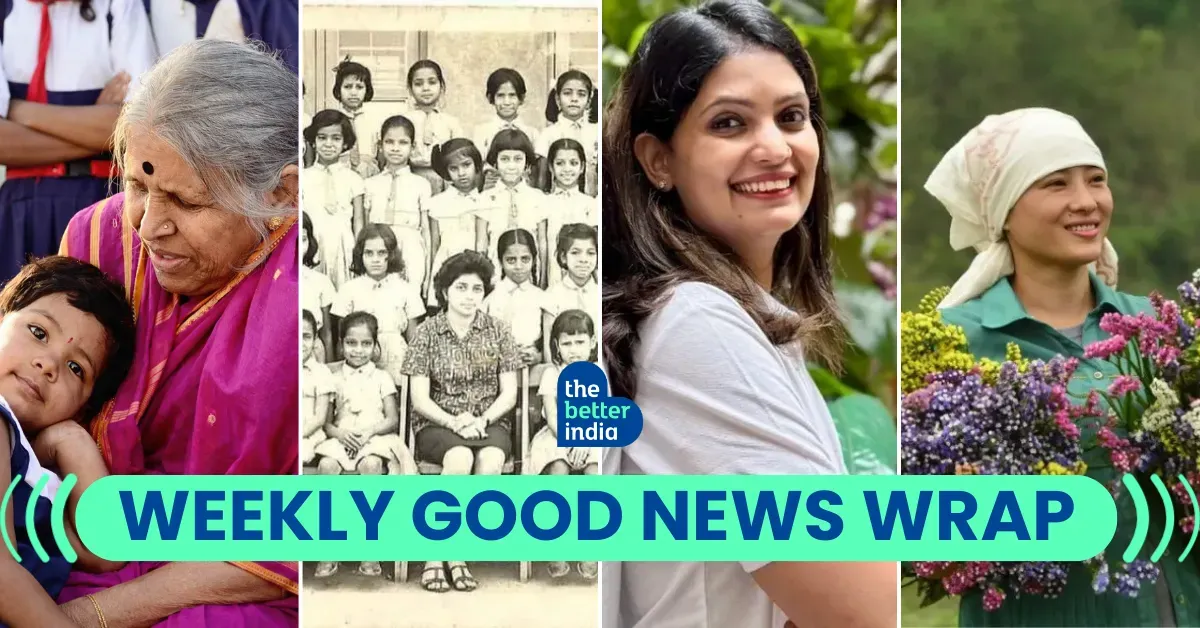
There's Sindhutai Sapakal, who was abandoned pregnant on a roadside by her own family. Instead of breaking, she rebuilt—opening her home to children no one else wanted until thousands called her 'Maai' (mother). She died in 2022, but her daughter Mamata is carrying that work forward, proving that love scaled becomes legacy.
Then there's the problem that sits silently in millions of women's heads: a gynecological question they're too embarrassed to ask. Divya Kamerkar and Akanksha Vyas noticed this gap and built Pinky Promise, an AI-powered chat clinic where women can start the conversation privately, then move to real doctors when they're ready. Over four lakh women across India have used it. What matters here isn't the technology—it's that someone recognized shame as a barrier and removed it.
We're a new kind of news feed.
Regular news is designed to drain you. We're a non-profit built to restore you. Every story we publish is scored for impact, progress, and hope.
Start Your News DetoxIn a different kind of persistence, Mercy Rego found an old school friend online and sent a message. One by one, their childhood group reconnected after 60 years apart. Instead of a nostalgic coffee, they gave themselves permission to travel together, to laugh in their 60s the way they did in their teens. There's something quietly radical about that—women claiming joy on their own terms, on their own timeline.
And in Mao, Manipur, Chokhone Krichena was told to get a "proper job." She ignored that advice and started Dianthe, connecting local floriculture farmers to city markets so they get fair prices and steady income. The business also transforms discarded flowers into eco-friendly products, turning waste into value. She's won recognition for climate innovation—not because she was chasing awards, but because she was solving a real problem in her community.
What ties these stories together isn't inspiration porn or feel-good sentiment. It's something harder: women who saw a gap between how things are and how they could be, and decided to close it themselves. Sindhutai didn't wait for the system to help abandoned children. Divya and Akanksha didn't wait for gynecological shame to disappear on its own. Mercy didn't assume her childhood friendships were lost forever. Chokhone didn't accept that flower waste had to stay waste.
Each of them made a small decision to act—and each decision rippled outward. Four lakh women now have access to healthcare they felt safe using. Thousands of children found a home. Farmers in Manipur have better livelihoods. A group of friends discovered that 60 years doesn't erase what you built together.
The pattern is worth noticing: progress often doesn't come from waiting for permission or for the perfect moment. It comes from someone looking at what's broken and deciding they'll fix it, even if no one asked them to.