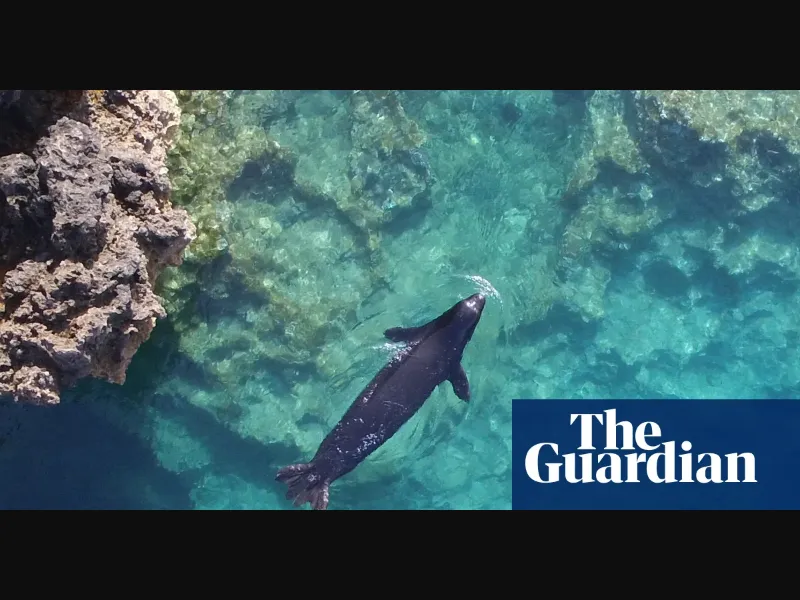
Deep in a sea cave off Greece's northern coast, a Mediterranean monk seal rests in the gloom. It's hiding—not from a predator, but from tourists on speedboats.
There are fewer than 1,000 monk seals left on Earth. Greece holds about half of them, making this small country the unlikely custodian of an entire species' survival. For decades, the main threat was hunting. Now it's something more insidious: the very people who come to admire them.
A Species Learning to Hide
Monk seals once hauled out on open beaches across the Mediterranean. But as coastal tourism exploded, they retreated into sea caves—a shift that happened within living memory. "The fact that they feel safe enough to rest here in the open is a really good sign that the protection measures are working," says Angelos Argiriou, a marine biologist monitoring key habitats in the Alonissos National Marine Park, Greece's largest marine protected area.
We're a new kind of news feed.
Regular news is designed to drain you. We're a non-profit built to restore you. Every story we publish is scored for impact, progress, and hope.
Start Your News DetoxYet caves no longer offer reliable refuge. Once-remote coastlines are now accessible to anyone with a rental boat or private yacht. What was thrilling for visitors—a glimpse of a rare seal—became a crisis for the animals themselves.
Joan Gonzalvo, a marine biologist at the Tethys Research Institute, watched it unfold in the Ionian Sea. "Six, seven, eight years ago we had encounters almost every day," he recalls. "We would see five, six seals in the water at once, socialising, chasing each other." Then the tourists arrived, searching for "seal experiences." Gonzalvo documented humans chasing seals into breeding caves. On two occasions, mothers were separated from their pups—the pups never returned.
Protection Starting to Take Root
The response is finally gaining momentum. This summer, authorities established a strict 200-metre no-entry zone around Formicula, a critical seal habitat in the Ionian Sea. The Hellenic Society for Protection of the Monk Seal has rescued and rehabilitated more than 40 orphaned or injured seals—including one female now raising a pup of her own. "If you save one female, she might have 20 pups in her lifetime," says Panos Dendrinos, the society's president.
In October, Greece's prime minister confirmed two large-scale marine protected areas are moving forward, potentially offering the seals genuine breathing room. A national education campaign, Seal Greece, is also underway to shift how visitors think about these animals.
But protection on paper means little without enforcement on the water. Gonzalvo worries that time is running out, especially at Formicula, where there are currently no wardens. "If we are not capable of protecting this important habitat for one of the most charismatic and endangered marine mammals on the planet, there is very little hope for anything else we want to protect in our oceans."
The next phase depends on funding and political will: more boats, more wardens, clearer authority. It's a straightforward problem with a straightforward solution—if Greece commits to it.
Study on Inadequate Implementation of Marine Protected Areas in Greece - Marine Policy, 2022