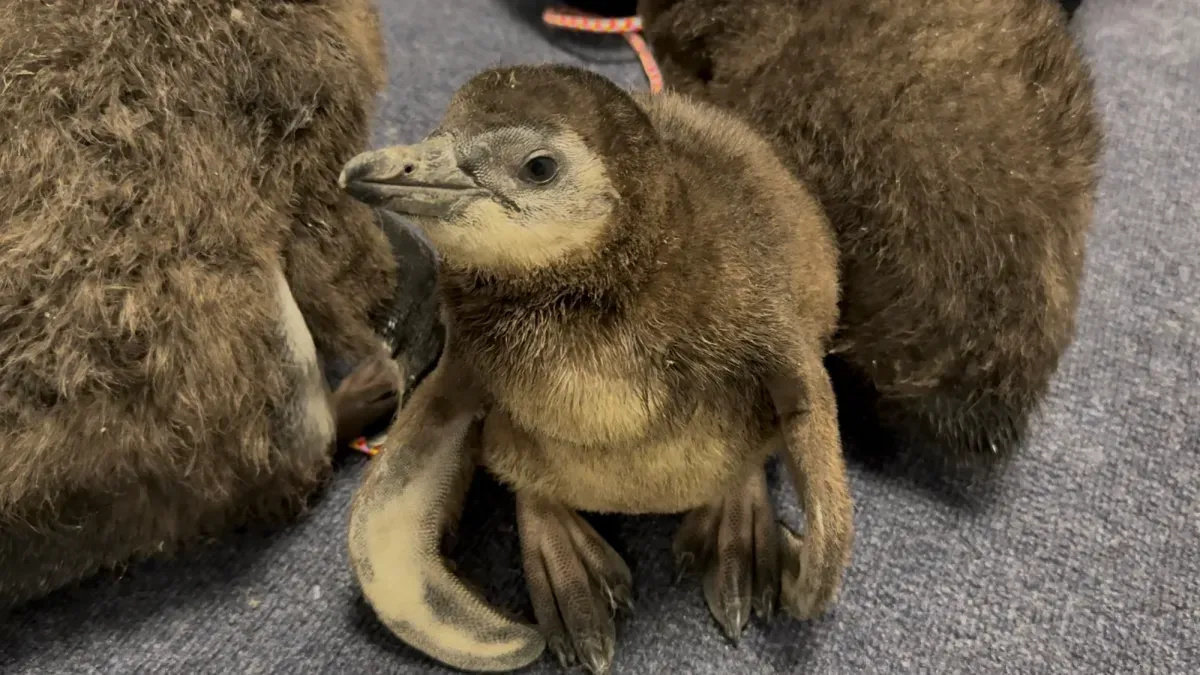
Adventure Aquarium in Camden, New Jersey, just welcomed three African penguin chicks in a matter of weeks—a rare bright spot for a species that's been collapsing for millennia.
Duffy and Oscar arrived last December. Their younger sibling from different parents followed within weeks, and this third chick is the largest hatched at the facility this season. For a species with only about 19,800 adults left in the wild, each birth matters.
The story of African penguins is one of slow-motion collapse. Twenty-two thousand years ago, during the Last Glacial Maximum, roughly 18.8 million of them thrived across 15 large islands near South Africa. Then the ocean rose. Gradually, their island homes vanished beneath the waves. By the time climate change accelerated the pressure—through warming waters that scatter their fish prey and disrupt breeding cycles—the population had already been hollowed out. In 2024, the International Union for Conservation of Nature reclassified them from "Endangered" to "Critically Endangered."
We're a new kind of news feed.
Regular news is designed to drain you. We're a non-profit built to restore you. Every story we publish is scored for impact, progress, and hope.
Start Your News DetoxWhat makes these three chicks significant isn't sentiment. It's that aquariums like Adventure Aquarium, the Columbian Park Zoo in Indiana, and the Maryland Zoo in Baltimore have become essential backup systems for the species. They're not a replacement for ocean conservation—nothing is—but they're buying time while habitat restoration and fishing regulation efforts slowly take root in South Africa.
The three chicks will stay behind the scenes for months, developing the waterproof feathers they need to swim. Once they're ready for public view, Adventure Aquarium is letting visitors name the third chick—Scrappy, Zero, Flounder, or Toothless—with donations to penguin conservation groups funding the vote. It's a small gesture, but it's how zoos have learned to work: turn a single hatching into a moment that reminds people why these birds matter.
The real test isn't whether aquariums can breed penguins. They can. The test is whether the wild population can stabilize before the window closes entirely. Three chicks in one aquarium won't save the species. But they're proof that dedicated breeding programs work—and that proof might be what shifts policy and funding toward ocean protection in the years ahead.