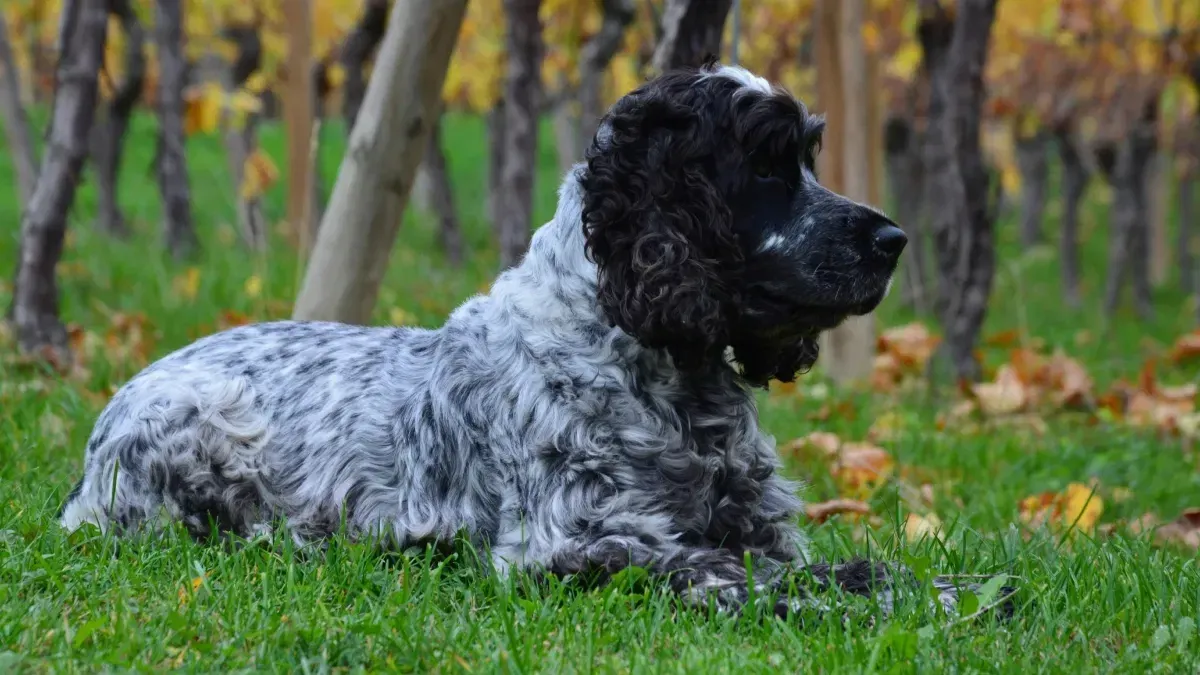
Sue Davis was on the ground, dizzy and unable to move, when her black cocker spaniel Arlo did what he'd been trained to do: he lay across her legs and barked until someone came.
The 67-year-old had taken a fall on black ice near her home in England. Deaf since her 40s, Sue relies on Arlo as her hearing dog—trained to alert her to sounds she can't hear, from doorbells to smoke alarms. But in that moment, on cold pavement with no one nearby, Arlo's response went beyond his formal training. He stayed with her, made noise, and didn't stop until a neighbor heard him and came to help.
"If it hadn't been for Arlo, I don't know what I'd have done," Sue told the BBC. "There was no one else around, so I would've had to crawl to get help."
We're a new kind of news feed.
Regular news is designed to drain you. We're a non-profit built to restore you. Every story we publish is scored for impact, progress, and hope.
Start Your News DetoxHearing dogs like Arlo are working animals, not pets—though the bond between handler and dog often becomes far deeper than professional. Sue connected with Hearing Dogs for Deaf People, the UK charity that trained and paired her with Arlo, in 2021. The organization selects dogs (often cocker spaniels and Labrador retrievers) and trains them for 18 months to respond to specific household sounds and alert their handler through touch or movement. They learn to guide their handler toward the source of the sound—a ringing phone, a knock at the door, a smoke alarm.
What makes these dogs valuable goes beyond the technical alerts. For deaf individuals, a hearing dog often becomes the bridge between isolation and participation. Sue describes Arlo simply: "He's my comfort blanket. I know I'm safe with him."
The impact is measurable. Research from the organization shows that hearing dog handlers report significant improvements in confidence, independence, and mental health. Many describe the same sense of safety Sue articulates—not just because the dog alerts them to sounds, but because someone (something) is genuinely attuned to their needs.
Hearing Dogs for Deaf People has trained over 1,500 dogs since 1982, each one requiring roughly £20,000 in training costs. The organization recently received recognition at a special reception at Windsor Castle, where Princess Anne met volunteers and highlighted the work of training these dogs and supporting deaf communities. It's a small gesture toward a larger reality: hearing dogs transform lives, one alert at a time.
And sometimes, they do more than that. Sometimes they know, without being told, that their person needs help—and they act.