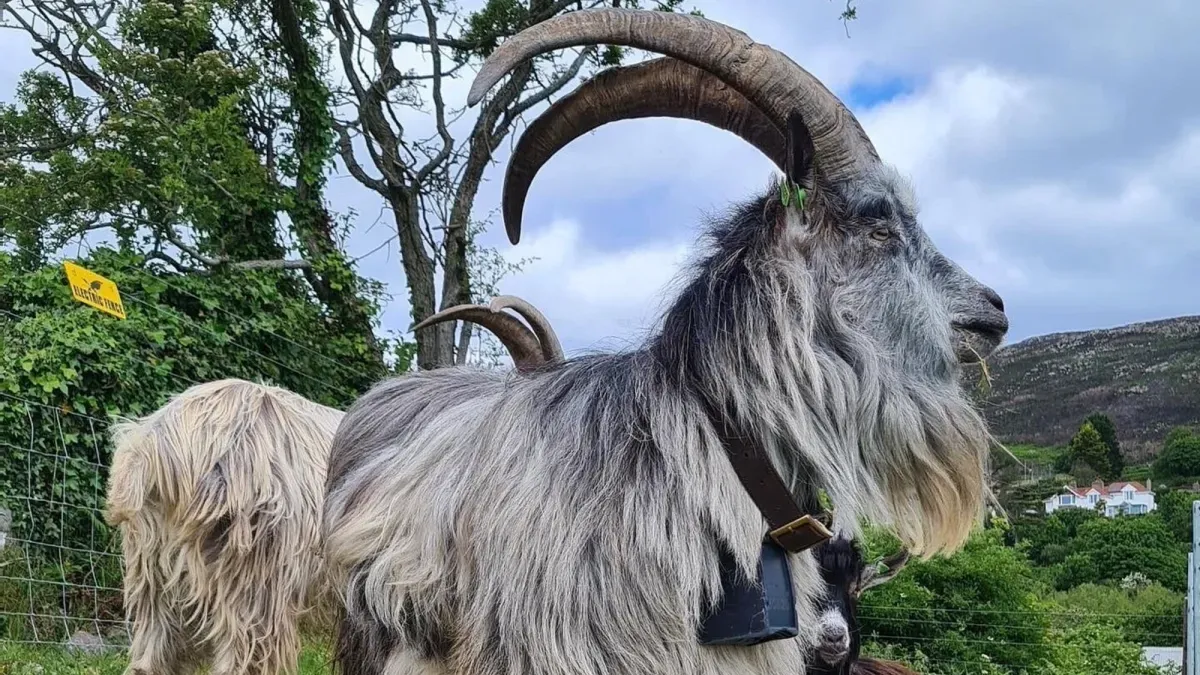
A goat crowned as king every August in a remote Irish village isn't just folklore—it's a living connection to the Bronze Age. Scientists have now confirmed what local communities always suspected: the wild goats roaming Ireland's mountains today are direct descendants of animals herded there 3,000 years ago.
Researchers analyzed bone fragments from a Bronze Age hillfort in County Armagh and a medieval port town in County Antrim, using genetic analysis and protein fingerprinting to trace the lineage. The DNA matched modern old Irish Goats with remarkable precision. "Combining genetics, proteomics, and archaeological science has allowed us a glimpse of our animals hundreds and thousands of years ago," said Kevin Daly, a palaeogenomicist at University College Dublin who led the study.
The old Irish Goat—known in Irish as an Gabhar Fiáin, or the wild goat—is now Ireland's only native goat breed. Goats arrived in Ireland during Neolithic times and became so valuable that herds were kept specifically to supply a trade in skins through ports like Carrickfergus. By 1891, the census recorded 282,000 of them across the country. But the 20th century was brutal: unregulated hunting, inbreeding, and habitat loss reduced that number to just 9,000 by 1980.
We're a new kind of news feed.
Regular news is designed to drain you. We're a non-profit built to restore you. Every story we publish is scored for impact, progress, and hope.
Start Your News DetoxWhy This Matters Now
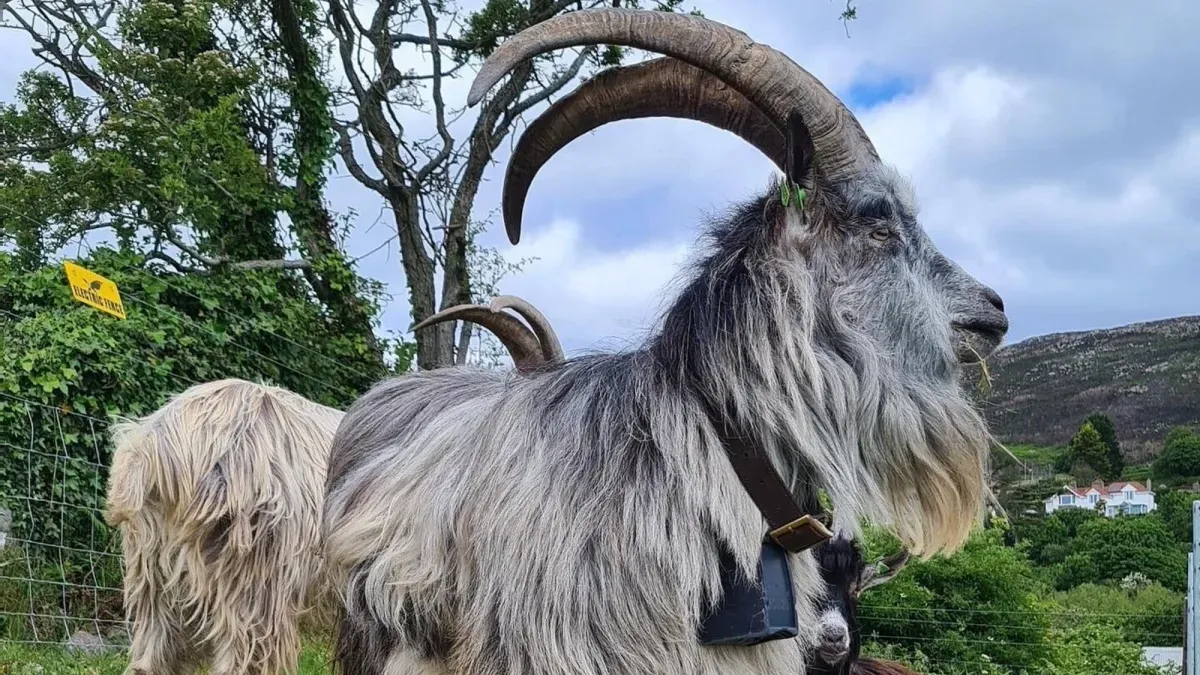
These aren't just hardy animals—they're a genetic archive. The old Irish Goat survives on marginal land where sheep struggle, produces nutrient-dense milk, and has sustained small farmers for centuries. Yet the breed is now critically endangered, its population ravaged by a modern genetic bottleneck that the research shows is entirely recent, not ancient.
The breakthrough in understanding this continuity comes from protein fingerprinting—a technique that identifies species from microscopic traces of collagen in bone—combined with DNA sequencing. Researchers compared Late Bronze Age goats (1100-900 BCE) with medieval remains and modern populations across the world. The prehistoric Irish goats clustered closest to today's old Irish Goat population, an unbroken thread through three millennia.
Interestingly, medieval goats showed more genetic diversity than modern ones, suggesting the population was healthier and more varied before recent decline. This matters because it means the genetic damage is reversible. The breed isn't inherently fragile—it's been squeezed, not weakened.
Sinead Keane from The Old Irish Goat Society called the research "a huge milestone" and "powerful scientific validation" of what conservationists have long known. The study, published in the Journal of Archaeological Science, gives that conviction a genetic backbone. It transforms the old Irish Goat from a curiosity into what it actually is: a living historical document, a breed that has survived empires, famines, and industrial agriculture.
The genetic continuity also reshapes how archaeologists read Ireland's past. Goat bones are notoriously hard to distinguish from sheep in the archaeological record, so they've been overlooked. This research suggests goats may have been far more important to ancient Irish farming than previously assumed—a quiet presence in the archaeological record that shaped the island's economy for millennia.
As researchers now revisit Ireland's archaeological collections with these new tools, they may discover that the country's early goat history is richer still than currently understood.