In the Sierra Nevada, the black-backed woodpecker appears almost born of flame. This bird swoops into forests shortly after wildfires subside, nests in the hollowed-out trees the burn has left behind, and gorges on the explosion of longhorn and bark beetles that follows. Throughout the charred landscape, a steady whack-whack echoes from their bills drilling into dead wood.
For millions of years, California's birds evolved alongside fire. Many species — including the black-backed woodpecker — actually need occasional burns to survive. The flames open up dense forest canopy, create nesting cavities in dead trees, and trigger an insect boom that feeds hungry birds. "While it's ephemeral, it's a native habitat of California that many species rely on and have evolved with over millions of years," says ornithologist Morgan Tingley at UCLA, whose research focuses on how fire shapes bird populations.
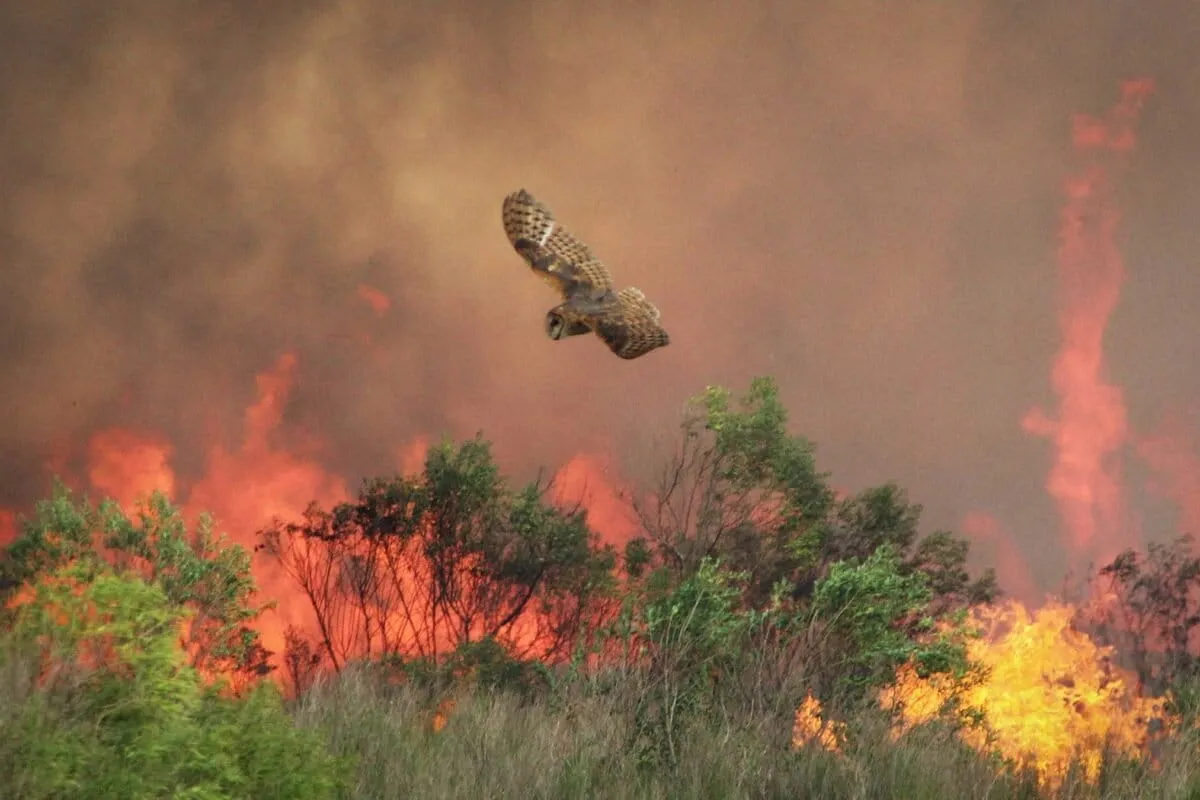
But here's where the story shifts. This ancient relationship was built on moderate or mixed-severity fires — the kind that burned through forests every few decades, leaving a mosaic of burned and unburned patches. California now faces something different: megafires that rage across landscapes with unprecedented intensity and speed. Over the past decade, fires have burned more than 5.3 million hectares (13 million acres) across the state. In 2020 alone, blazes consumed record acreage in a single year.
We're a new kind of news feed.
Regular news is designed to drain you. We're a non-profit built to restore you. Every story we publish is scored for impact, progress, and hope.
Start Your News DetoxThe problem with too much of a good thing
When fires burn hot enough and fast enough, they leave little behind — not just vegetation, but the structural complexity that birds need. A forest scorched by a megafire looks different from one shaped by a moderate burn. The intense heat can sterilize soil, kill seeds in the canopy, and leave behind a landscape so damaged that recovery takes decades rather than years. For birds that depend on the quick regeneration of insects and vegetation, this matters enormously.
Species like the black-backed woodpecker can still find opportunity in these megafires — at least initially. But other birds face a narrowing window. Warblers, thrushes, and flycatchers that need the early-stage vegetation regrowth that follows a burn are struggling as fires become more frequent and severe. When the next megafire arrives before the forest has recovered, these species have nowhere to go.
Tingley's research suggests that the frequency and intensity of California's fires are now outpacing what birds evolved to handle. The question isn't whether fire belongs in these ecosystems — it does. The question is whether the current fire regime gives birds time to adapt between burns.
Managing this balance will require rethinking how California approaches fire. Some researchers advocate for more strategic prescribed burns during cooler months, which could reduce fuel loads and create the mosaic of burned and unburned habitat that birds actually need. Others focus on forest restoration in high-risk areas. Neither approach is simple or quick, but both recognize that the future of California's birds depends less on preventing fire than on restoring the rhythm of fire that shaped these forests for millennia.