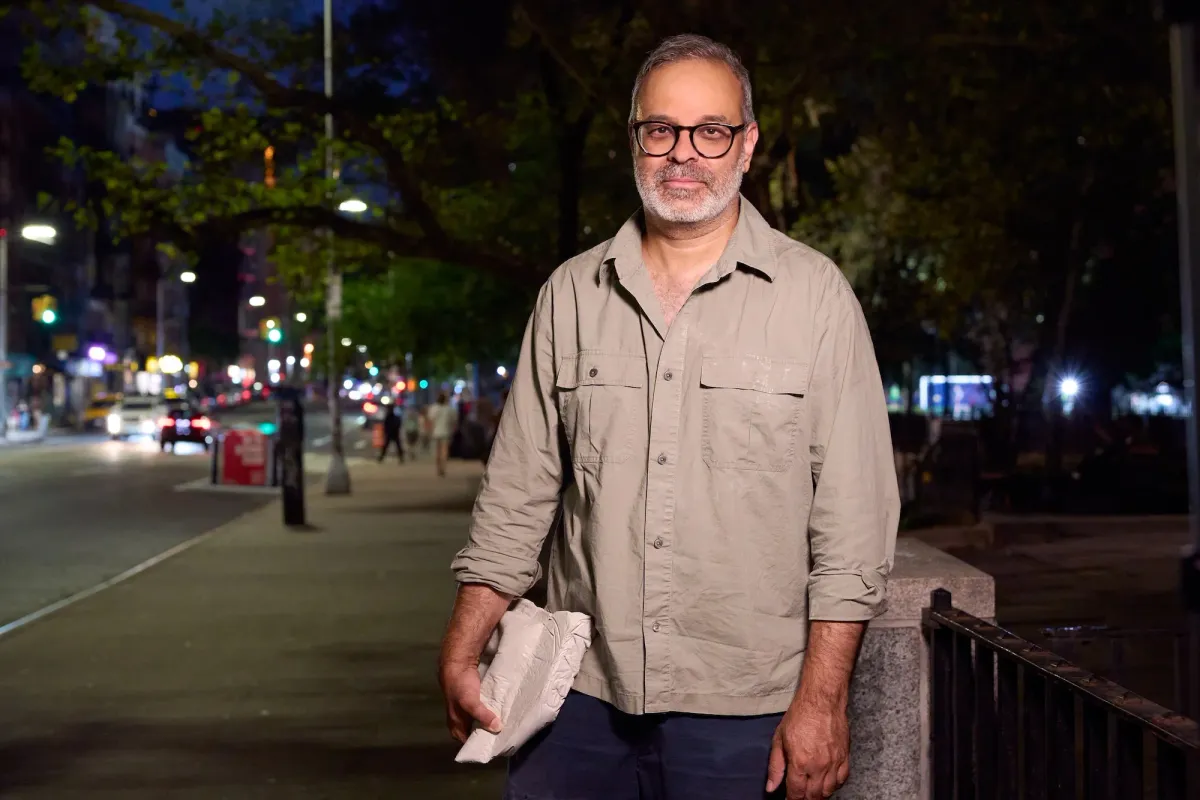
You know New York City's art scene is vibrant, but who knew it was this inclusive? Artist Asad Raza just launched a public art exhibition, not for the usual gallery-hopping crowd, but for the city's most ubiquitous, and often maligned, residents: the brown rats, Rattus norvegicus.
Yes, actual art for rats. Because apparently, even rodents deserve a cultural experience.
A Five-Star Experience for a Four-Legged Critic
Raza, a Berlin-based artist, collaborated with animal behaviorist Michael Parsons (who, yes, studies urban rats) to design these bespoke sculptures. Picture tiny, artfully broken construction materials or cinder-block fragments, strategically placed in rat hotspots like construction sites and public housing yards. They even have little indentations for rainwater collection and multiple entry points, because a rat's gotta have options.
We're a new kind of news feed.
Regular news is designed to drain you. We're a non-profit built to restore you. Every story we publish is scored for impact, progress, and hope.
Start Your News DetoxParsons clued Raza in on a crucial detail: rats navigate by smell and touch more than sight. So, the sculptures feature scent-absorbing burlap and textured surfaces. Raza and his team, artists Devyn Galindo, Kunning Huang, and Jared Packard, even set up cameras to capture the nocturnal art critics in action. The verdict? Rats were genuinely curious, which, if you think about it, is both impressive and slightly terrifying.
These tiny masterpieces and their surveillance footage will be on display for humans in an exhibition called "Thigmotaxis (the rat show)," opening September 19 at the new venue, Times. Thigmotaxis, for the uninitiated, is that charming rat habit of hugging walls to avoid predators. The show will even include a wall sculpture for human touching, so you too can experience the thrill of being a rat on the run.
Art That Lives (and Breathes, and Sometimes Wades)
Raza is no stranger to incorporating living elements into his work. He's previously exhibited actual trees in museums, rerouted river water through art venues, and even transformed trash into fertile soil. For the Medina Triennial, he directed Erie Canal water through an exhibition space. In Frankfurt, he diverted the Main River through a museum, inviting visitors to wade in the water and even filter it to make it drinkable. Because nothing says "art experience" like a refreshing sip of Main River.
Poet Claudia Rankine once praised Raza's work for "venerating change and growth," which is a rather elegant way of saying he makes art that doesn't just sit there. His 2017 Whitney Biennial piece, Root sequence. Mother tongue, featured actual trees, cared for by attendants who also chatted with visitors and performed. It’s all very alive.
From Pest to Pal: A Rat's Rebrand?
Rats, despite being biomedical research darlings, often get a bad rap. Michael Parsons rather brilliantly compares a lab rat to a street rat like a chihuahua to a wolf – we actually know very little about our urban co-denizens. Even Kenny "The Rat Daddy" Bollwerk, who gives tours of NYC focused on norvegicus, consulted on Raza's project. Because if anyone knows rats, it's The Rat Daddy.
Artists have long been fascinated by these creatures. Banksy, for instance, admires them for existing "without permission." Katharina Fritsch's Rat-King sculpture references the nightmare scenario of rats with intertwined tails. Bruce Nauman's 1988 video, Learned Helplessness in Rats, which Raza found "sadistic," shows a rat navigating a maze to the tune of loud drumming. Raza's own project, thankfully, is less about torment and more about empathy, leading him to see rats as "co-denizens" rather than just, well, rats.
Meanwhile, New York City has been working hard to reduce its rat population, even appointing a "rat czar" (who has since moved on to other, presumably less rat-infested, endeavors). Thanks to new rules requiring sealed trash containers, rat sightings have actually fallen for 18 months straight. Which means Raza's art might be for a slightly smaller, albeit still discerning, audience.
Inspired by Immanuel Kant's idea of art having "purposiveness without purpose," Raza aimed to create something that feels intended for rats but serves no obvious function. He wants the sculptures to be "slightly enigmatic for the rats too." And in doing so, he's fallen "in love with New York again," even the parts that smell of trash and rat urine. Because sometimes, true love means embracing the city, whiskers and all.
"Thigmotaxis (the rat show)" runs from September 19–December 12, 2026, at Times, 151 Lafayette St. 4th floor, New York.