Every spring, ruby-throated hummingbirds crash into windows and tangle with house cats, landing at wildlife hospitals across the eastern United States with injuries that are nearly impossible to diagnose. At just a few inches long and weighing about as much as a penny, these birds defy conventional veterinary tools. Standard X-rays can't see their fractures. Dental X-rays help a little more, but not enough. Until now, injured hummingbirds have been treated somewhat in the dark.
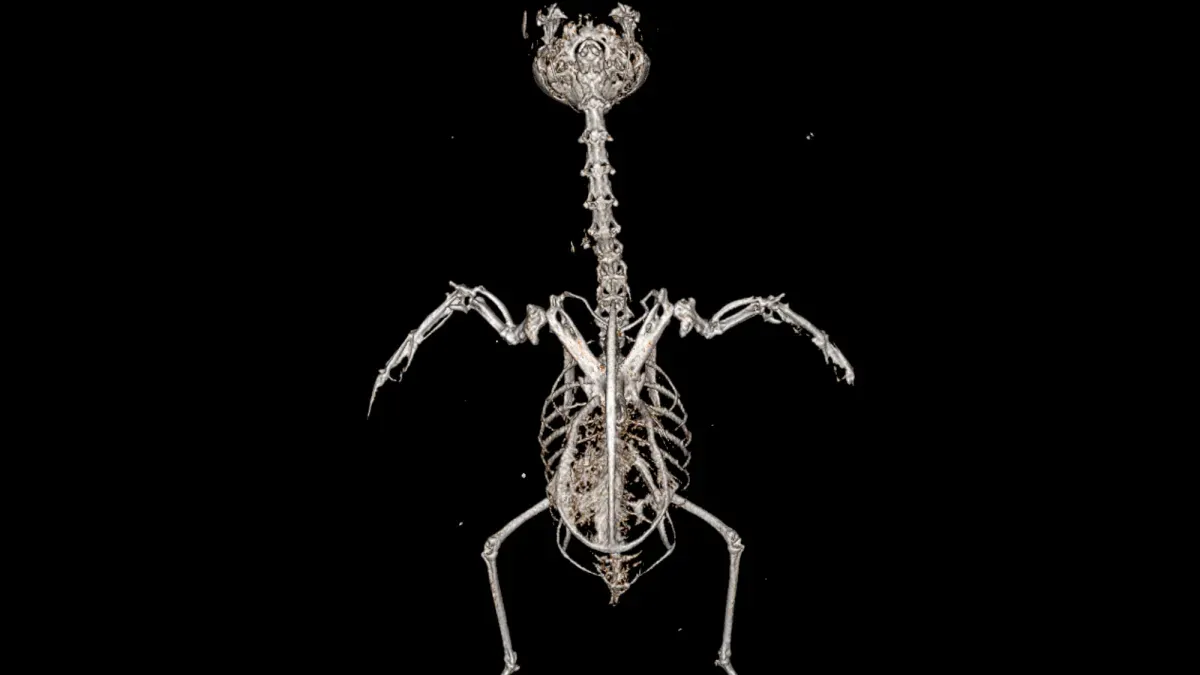
Researchers at Louisiana State University decided to solve this problem by testing four imaging techniques on 16 deceased hummingbirds, then having six veterinarians review the results. The winner: micro-CT scanning, a technology that fires X-rays from hundreds of angles and stitches the images into a detailed 3D model. When vets could see the birds' skeletons in three dimensions, they caught fractures that standard methods missed entirely.
"These animals play such an important role in our ecosystems," says Mark Mitchell, the LSU veterinarian who led the study. "It's important for us to protect them." The research, published in the journal Animals, is already changing how some wildlife hospitals approach hummingbird care.
We're a new kind of news feed.
Regular news is designed to drain you. We're a non-profit built to restore you. Every story we publish is scored for impact, progress, and hope.
Start Your News DetoxThe technique isn't perfect—vets still missed some of the tiniest fractures even with micro-CT. But the findings suggest that if a rehabilitator has access to a micro-CT scanner, it should be the first tool they reach for. And if initial scans look clear, a second look with the advanced imaging might reveal what was hidden the first time.
What to do if you find one
If you encounter an injured hummingbird this spring, resist the urge to help directly. Give the bird a few minutes in a quiet, dark space—many recover from window collisions with just time and rest. If it still can't fly after 10 minutes, contact your state wildlife agency or a licensed rehabilitator. Gently place the bird in a ventilated box, keep it warm and dark, and let the professionals take it from there. Hummingbirds are protected by law, and improper handling can cause more damage than the original injury.
As wildlife hospitals gain access to better imaging tools, more of these jewel-toned birds will have a genuine shot at recovery and release back into the wild.