Grace Barata was underground when the rain came. It was January 28, mid-afternoon in Rubaya, eastern Democratic Republic of the Congo, and heavy downpour triggered a landslide that collapsed the coltan mine where he and hundreds of others were working. In seconds, darkness. In the shaft with him, miners faced two threats: the weight of fallen rock and the slow suffocation of air running out.
"It started raining around 3pm, and we took shelter in the mine," Barata recalls. "I heard rocks rubbing together and thought it was pebbles being washed away by water, and then I found myself in darkness."
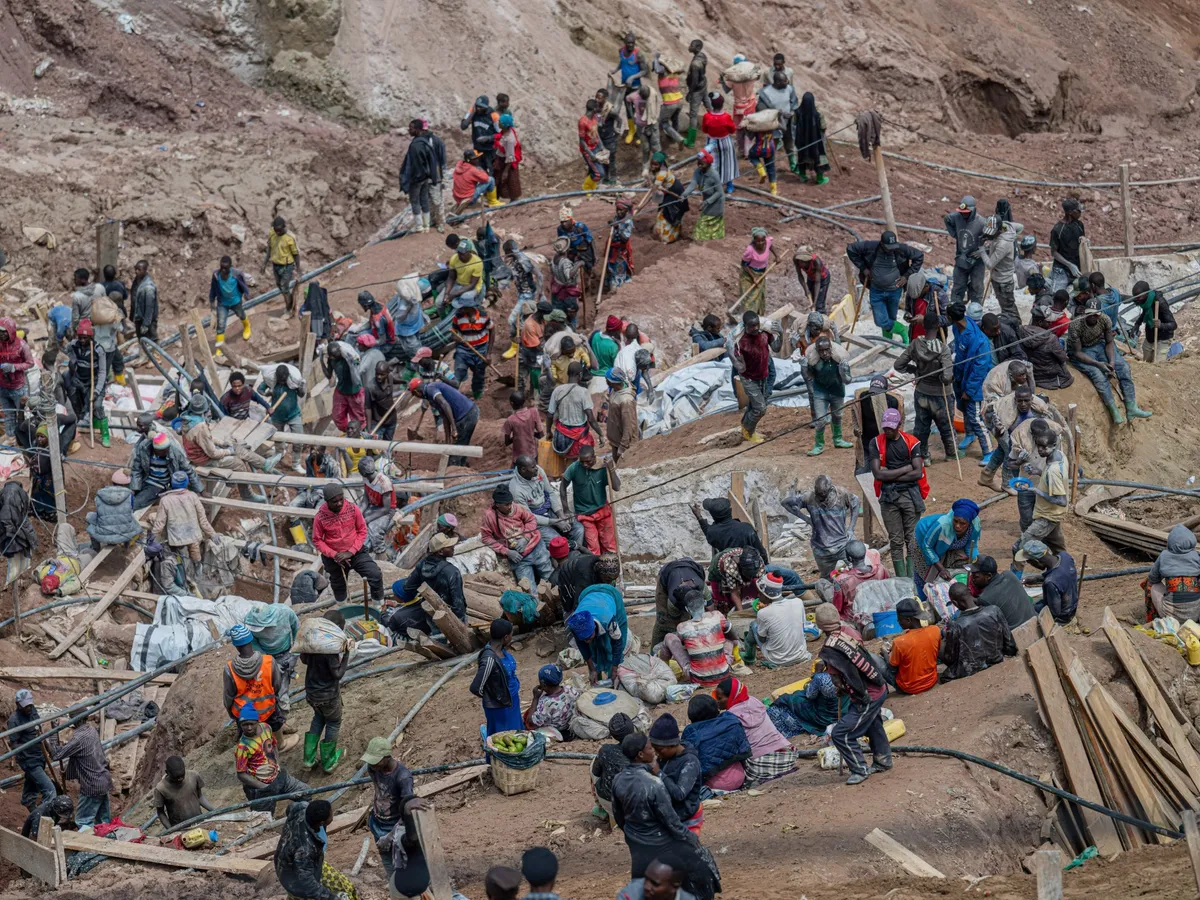
 A coltan mining quarry in Rubaya, DRC [File: Moses Sawasawa/AP]
Buried but not forgotten
At least 200 people died in that collapse. Barata was one of the rare ones pulled out alive. After 21 hours underground, rescuers found him and two friends. What he describes is less a mine shaft than a tomb: bodies around him, the living waiting for oxygen to run out, the darkness absolute.
We're a new kind of news feed.
Regular news is designed to drain you. We're a non-profit built to restore you. Every story we publish is scored for impact, progress, and hope.
Start Your News Detox"There were many of us in the same shaft, which I would describe as a tomb," he says. "We saw the light from afar and knew we would be rescued, but the others died before our eyes, without saying a word."
In those final hours before rescue, the miners made a choice about how to face what might be their last moments. "Before the oxygen ran out in the shaft, we told each other to repent so that we would not miss what we had come for or the kingdom of heaven. Bosco didn't make it, but I came back from the dead."
The collapse has triggered the predictable blame cycle: the Congolese government accuses rebel authorities controlling the region of negligence and illegal mining practices; rebel authorities point back. What gets lost in that argument is the structural reality — Rubaya sits atop immense mineral wealth, yet the people who extract it live in poverty and work in conditions that kill them.
Barata knows this. He knows the danger. And he's going back. Because in a region where coltan mining is one of the only ways to survive, choice becomes a theoretical concept. "I have no choice but to return to the mines, even after my harrowing experience," he says.
That's the harder story than the collapse itself — not the disaster, but the desperation that makes people return to the place that nearly killed them.