High in California's coast redwoods, entire ecosystems have gone missing. The Van Eck Forest in the northwest still holds the world's tallest trees—some over 300 feet, some older than 2,000 years—but something crucial has vanished from their canopies.
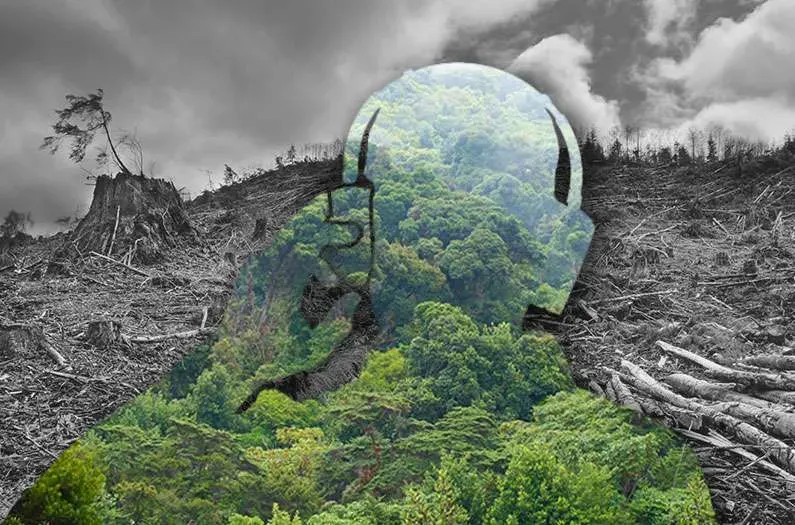
Logging has reduced old-growth redwood forests to just 5% of their original extent. With that loss went the fern mats: thick, tangled masses of leather-leaf ferns that once blanketed the highest branches. These weren't decorative. The ferns stored water, regulated temperature, and created entire neighborhoods for salamanders, insects, birds, and rare lichens. When the ferns disappeared, so did the animals that depended on them.
Starting in 2021, the Pacific Forest Trust and California State Polytechnic University, Humboldt began experimenting with something straightforward but ambitious: transplanting fallen fern mats back into younger redwood trees. Using ropes and harnesses, researchers carefully secure the mats into the canopy, where they can take root and begin regenerating the lost layer.
We're a new kind of news feed.
Regular news is designed to drain you. We're a non-profit built to restore you. Every story we publish is scored for impact, progress, and hope.
Start Your News Detox"It's like having a jigsaw puzzle and some of the pieces are missing," said Laurie Wayburn, co-founder of the Pacific Forest Trust. "We're trying to put back the pieces."
Rebuilding from the canopy down
Over decades and centuries, these replanted mats will collect decomposing plant matter and germinate seeds, gradually reconstructing the arboreal gardens that once thrived overhead. The ferns regulate humidity, light, and temperature—essentially the breathing mechanism of the forest. Without them, the canopy is incomplete, and the ecosystem below feels the loss.
This isn't just about ferns. When you restore the canopy layer, you're inviting back an entire web of species. The rare lichens that grow nowhere else. The salamanders that never touch the ground. The insects and birds that navigate a three-dimensional world most of us never see.
The work in Van Eck Forest is still in its early stages, but the Pacific Forest Trust is already exploring how to scale this approach across California's remaining redwood forests. The timeline is long—these are trees that have stood for millennia—but the principle is clear: what logging removed can, with patience and precision, be carefully put back.
The next phase will test whether this canopy restoration can spread beyond a single forest, whether the small victories high in the branches of one grove can ripple outward across the redwood landscape.