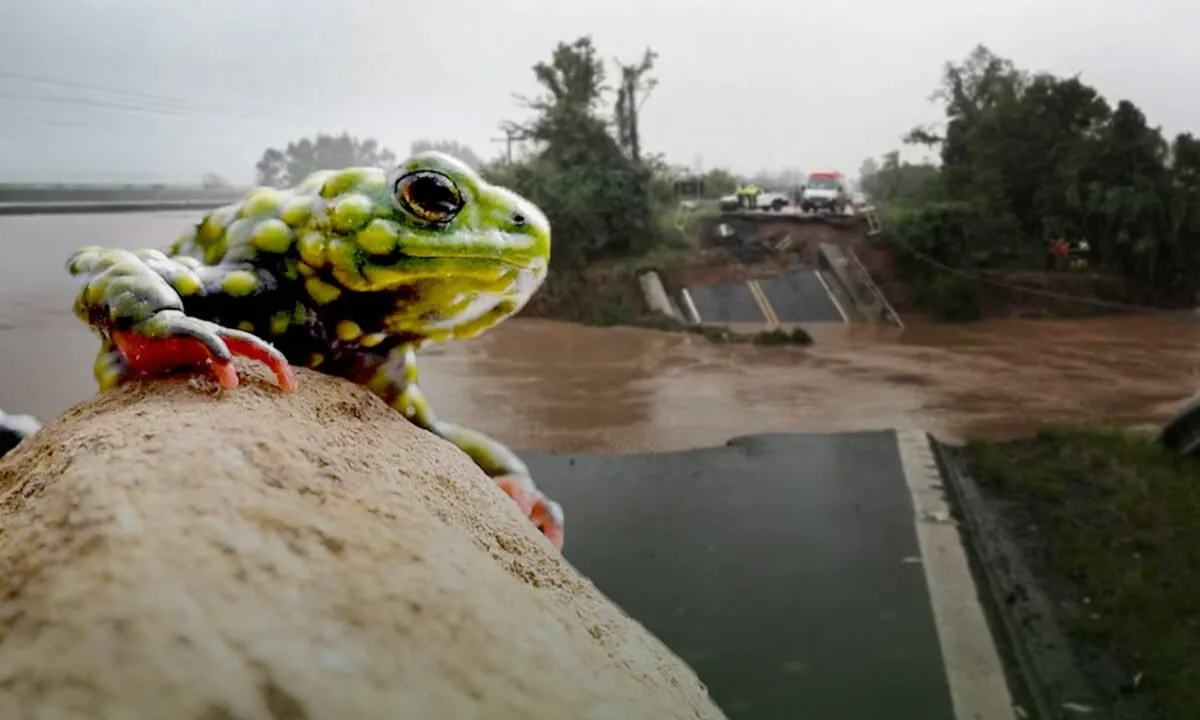
The admirable red-belly toad is a tiny amphibian found only in a small forest patch in southern Brazil. Despite its size, this toad made history in 2014 by stopping a hydroelectric dam. The dam would have destroyed its only home.
With just over 1,000 individuals left, the species is critically endangered. It faces threats from climate change, expanding agriculture, and wildlife trafficking.
Surviving the Floods
In May 2024, catastrophic floods hit southern Brazil. These floods submerged entire landscapes, including the toad's fragile habitat. Michelle Abadie, a researcher who has studied the species for over 15 years, went to the field to check on the toads.
We're a new kind of news feed.
Regular news is designed to drain you. We're a non-profit built to restore you. Every story we publish is scored for impact, progress, and hope.
Start Your News DetoxAbadie joined a local partner, Grazi, who has become a guardian of the species. The river had risen about 20 meters. The team found 111 toads over two days of fieldwork. This showed that the vegetation is recovering, and the toads are still present.
A Historic Win Against a Dam
This wasn't the first challenge the toad faced. In 2010, a plan emerged to build a hydroelectric power plant near the toad's habitat. The dam would have been less than 300 meters from their home. Such a change would have been devastating. Hydropower plants alter natural river flow and block aquatic life movement.
Using years of field data, Abadie and her team showed the high risk to the red-belly toad. In 2013, the species was listed as critically endangered. The next year, the dam's construction was stopped. This was the first time an amphibian had halted such a large project in Brazil, and possibly the world.
The toad lives by riverbanks in a steep valley. It senses when heavy rains cause the river to rise. This helps it avoid threats that could wipe out the population.
Ongoing Threats and Future Hopes
The toad's bright colors, which make it "admirable," also make it a target for poachers. People often don't understand the importance of these species in nature and want them as pets. Globally, nearly 450 amphibian species have appeared in the pet trade. In the U.S. alone, over 3.6 million amphibians were imported between 2013 and 2018.
Scientists, policymakers, and local communities are now working to recognize the species as part of the state's official genetic heritage. This could lead to stronger protection for the toad. It's a hopeful step and a reminder that even tiny species are important.