In a country where everyday life is a masterclass in resilience, football in Haiti isn't just a game. It's the great equalizer, the unofficial national therapy, and, apparently, a consistent source of triumphant headlines. Rich, poor, old, young—everyone mixes on the field, cheering for the same teams, because talent, not background, gets you a spot. Which, if you think about it, is how most things should work.
For six years, Haiti has been wrestling with a security crisis that's displaced over a million people and claimed thousands of lives. Every facet of life has taken a hit, and football, a national obsession, has been no exception. Modern sports facilities are a luxury, so games happen on school grounds, in streets, on dirt patches, and in parks. For young people in tough neighborhoods, it's a golden ticket to local clubs, and sometimes, the national stage.
Kicking Through the Chaos
But here's the kicker: gang violence has systematically dismantled much of the country's infrastructure, including its sports venues. The FIFA Goal Center, where stars like Melchie Dumornay honed their craft, was attacked, looted, and torched by the notorious 400 Mawozo gang. The Sylvio Cator Stadium, home to the national team, and the Haitian Olympic Center have also faced major gang assaults, now sitting in areas effectively controlled by these groups.
We're a new kind of news feed.
Regular news is designed to drain you. We're a non-profit built to restore you. Every story we publish is scored for impact, progress, and hope.
Start Your News DetoxBecause major roads are no-go zones, the national championship has ground to a halt. The football league had to invent a special competition just to keep players from turning into couch potatoes. And yet, somehow, the game endures.
Just last November, the Grenadiers qualified for the 2026 World Cup. Not a single qualifying match was played on Haitian soil, for obvious reasons, but the sheer fact of their participation still brought a much-needed jolt of joy to the nation. And then, the kids showed up.
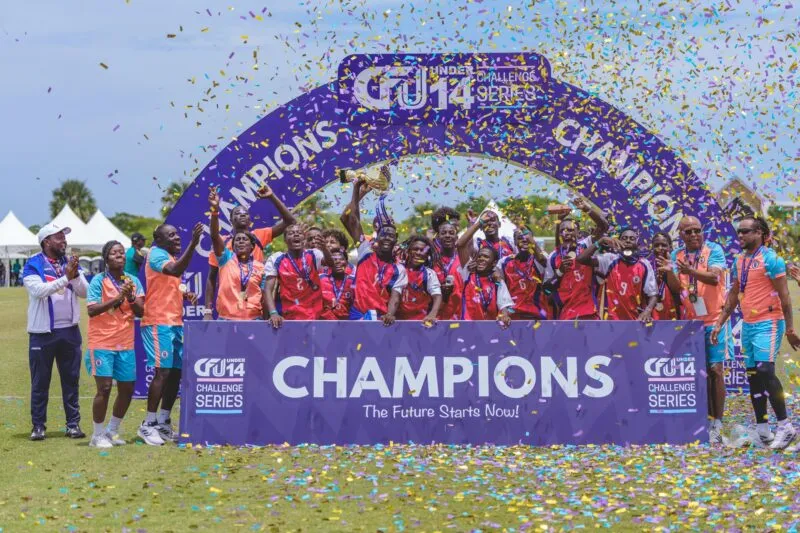
This year, Haiti's U14 team didn't just win the Caribbean Football Union (CFU) U14 Challenge Series; they dominated it. They dispatched Trinidad and Tobago 4-1, French Guiana 5-2, and the Dominican Republic 6-1 in the semis. Then, for the final, they delivered a decisive 4-0 knockout punch to Jamaica, securing the Division 1 championship. This marks Haiti's third CFU U14 title, all won during periods of significant national turmoil. Let that sink in.
To prep, the Haitian Football Federation (FHF) scoured the island for talent, then put the chosen few through a two-month training camp near the Dominican Republic border. When the young champions returned home on August 24th, they were greeted with a hero's welcome at Toussaint Louverture International Airport, orchestrated by the Ministry of Youth, Sports, and Civic Action. Captain Cedric Clairemond, probably still high on adrenaline, thanked the fans and expressed immense pride in bringing home the trophy. Sports Minister Phytagore Dumas, for his part, promised to support these young athletes in their education and personal growth. Because apparently, that's where we are now: the sports ministry is also your career counselor.
A Glimmer, Briefly
The U17 national team is now prepping for the FIFA U-17 World Cup in Qatar, and the U20 team recently qualified for the 2027 Pan American Games in Peru. The good news keeps coming, but it's often a fleeting moment of relief. Less than 24 hours after the U14 victory, armed gangs killed 47 people and kidnapped over 30 in Kenscoff, reminding everyone of the brutal reality.
Yet, even amidst the relentless challenges, positive things continue to bloom in Haiti—in culture, art, farming, entrepreneurship, and, most visibly, in sports, particularly in areas not under gang control. Football, in its purest form, teaches an undeniable lesson: when the going gets tough, you keep moving forward. With or without a stadium.