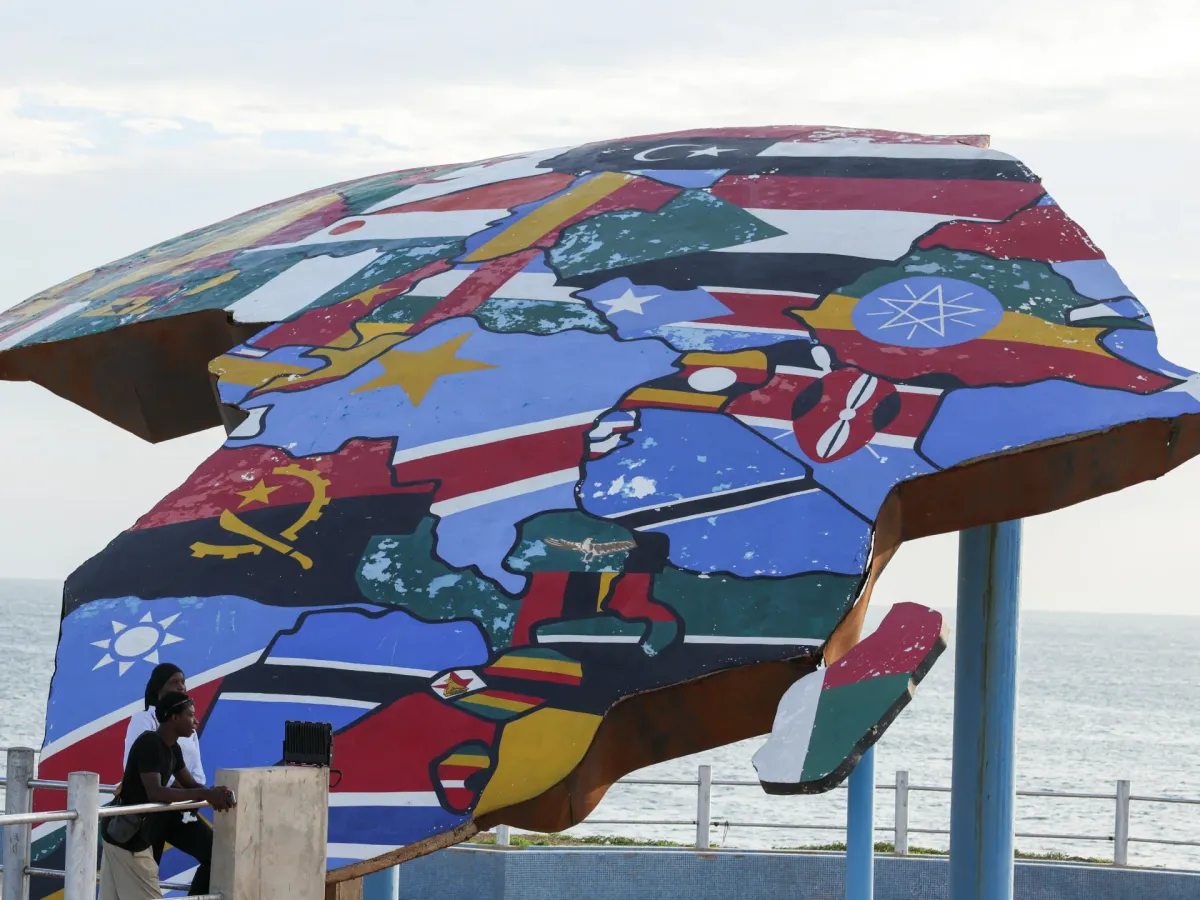
For centuries, your world map has been lying to you. Specifically, it's been making Africa look like a significantly smaller continent than it actually is, while inflating the visual ego of places like Greenland (which, for the record, is roughly the size of Algeria, not Africa).
Well, the United Nations has finally had enough. They just voted to adopt a new world map, one that actually reflects the true sizes of countries. Because apparently, a fair world begins with a fair map.
The Great Map Correction
The resolution, aptly named "Correct the Map," sailed through the UN General Assembly with 164 votes for, one against (we'll get to that), and six abstentions. The African Union, led by Togo, spearheaded the effort to dethrone the ubiquitous Mercator projection.
We're a new kind of news feed.
Regular news is designed to drain you. We're a non-profit built to restore you. Every story we publish is scored for impact, progress, and hope.
Start Your News DetoxGerardus Mercator, a 16th-century Flemish cartographer, created his famous map, which, while excellent for nautical navigation (it keeps lines of constant bearing straight), has a rather unfortunate side effect: it stretches landmasses closer to the poles. This is why Greenland appears to be roughly the size of Africa, even though Africa is a whopping 14 times larger. Let that sink in.
Critics have long argued that the Mercator map's continued use subtly reinforces ideas of European dominance by making Western nations appear larger and more central. French Foreign Minister Jean-Noel Barrot put it plainly: "The United States, Russia and China take on a disproportionate visual prominence compared to Africa, Latin America or southeast Asia." He added that "distortions eventually take root in perceptions," and it's time to fix them.
So, the UN is now officially endorsing the Equal Earth projection, which, as the name suggests, shows continents in their actual, proportionate sizes. This isn't legally binding, mind you, and Mercator is still perfectly fine for steering ships and planes. But it's a powerful symbolic shift.
Now, about that lone dissenting vote: the United States called the resolution an "ideological agenda" and a distraction from "genuine problems." Which, if you think about it, is a rather interesting take on map accuracy.
Moky Makura, executive director of Africa No Filter, celebrated the vote, declaring, "now the real work begins." Her organization wants to see these accurate maps everywhere: schools, textbooks, newsrooms, businesses, and digital platforms. She makes a salient point: "If we got something as basic as Africa’s size wrong for this long, what else about Africa have we simply accepted without questioning?"
France, a co-sponsor, has already announced it will ditch the Mercator map in its foreign ministry. Togo's Foreign Minister Robert Dussey plans to push other governments, schools, and tech giants to follow suit, connecting the map campaign to broader efforts to address colonial legacies. Because the world, and Africa, are changing. And it's high time our maps caught up.