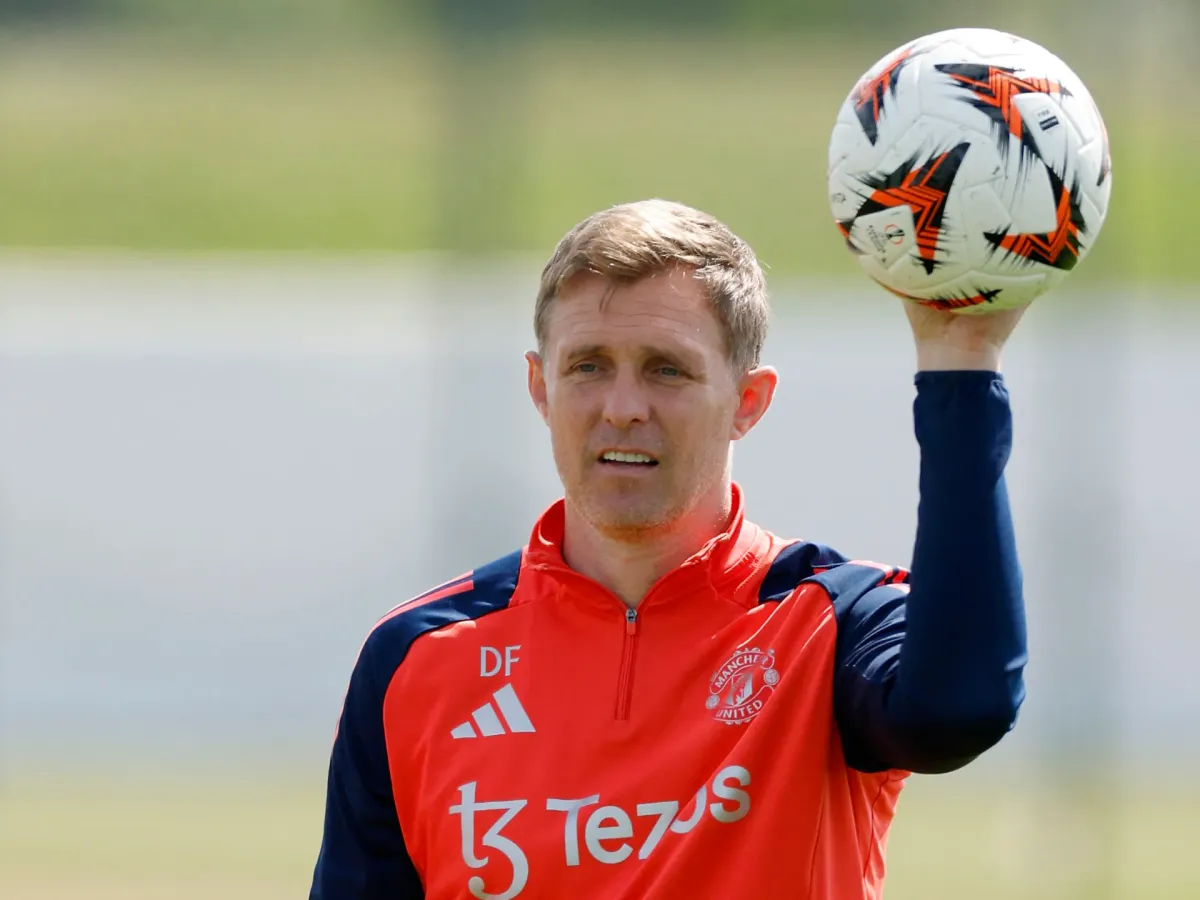
Darren Fletcher never imagined he'd be standing in a Manchester United press room as manager. Yet here he is — thrust into one of football's most scrutinized jobs after Ruben Amorim's chaotic 14-month tenure ended Monday.
The interim boss, who spent 342 appearances as a player at Old Trafford and has worked across various roles since 2020, including technical director, faced the media for the first time ahead of this weekend's match at Burnley. His tone was notably grounded. "It's surreal," he said. "It's an amazing honour to be able to lead a Manchester United team. I don't even think it was in my wildest dreams."
What's striking about Fletcher's appointment isn't the sentiment — it's the steadiness. After months of turbulence, there's something reassuring about a manager who knows the club's DNA, who won five Premier League titles under Alex Ferguson, who can speak to what United actually is rather than what it might become.
We're a new kind of news feed.
Regular news is designed to drain you. We're a non-profit built to restore you. Every story we publish is scored for impact, progress, and hope.
Start Your News DetoxThe Immediate Reality
The job is undeniably difficult. United sit sixth in the Premier League, three points behind fourth-placed Liverpool, with injuries ravaging the squad and international commitments stretching the available players thin. Fletcher will be without captain Bruno Fernandes and Mason Mount for at least the Burnley fixture, though he hopes to welcome them back soon.
When asked if he wanted to earn the permanent role, Fletcher deflected with refreshing honesty: "Honestly, it's not something I've thought about. I'm focusing on Burnley. I think that discussion is for after the game." No grand promises, no "I'm here to save this club" rhetoric. Just a man doing the next job in front of him.
He was clearer about what he wants the team to represent. "Hopefully, it looks like a Manchester United team that represents a bit of me, in terms of what I know is Manchester United," he said. "I hope it resembles a Manchester United team that fans can be proud of, that I can be proud of, and I'm sure they will because I believe in the players."
That last line matters. Fletcher isn't here to overhaul or criticize or promise a revolution. He's here to restore something basic: belief. The club hasn't won an English league title since 2013, and the standard — as Fletcher put it — is to be on top. That's not delusion. That's just what Manchester United is supposed to be.
What happens at Burnley will tell us whether this moment of calm is the beginning of something steadier, or just a brief pause before the next chapter of uncertainty.