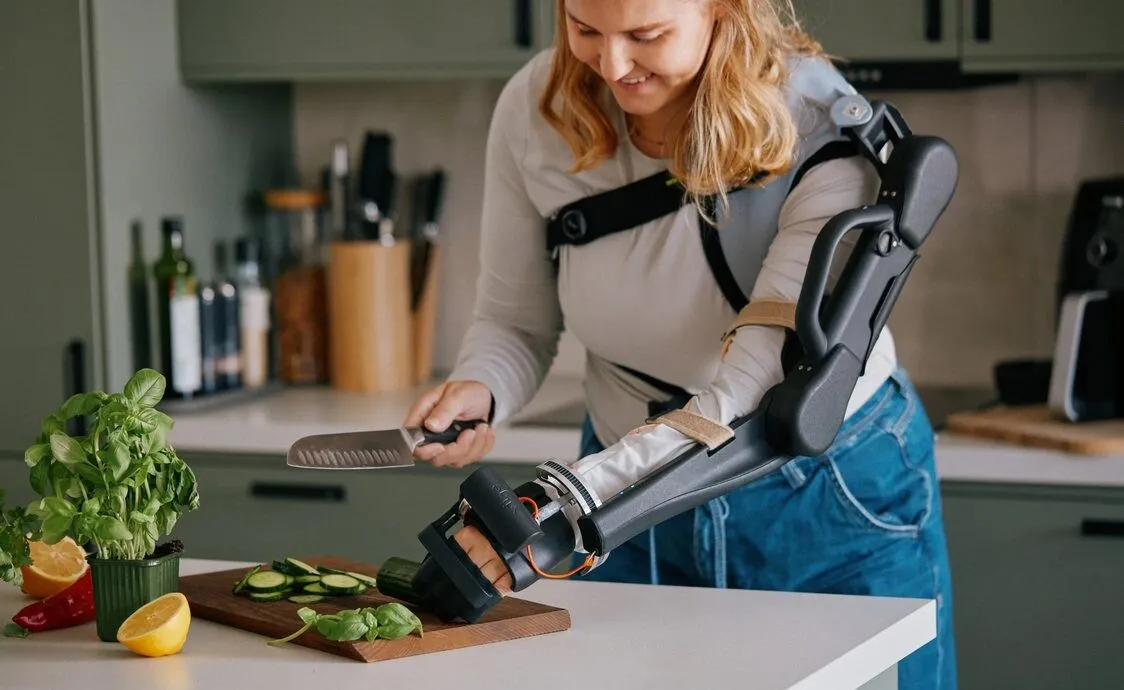
After a stroke in 2017, Johanne Marie Hemnes couldn't move her right arm the way she wanted. She named it Jenny—a way of acknowledging it no longer felt like hers. Then she tried the Vilpower exoskeleton, a shoulder-mounted robotic arm developed by Norwegian company Vilje Bionics. Within minutes, something shifted. "It feels like me again," she told reporters. "It doesn't just feel like another human being's arm."
This isn't science fiction. It's the world's first exoskeleton designed to assist an entire arm—shoulder, elbow, and hand working together—and it's built on a surprisingly elegant idea: amplify what's already there.
How it actually works
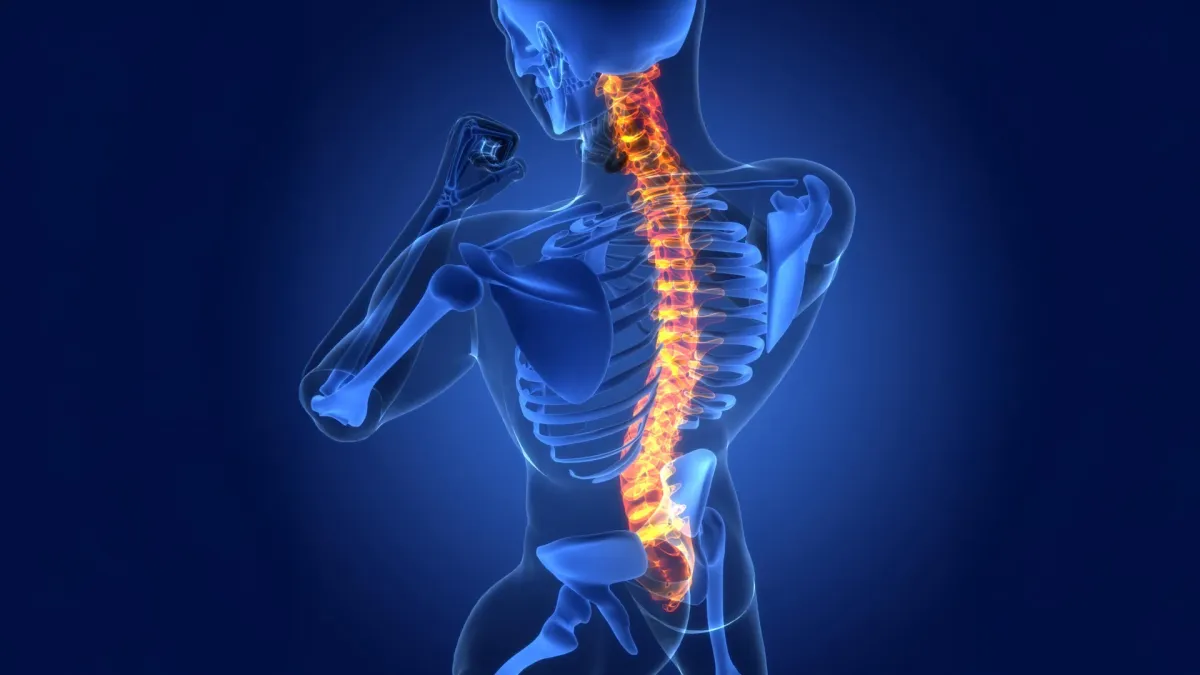
Stroke survivors often retain tiny, invisible muscle movements even when their arm appears paralyzed. The Vilpower detects these micro-movements through sensors and amplifies them, translating minimal effort into full, functional motion. A patient thinking about reaching for a bottle might produce only a millimeter of shoulder movement; the exoskeleton turns that into a complete reach and grasp. The technology works by reading the user's intent—both through thought and the smallest residual muscle signals—and doing the heavy lifting.
We're a new kind of news feed.
Regular news is designed to drain you. We're a non-profit built to restore you. Every story we publish is scored for impact, progress, and hope.
Start Your News DetoxFounder Saeid Hosseini explains it plainly: "You think, you make a small movement, and then it amplifies that movement." The exoskeleton's components are largely 3D-printed, keeping costs lower than traditional robotic systems and making it more accessible for eventual patients.
For Hemnes, the difference is concrete. She can now cut vegetables. Open bottles. Perform the everyday tasks that most of us do without thinking, but that become impossible after a stroke. Independence, it turns out, lives in these small moments.
What comes next
So far, 40 people have tested the Vilpower in trials. Vilje Bionics plans to launch it commercially in Norway within the next 4–6 months, with the current focus on helping people with lasting stroke disabilities rather than using it purely for rehabilitation. The World Stroke Organization estimates that one in four people will suffer a stroke at some point in their life—meaning the potential reach of a technology like this is enormous.
The exoskeleton won't reverse a stroke. It won't restore what was lost. But it does something perhaps more valuable: it gives back the feeling of being yourself again.