Abigail Hendricks was 33 weeks pregnant when the headaches started. She'd already been living with high blood pressure, and now her vision was blurring, protein was appearing in her urine, and her doctors were talking about inducing labor early. She had preeclampsia — a condition where the placenta, starved for oxygen, essentially sends out a distress signal that causes the mother's blood pressure to spike dangerously. It's one of the leading causes of maternal death worldwide, killing at least 42,000 women each year.
"I kept on fighting," Hendricks recalls of those anxious weeks in Cape Town. "I did go to church. I pray in the morning. I pray at night for my baby to be safe and for me to be safe."
Her case illustrates the cruel bind at the heart of preeclampsia treatment. The condition demands early delivery to save the mother's life. But every day the baby stays in the womb matters. Yet conventional blood pressure medications create their own trap — they lower the mother's pressure but can reduce blood flow to the baby, right when the placenta is demanding more oxygen. For a decade, researchers have been hunting for a drug that could do both: calm the mother's blood pressure while healing the damaged blood vessels that preeclampsia creates.
We're a new kind of news feed.
Regular news is designed to drain you. We're a non-profit built to restore you. Every story we publish is scored for impact, progress, and hope.
Start Your News DetoxA Breakthrough at Patient 16
Cathy Cluver, a professor of obstetrics and gynecology at Stellenbosch University, is one of those researchers. She runs a maternity ward at Tygerberg Hospital in Cape Town that handles about 8,000 to 9,000 high-risk deliveries each year. Two years ago, a U.S. pharmaceutical company called DiaMedica Therapeutics reached out. They'd been developing a drug called DM199 for stroke, but thought its mechanism might work for preeclampsia too. Cluver was skeptical, but after reviewing the science, she decided it was worth testing.
They began enrolling women with dangerously high blood pressure who were scheduled for early delivery. The first 15 patients showed no meaningful change. "I thought, 'this drug is not real,'" recalls Jacqui Thake, the research nurse overseeing the trial. "There was really no difference in the blood pressure."
Then came patient 16. "We literally just opened up this IV infusion and then her blood pressure stabilized," says Cluver. "We suddenly saw these sky-high blood pressures coming down and we were like, 'We don't believe this. This is impossible.'"
The effect held. Subsequent patients at the same or slightly higher doses showed the same response. Tests revealed the drug doesn't cross into the placenta or breastmilk, meaning it's unlikely reaching the baby — a crucial safety marker. What it does is stabilize the lining of blood vessels, making them function normally again.
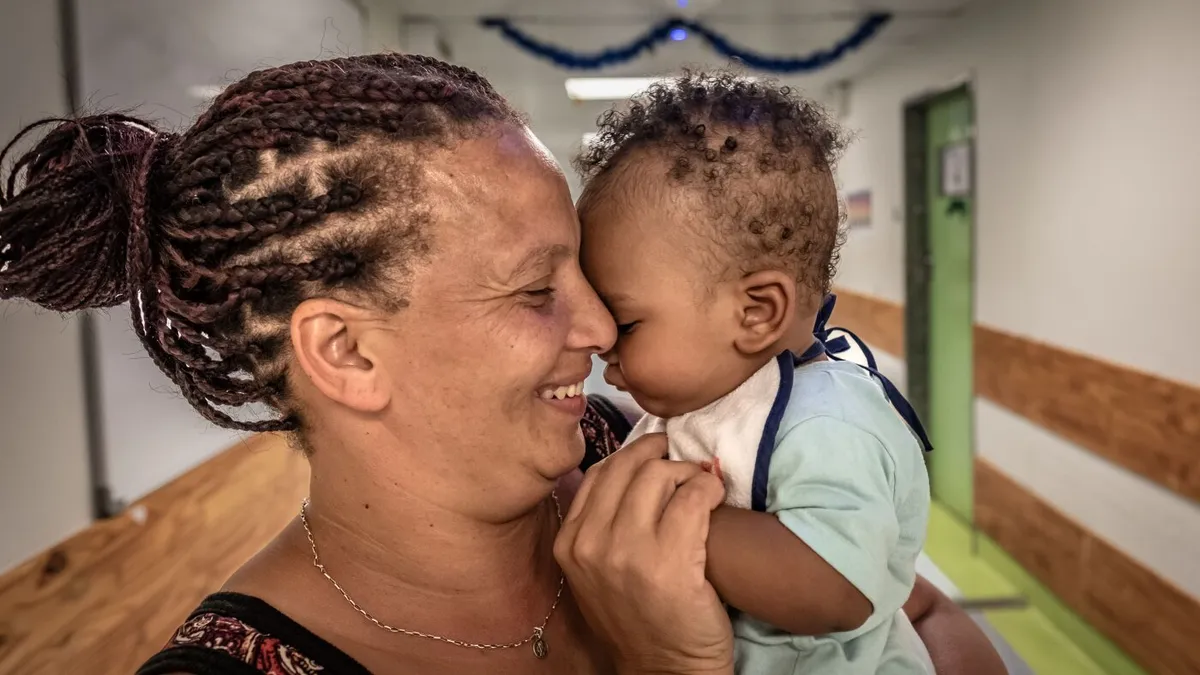
For Hendricks, patient 24 in the trial, the drug worked. When her blood pressure spiked several weeks before her due date, she received DM199 just before doctors induced labor. Her pressure gradually dropped. Her son Hayden was born safely.
"When I held my baby for the first time, I cried," she says. "I had so much joy in my heart to know that he is alright. And I was alright."
Experts caution that larger trials are needed before this becomes standard treatment. But the early signal is clear enough that researchers are already planning the next phase of testing — including work to see whether the drug can help women even earlier in their pregnancies, potentially extending those critical weeks in the womb. If it works, Thake says, it means something simple: healthy mothers, healthy babies, and families that stay whole.