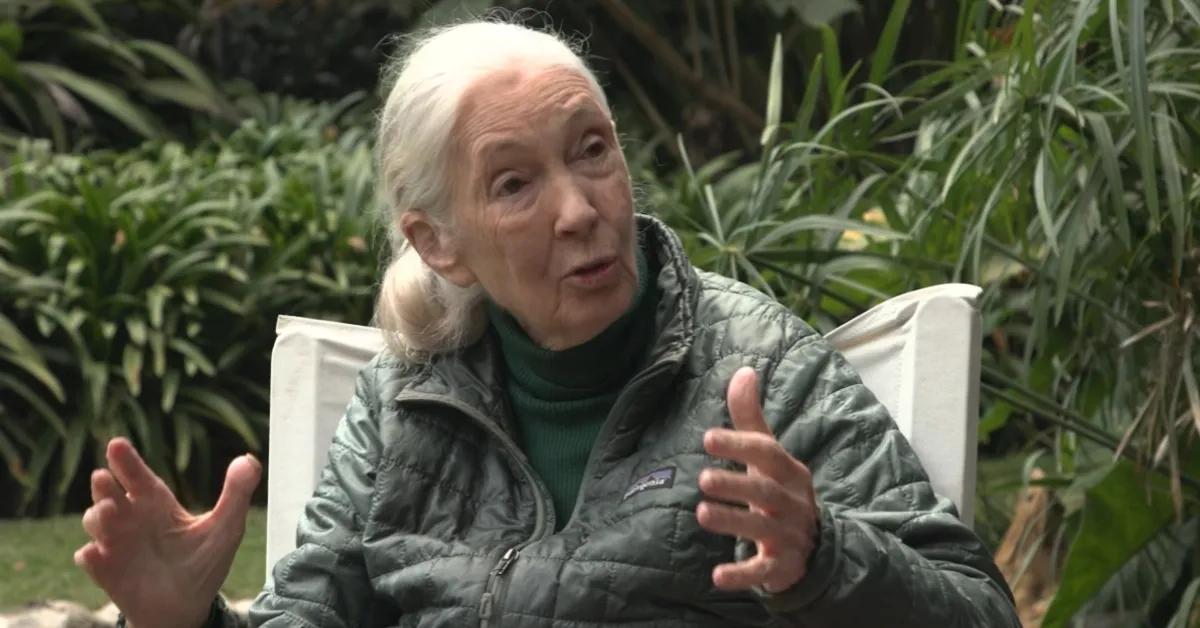
Just months before she passed away at 91, the legendary primatologist and conservationist Dr. Jane Goodall sat down for a rare 20-minute interview. She spent three weeks in Tanzania with Dax Dasilva, founder of the environmental nonprofit Age of Union, and the resulting conversation was aired on Earth Day.
Goodall, ever the pragmatist, believed the biggest changes would come from young people, but was quick to add that older generations aren't off the hook. She'd met countless older folks who'd thrown in the towel on hope, only to find renewed purpose in her message. Her own mother, she recalled, gave her the timeless advice to work hard, seize every chance, and, crucially, never give up. Apparently, it stuck.
Their conversation naturally touched on her groundbreaking work in Tanzania, especially her early studies of primates in Gombe Stream National Park back in the 1960s. But it was her return 20 years later that truly drove home the complexities of conservation.
We're a new kind of news feed.
Regular news is designed to drain you. We're a non-profit built to restore you. Every story we publish is scored for impact, progress, and hope.
Start Your News DetoxWhen the Forest Disappeared
Goodall arrived back in Gombe to find a significant portion of the forest simply gone. The problem wasn't just abstract environmental degradation; it was people trying to survive. Growing populations needed more food, and families needed income from timber or farmland. She understood that if local communities couldn't find ways to live with the environment, then chimps, forests, and humanity itself were all on a fast track to oblivion.
For anyone feeling utterly swamped by the sheer scale of global problems — war, poverty, environmental collapse — Goodall offered a simple, powerful antidote: action. She often heard the lament, "I'm just one person, what can I do?" Her response was a gentle but firm reframe of the classic mantra. Forget "think globally, act locally." Goodall's version? "Act locally first and do something."
Find what bugs you in your own backyard. Litter on the beach? Organize a cleanup. An empty patch of land? Plant some trees. The feeling of doing something will make you feel better, she insisted. And that feeling? It's contagious. It inspires more action, and it encourages others to join in. Because apparently, even saving the world starts with one person picking up one piece of trash.