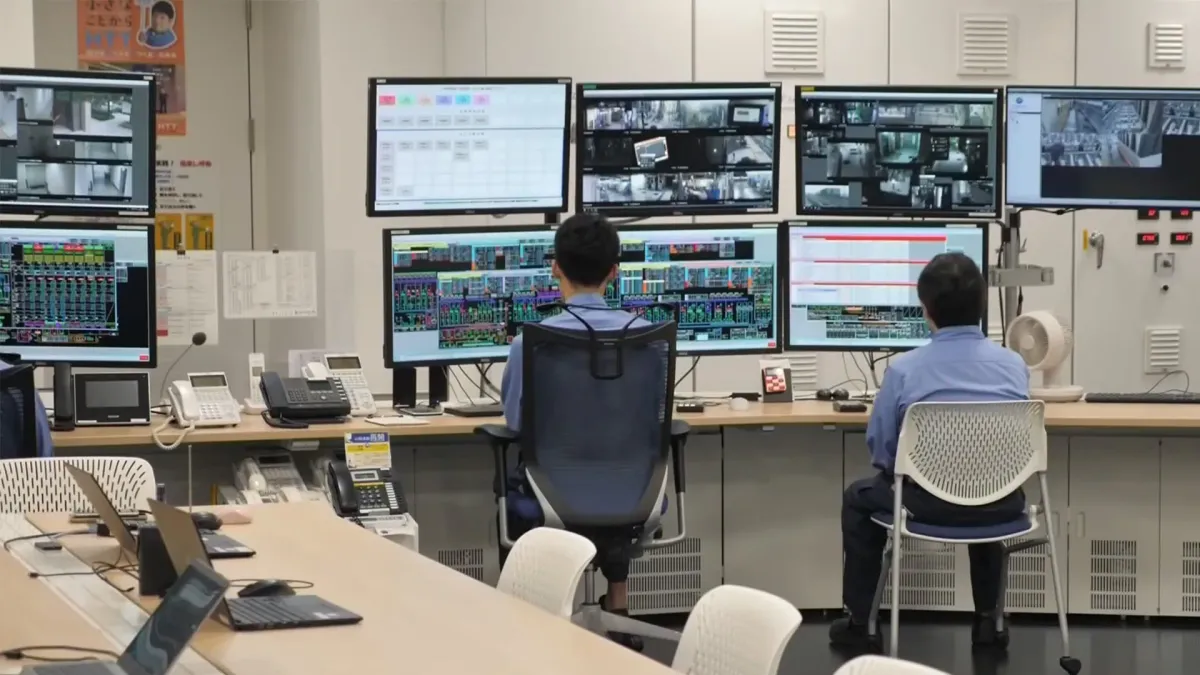
In Tokyo's Otemachi district, where the Marunouchi Heat Supply Company manages a sprawling 30-kilometer network of heating and cooling pipelines, a quiet revolution is underway. They're not just upgrading their system; they're essentially teaching an AI to run the show by 2027. Because apparently, that's where we are now: letting the robots handle the infrastructure while everyone else enjoys retirement.
This isn't just about efficiency. This is Japan, with the world's oldest population, trying to outsmart a demographic crisis that's threatening to upend its entire (third-largest) economy. Their biggest challenge, according to Marunouchi's Hidetaka Yagi? Finding enough skilled workers. As the seasoned engineers clock out for good, all that invaluable institutional knowledge risks walking right out the door with them. Enter PlantPilot, an AI system that's literally learning from the old guard, soaking up operating data and engineer wisdom like a digital sponge.
The Robot Workforce: Not Here to Steal Your Job, Just to Remember It
Unlike some countries that fret about AI taking jobs, Japan sees it as a partner. A very smart, very efficient partner. Worker shortages are hitting everything from manufacturing and logistics to energy and healthcare. So, instead of replacing humans, the goal is to augment them. The Marunouchi project isn't about firing engineers; it's about combining their experience with an AI that can process data faster than a human can say, "Wait, what was that pressure reading again?" The aim: quicker, smarter decisions, and a digital archive of expertise for the next generation.
We're a new kind of news feed.
Regular news is designed to drain you. We're a non-profit built to restore you. Every story we publish is scored for impact, progress, and hope.
Start Your News DetoxBut this isn't just about keeping the pipes warm. It's also Japan's bid to regain its footing in the global tech race. For a country synonymous with innovation, Japan has oddly few "unicorn" startups (private companies valued over $1 billion). The US has around 690. China boasts about 160. Japan? A humble eight. It's a rather stark gap between reputation and reality.
One company trying to bridge that gap is Sakana AI, a Tokyo-based startup that's ballooned from 50 to 150 employees in a year, already rolling out products like Sakana Chat. Chairman Ren Ito isn't interested in just copying Silicon Valley. He believes Japan needs its own unique approach, one that attracts top talent and fosters genuinely novel ideas. He thinks the future isn't just about who builds the biggest, most expensive AI models (looking at you, OpenAI and Google). Instead, Ito suggests Japan's strength lies in its knack for applying technology to real-world problems. The goal isn't to build another OpenAI; it's to embed AI into the very fabric of its existing industries—energy, manufacturing, healthcare—where Japan already has deep expertise. It's about practical solutions, not just theoretical advancements.
The government seems to agree, earmarking a cool 370 trillion yen (about $2.3 trillion) for AI, semiconductors, and advanced research by 2040. Which, if you think about it, is both impressive and slightly terrifying. But money alone won't solve everything. Japan also needs to cultivate the next wave of researchers and innovators, because AI leadership isn't just about the tech; it's about the brains behind it.
Japan's AI gamble is a fascinating blend of necessity and ambition. It's using technology to tackle its aging population head-on, while simultaneously trying to forge its own path in the global innovation landscape. AI might not be a magic wand for all its economic woes, but it's quickly becoming an indispensable tool to keep the country productive, competitive, and, well, running in a rapidly changing world.