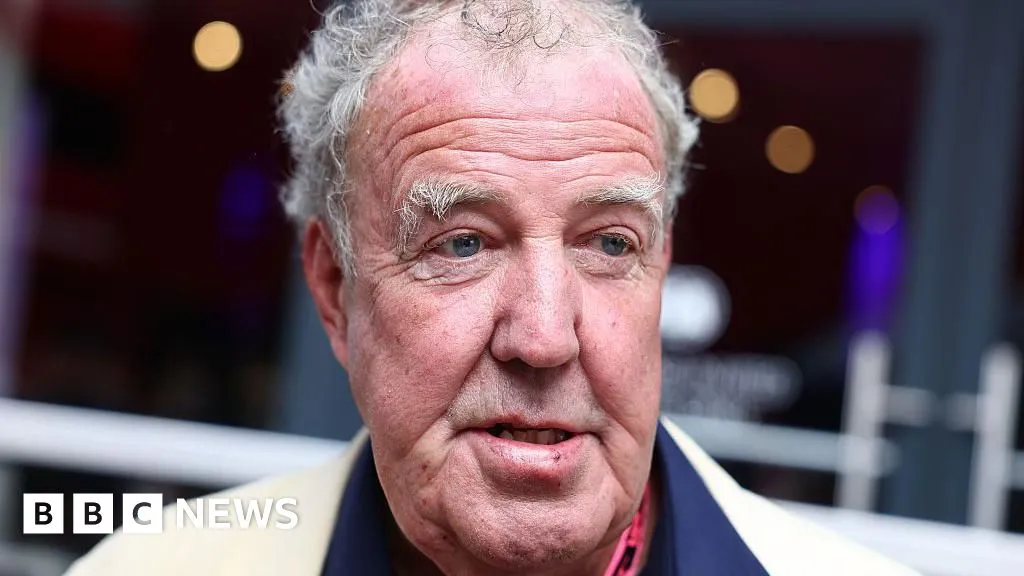
Just days after revealing a battle with an "aggressive" form of prostate cancer, Jeremy Clarkson has announced he's officially in remission. Apparently, even aggressive cancer thinks twice before messing with the man who tamed Top Gear.
Clarkson, never one to shy from the dramatic, initially shared his diagnosis on Clarkson's Farm, then confirmed in an interview that follow-up tests two months ago showed absolutely no signs of the disease. Because, of course, a man of his stature only does things in extremes.
The Luckiest Man on Earth (His Words)
Clarkson described himself as "officially, the world's luckiest man." He noted the cancer was the aggressive kind, the kind that usually invites itself to other organs for an extended stay. Doctors, however, managed to evict it early.
We're a new kind of news feed.
Regular news is designed to drain you. We're a non-profit built to restore you. Every story we publish is scored for impact, progress, and hope.
Start Your News DetoxIn a video shared on his pub's X account, The Farmer's Dog, Clarkson declared he was "fine" thanks to that early detection. He then did something uncharacteristically earnest: he stressed the importance of getting tested, pointing out that 12,000 men in the UK die from prostate cancer every year. Which, if you think about it, is a pretty compelling reason to get uncomfortable for five minutes.
The 66-year-old now faces regular blood tests, a delightful reminder that even after kicking cancer to the curb, it still might try to send a postcard. He knows there's a 40% chance of recurrence but is aiming squarely for the 60% who don't see it again. Because, naturally, Jeremy Clarkson doesn't do average.
His treatment involved removing a portion of his prostate, a procedure that came after a routine medical check in May 2025. He urged everyone to get checked, calling it "not uncomfortable" and "a no-brainer." Apparently, a quick check-up is far less painful than, say, driving a Reliant Robin into a swimming pool.
Clarkson also mentioned swapping war stories with former prime minister Lord David Cameron and restaurant critic Giles Coren, both of whom have also faced prostate cancer. Because apparently, that's where the who's who of British public figures hang out now – comparing notes on medical procedures.
Before this latest health saga, Clarkson had a heart procedure in October 2024, receiving two stents. So, it seems his body is just as keen on high-octane drama as his television career. One can only hope his next series of Clarkson's Farm features fewer medical emergencies and more actual farming.