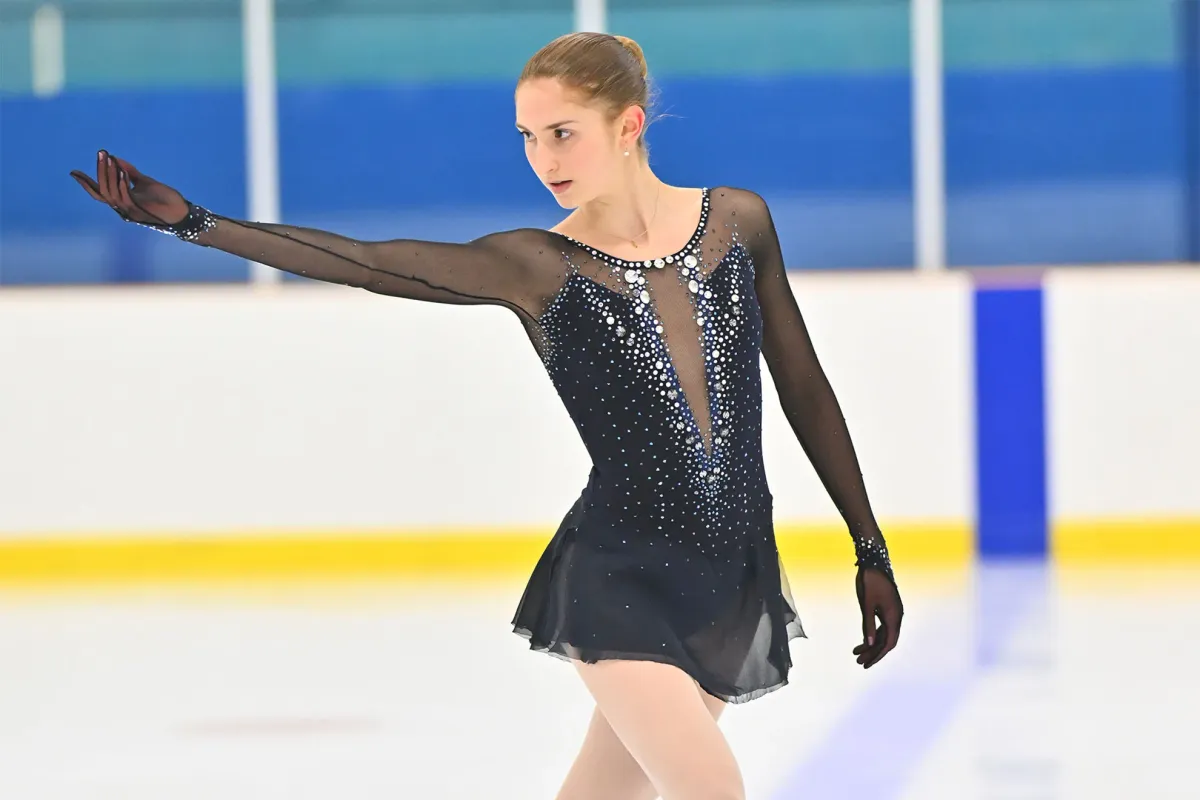
Caitlyn Kukulowicz grew up on ice. Her father played hockey at Harvard. Her mother drove her to distant rinks across Toronto before dawn, watching her daughter compete as a two-time Canadian national figure skater. Then, in 2020, her mother died of cancer.
Skating didn't stop. But something shifted.
Now a junior at Harvard studying human developmental and regenerative biology, Kukulowicz still performs—at the Jimmy Fund benefit "An Evening with Champions," which raises money for Dana-Farber Cancer Institute, and during intermissions at Harvard hockey games. But she's also discovered something figure skating, for all its beauty, could never give her: a crew.
Finding rhythm on the water
Last year, Kukulowicz joined the women's Harvard-Radcliffe lightweight rowing program. The difference was immediate. "You walk into the boathouse at 6 a.m., and music is blasting, and everyone is on the erg machines," she said. "Joining a team was the best decision ever."
We're a new kind of news feed.
Regular news is designed to drain you. We're a non-profit built to restore you. Every story we publish is scored for impact, progress, and hope.
Start Your News DetoxFigure skating had always been hers alone—the training individual, the performance solitary. Rowing demanded something different: trust, timing, eight bodies moving as one. She rows in either a scull or the first varsity 4 boat, sitting in the two-seat for the Crimson, and she's looking forward to getting back on the water this spring.
But the ice still holds something irreplaceable. Her father, Shayne Kukulowicz, a former Harvard hockey player himself, watched his daughter perform at the Bright-Landry Hockey Center—the same arena where he once played. "Watching my daughter perform at that rink is one of those 'circle of life' moments that Caitlyn's mom and I dreamed of," he said.
The first time she skated there for Evening with Champions, she surprised him. She chose his favorite song: "Forever Young."
For Kukulowicz, the path forward isn't about choosing between ice and water. It's about honoring both—the solitary discipline that shaped her childhood, and the collective rhythm she's found now. Two sports. Two ways of moving through loss and forward into something new.