A simple scent is changing how deer behave in recovering forests across southeastern Germany — and it might offer a low-cost solution to one of Europe's biggest forest problems.
Researchers from the University of Freiburg found that plots of young tree saplings treated with lynx urine and scat suffered significantly less browsing damage than untreated plots. Deer visited the scented areas less often and spent less time foraging when they did. The effect was strongest with lynx scent, likely because these ambush predators hunt from close range, triggering a deeper instinctive wariness in their prey.
Why this matters
Overbrowsing from deer populations has become a genuine crisis for forest regeneration across Europe. Too many deer means fewer young trees survive to maturity, which damages biodiversity and costs the forestry sector millions in lost productivity and management expenses. Traditional solutions — fencing, culling, replanting — require constant human effort and money. A predator's scent requires none of that.
We're a new kind of news feed.
Regular news is designed to drain you. We're a non-profit built to restore you. Every story we publish is scored for impact, progress, and hope.
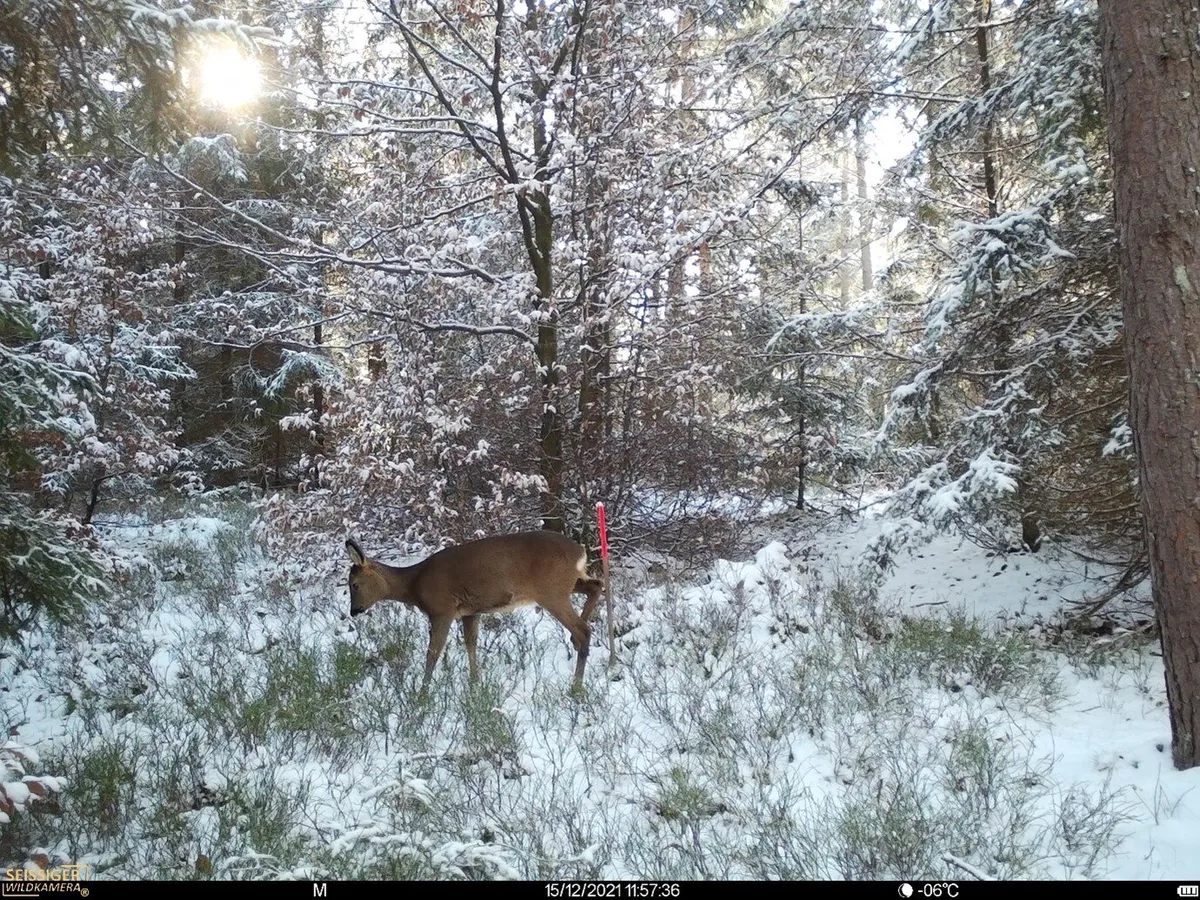
Start Your News DetoxThe experiment was straightforward: researchers set up 11 forest sites with four plots each — one treated with wolf scent, one with lynx scent, one with cow scent (a control), and one with water. They planted 30 saplings in each plot and monitored browsing damage using camera traps that recorded how often and how long deer visited each area.
Walter Di Nicola, one of the lead researchers, frames the finding in a larger context: "At a time when debates around large carnivore conservation often focus on conflicts, our study highlights the benefits these species bring to landscapes. The presence of carnivores, even just their scent, could help reduce the ecological and economic problems associated with browsing from overabundant deer populations."
The research was conducted in forests where lynx and wolves have been recently reintroduced. But the findings likely extend beyond these regions. In the UK, where large predators have been absent for centuries, deer still carry an innate fear response to predator scents — a memory written into their biology across generations. Di Nicola suggests that "where predators return, we expect these responses—and their ecological benefits—to become stronger over time."
There's a caveat worth noting: the experiment used concentrated predator scents that were easier for deer to detect than natural conditions would provide. In the wild, predator cues are scattered and unpredictable, which likely creates a more nuanced behavioral response. Still, the core finding holds: the mere chemical signature of a top predator is enough to shift how deer use a landscape.
The researchers are calling for conservation strategies that treat large carnivores as a natural, self-sustaining tool for forest management. Not a replacement for other approaches, but a complement that requires no ongoing intervention — just the presence of predators doing what they've always done.