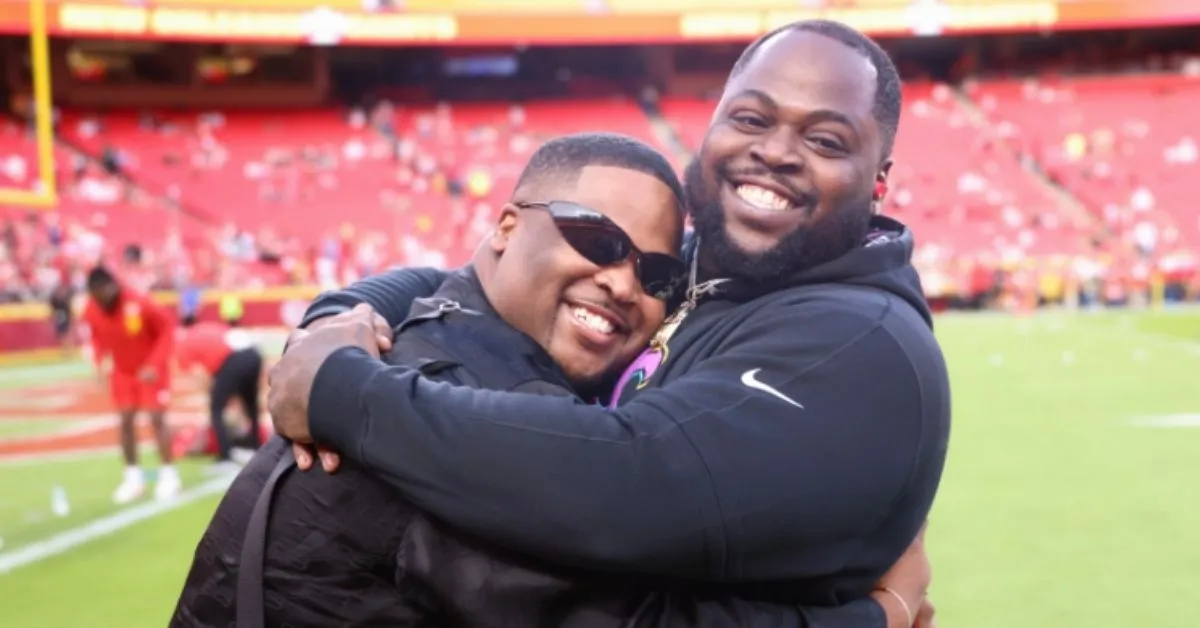
Two brothers who grew up protecting each other are now building a space where thousands of young athletes can do the same.
Khalen Saunders played defensive tackle for the New Orleans Saints and New York Jets. His older brother Kameron spent over 630 days dancing on stage with Taylor Swift during the Eras Tour. In June, they launched the first football camp designed specifically for LGBTQ+ youth — a move that signals a quiet but significant shift in how sports spaces are being reimagined.
The camp emerged from something deeply personal. When Kameron came out to their family at eleven, Khalen was just seven. That protective instinct never faded. Years later, as Khalen built a career in professional football and Kameron found his stage in music, they both carried the same conviction: young people shouldn't have to choose between their identity and the spaces they love.
We're a new kind of news feed.
Regular news is designed to drain you. We're a non-profit built to restore you. Every story we publish is scored for impact, progress, and hope.
Start Your News Detox"I hope this camp can accomplish teaching the younger generation how to be accepting and loving and empathetic of others," Khalen said on the Today Show. "Because at the end of the day, loving one another is the most important thing. I feel like my No. 1 rule that I've always went by is, treat others as you want to be treated."
Why This Moment Matters
Football has long been coded as a certain kind of space — one where vulnerability is discouraged and masculinity is narrowly defined. LGBTQ+ youth interested in the sport often navigate this tension silently, hiding parts of themselves to belong. A camp that explicitly centers their safety doesn't just add representation; it rewires what's possible in a male-dominated sport.
Kameron understood this when he described what they're building: "This camp will be the catalyst for how future generations navigate spaces — particularly male-dominated spaces — in a more loving, nurturing, caring way." That's not just about football. It's about permission. Permission to show up fully. Permission to learn that strength and care aren't opposites.
What makes this initiative distinct is that it's led by people who understand both worlds — professional sports and the lived experience of having an LGBTQ+ family member. They're not outsiders advocating from a distance. They're brothers who know what's at stake.
The camp taps into a broader movement of LGBTQ+ sports initiatives gaining traction globally. Organizations like You Can Play and Athlete Ally have spent years shifting culture in professional and amateur sports, but youth-focused spaces remain scarce. This gap matters because early experiences in sports shape not just athletic development but identity formation itself.
For young people who've internalized the message that football (or any competitive space) isn't for them, a camp like this is a kind of permission slip. It says: your identity isn't a barrier to entry. Your presence makes this space better.
The brothers aren't positioning this as a charity project or awareness campaign. They're building infrastructure — a concrete place where LGBTQ+ youth can train, compete, and belong without translation. That practical approach, grounded in their own family story, is what gives this initiative its weight.