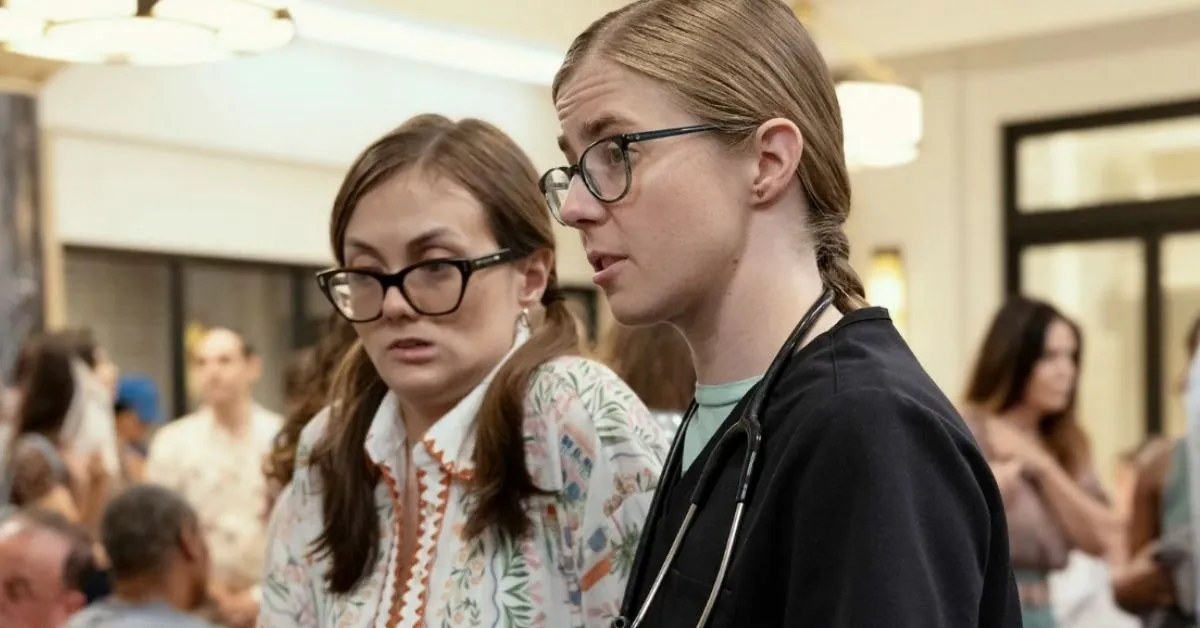
Tal Anderson, who plays Becca King on HBO's "The Pitt," is autistic herself. And she's tired of the word "awareness."
In a recent interview, Anderson — a filmmaker, children's book author, and actress known for her role in Netflix's "Atypical" — made a simple but pointed case: April should be about doing something, not just knowing something exists. "Awareness is not enough," she said. "April can be the month where we take concrete steps to empower and include autistic people in all areas of life."
The shift from awareness to action might sound like semantics. It's not. Awareness can mean passivity — you know autism exists, you've seen a ribbon, you've scrolled past a post. Action means changing how you hire, how you design spaces, how you talk about neurodivergence. It means moving from "I understand autism" to "I'm removing barriers for autistic people."
We're a new kind of news feed.
Regular news is designed to drain you. We're a non-profit built to restore you. Every story we publish is scored for impact, progress, and hope.
Start Your News DetoxWhat Action Actually Looks Like
Anderson praised "The Pitt" for showing autism authentically, without leaning on tired stereotypes. "They show the diversity of autism in an everyday way," she said. "Autistic representation, especially for girls, is rare. So I'm grateful to be part of providing that to my community." That representation matters because it counters the myths that still circulate — the ones that have real consequences.
In April 2025, when Robert F. Kennedy Jr., now Secretary of Health and Human Services, claimed autism "destroys families" and that autistic people would "never hold a job" or "never go out on a date," former "Survivor" contestant Eva Erickson responded with her own life. She posted photos of herself playing sports, graduating from college, going on dates. "Let me show you how wrong RFK Jr. is," she said. The message was direct: I exist. I'm thriving. Your narrative is false.
Anderson echoed that sentiment at the end of her interview. "Never let anyone tell you you can't make your dreams come true," she said.
There's something worth noting here: both Anderson and Erickson aren't asking for pity or inspiration-porn applause. They're simply refusing to accept a false ceiling on what autistic people can do. That refusal — that insistence on being seen accurately — is the real work of acceptance. It's not warm and fuzzy. It's corrective. It's necessary.
Anderson also pushed back on the medical myths that persist. "Autism is not a disease. It's a neurodivergence," she said. "Vaccines do not cause autism, and neither does Tylenol." These aren't subtle points — they're direct responses to claims that still drive policy and parenting decisions, despite being thoroughly debunked.
As Autism Acceptance Month approaches, the conversation is shifting. Less "raise awareness" and more "what are you actually changing." Less inspiration and more inclusion. It's a small reframing with real teeth.