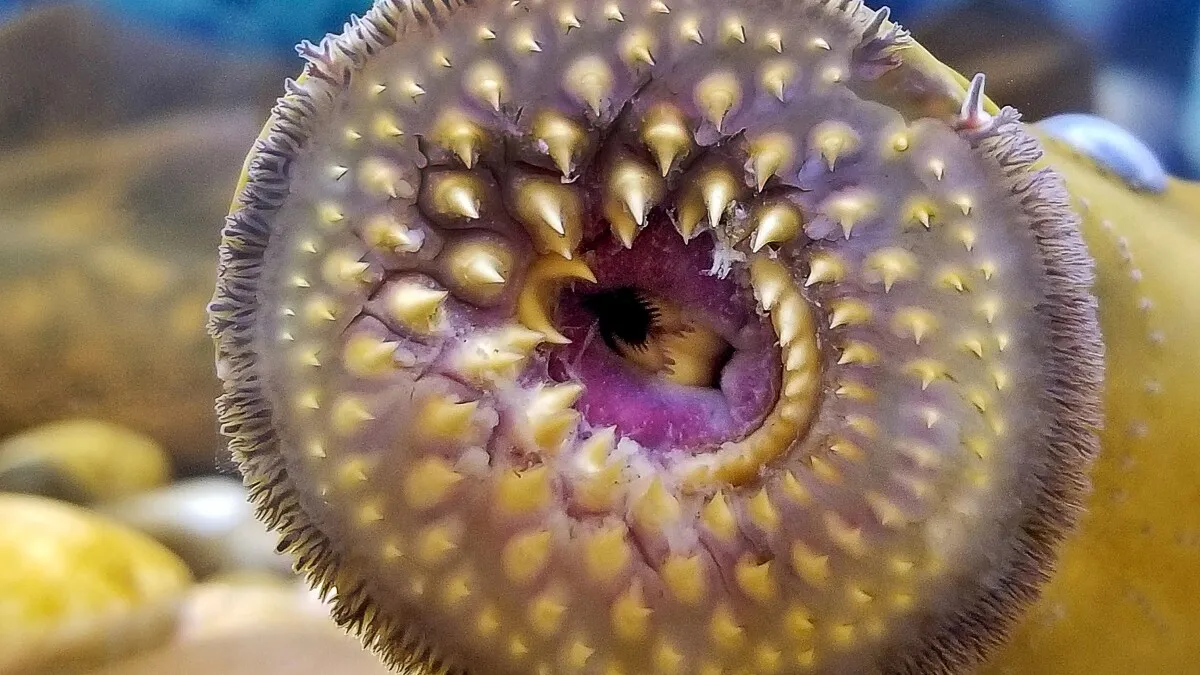
Lampreys can stick to whales and sharks even while moving fast in the ocean. This ability has inspired scientists to create a new kind of suction cup. This new device can lift more than 800 times its own weight.
How the Suction Cup Works
Lampreys use an "oral disc" to create suction. This disc has a soft lip on the outside and a ring of teeth inside. The teeth dig into the host animal's skin, and the lip creates a tight seal.
Professor Junzhi Yu and his team at Peking University copied this design. They based their device on the Far Eastern brook lamprey. This freshwater species lives in places like China, Japan, and Russia.
We're a new kind of news feed.
Regular news is designed to drain you. We're a non-profit built to restore you. Every story we publish is scored for impact, progress, and hope.
Start Your News DetoxThe new gadget is disc-shaped. It has a soft silicone outer lip. In the middle is a round core made of a Shape Memory Polymer (SMP) that reacts to temperature.
When the device is pressed onto a surface, the silicone lip seals immediately, like a regular suction cup. A heater behind the core then warms it to 33 ºC (91 ºF). This makes the SMP soft and rubbery. The vacuum created by the seal then pulls the soft SMP into tiny cracks and pores on the surface.
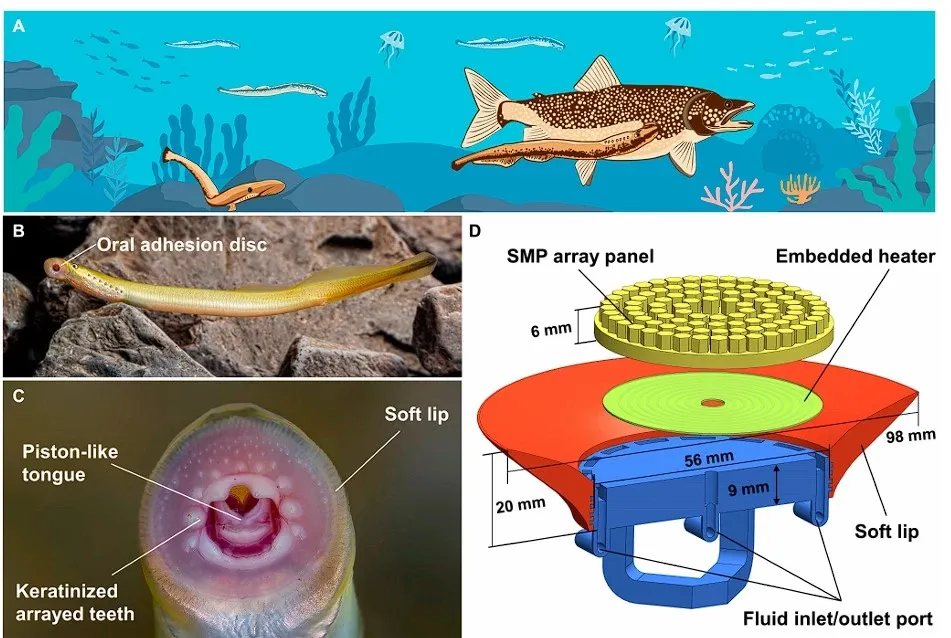
When the heater turns off, the SMP hardens, locking into place. It stays stuck until it's heated again. This grip remains strong even if the silicone lip's seal breaks.
Impressive Lifting Power
In tests, the 70-gram (2.5-oz) suction cup lifted objects over 850 times its own weight. It worked both in the air and underwater. Unlike regular suction cups, it stuck well to rough, porous, or uneven surfaces. It lifted items like a desk, a wrench, a brick, and a conch shell.
Scientists believe this technology has many uses. They see it being used in robots for exploring the deep sea, maintaining marine structures, and helping with water rescue missions.
Deep Dive & References: Lamprey-Inspired Bionic Suction Cup with Enhanced Adhesion on Rough Surfaces - Cyborg and Bionic Systems