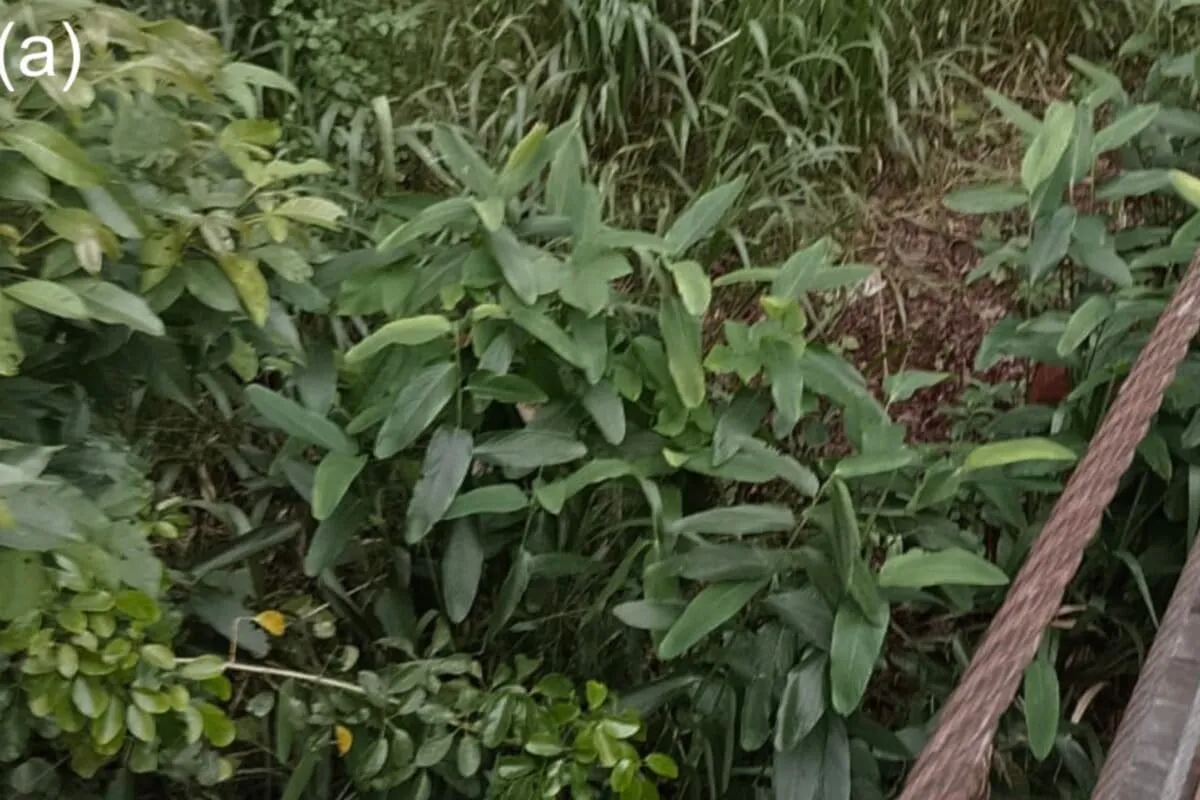
Imagine going off the grid for 170 years. No calls, no postcards, just… gone. That's pretty much the story of Indianthus virgatus, a rare plant that recently decided to pop back up in Sri Lanka after its last confirmed sighting in 1855. Researchers had officially declared it possibly extinct in the wild there. Apparently, it just needed a really long nap.
This isn't some giant, flashy jungle beast. We're talking about a modest plant with small white flowers, quietly doing its thing in the understory of wet tropical forests. While it's known from about 150 locations in India, Sri Lanka only had one confirmed record: a specimen collected nearly two centuries ago.
The Great Botanical Detective Work
So, how do you find a plant that's been playing hide-and-seek for generations? Researchers, bless their determined hearts, dug through old records from both India and Sri Lanka. Then, because apparently that's where we are now, they fired up some computer models to predict ideal growing spots. Their target: southwestern Sri Lanka, specifically Sabaragamuwa Province.
We're a new kind of news feed.
Regular news is designed to drain you. We're a non-profit built to restore you. Every story we publish is scored for impact, progress, and hope.
Start Your News DetoxAnd in January 2025 (yes, future news, how's that for efficiency?), the team hit the jackpot. They stumbled upon a small, thriving community of I. virgatus — somewhere between 70 and 100 individual plants. The irony? It was exactly where their predictive models said it would be. Because sometimes, even nature follows a script.
Vivek Pandi, a co-author of the study, pointed out that I. virgatus is the only species in its entire genus, making its evolutionary journey particularly unique. Its populations are scattered across India and Sri Lanka, separated by a rather significant geographical gap. Which, if you think about it, just makes its grand reappearance even more of a botanical mic drop.