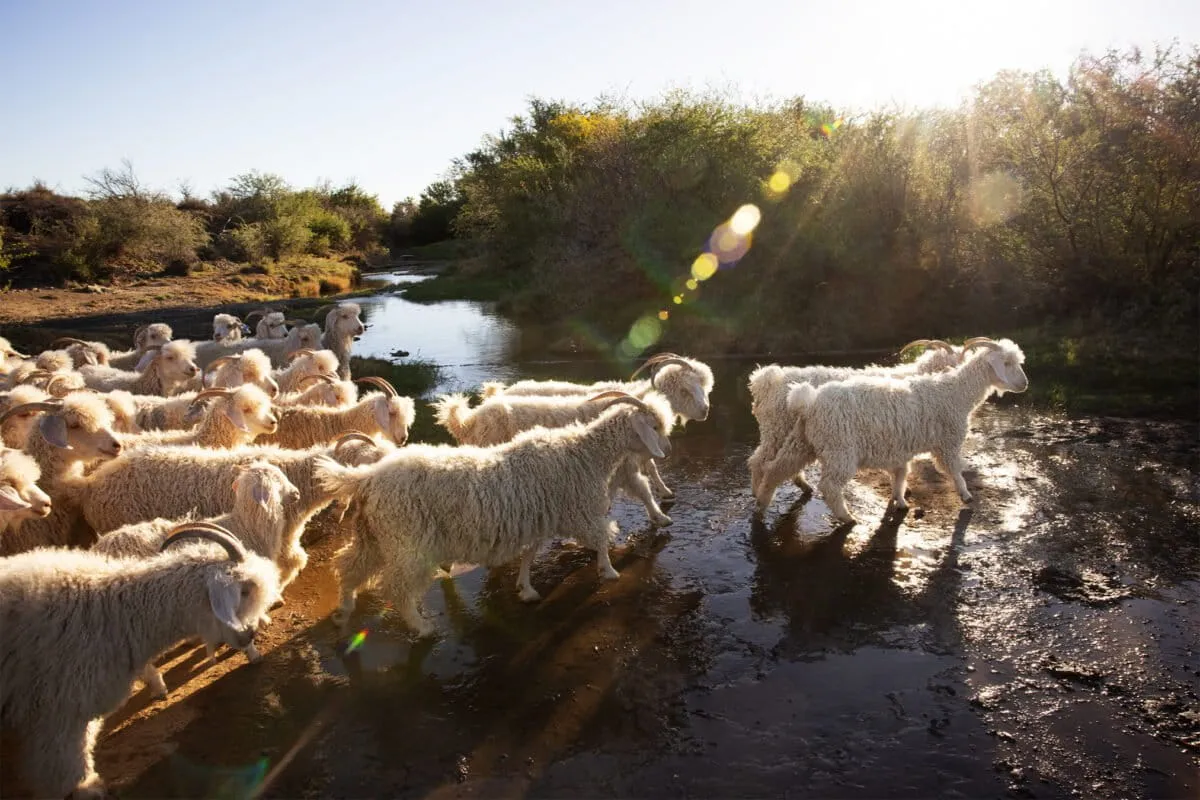
In South Africa's Eastern Cape, there's a plant called spekboom. Locals, with a certain dry wit, call it the "bacon tree" because goats absolutely adore it. And for generations, those goats — particularly the mohair kind — have had an all-you-can-eat buffet. The result? About 90% of the Albany thicket, once a dense, vibrant bushland, now looks less like a forest and more like a desert. Because apparently, even plants can become an endangered species when they're delicious.
But here's the twist: the very plant that got devoured is now at the heart of a surprising new industry. People are literally pouring money into bringing spekboom back. It's a high-stakes, big-money restoration effort, and it's turning a humble, goat-loved shrub into South Africa's newest green gold rush.
The Comeback Kid
Nick Hamp-Adams, general manager at Return to Thicket, points to some veteran spekboom plants. These aren't your average garden shrubs; they're roughly 50 years old and tower over a person. Their leaves are thick and water-filled, forming a dense, almost impenetrable hedge. Some even root their lower branches into the ground, a clever trick to spread out and cover more soil. It's basically a self-propagating green blanket.
We're a new kind of news feed.
Regular news is designed to drain you. We're a non-profit built to restore you. Every story we publish is scored for impact, progress, and hope.
Start Your News DetoxHamp-Adams recounts how one farmer, back in 1976, planted these particular spekboom just to stop mud from flooding his barn. A rather unglamorous origin story for what's now a major ecological player, but it perfectly illustrates spekboom's superpower: land restoration. And Return to Thicket is just one of the burgeoning initiatives betting big on the bacon tree's comeback.