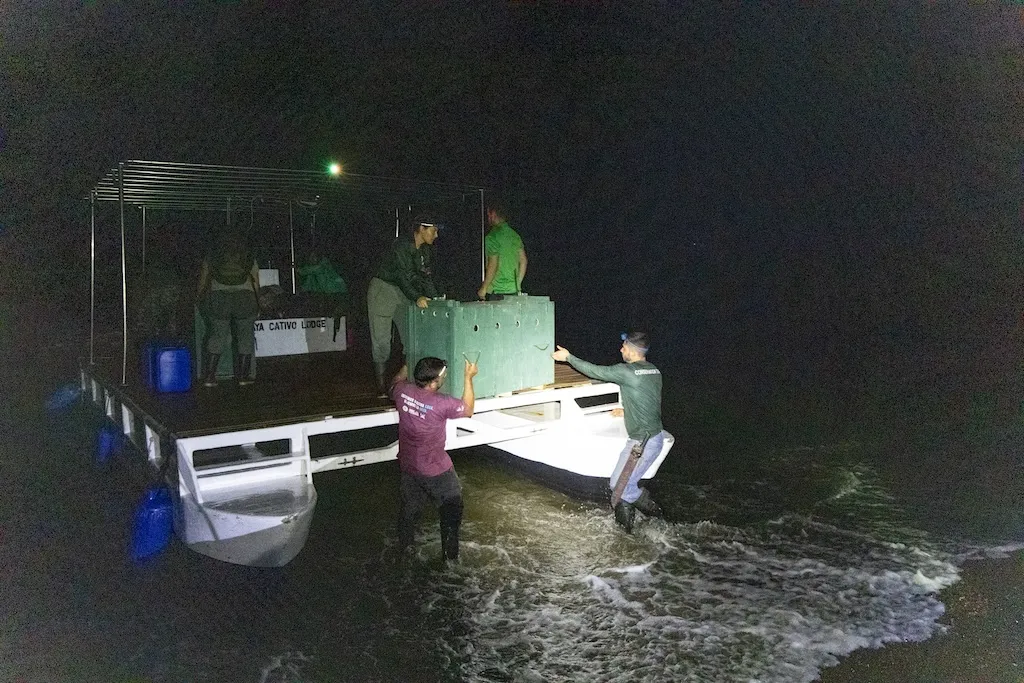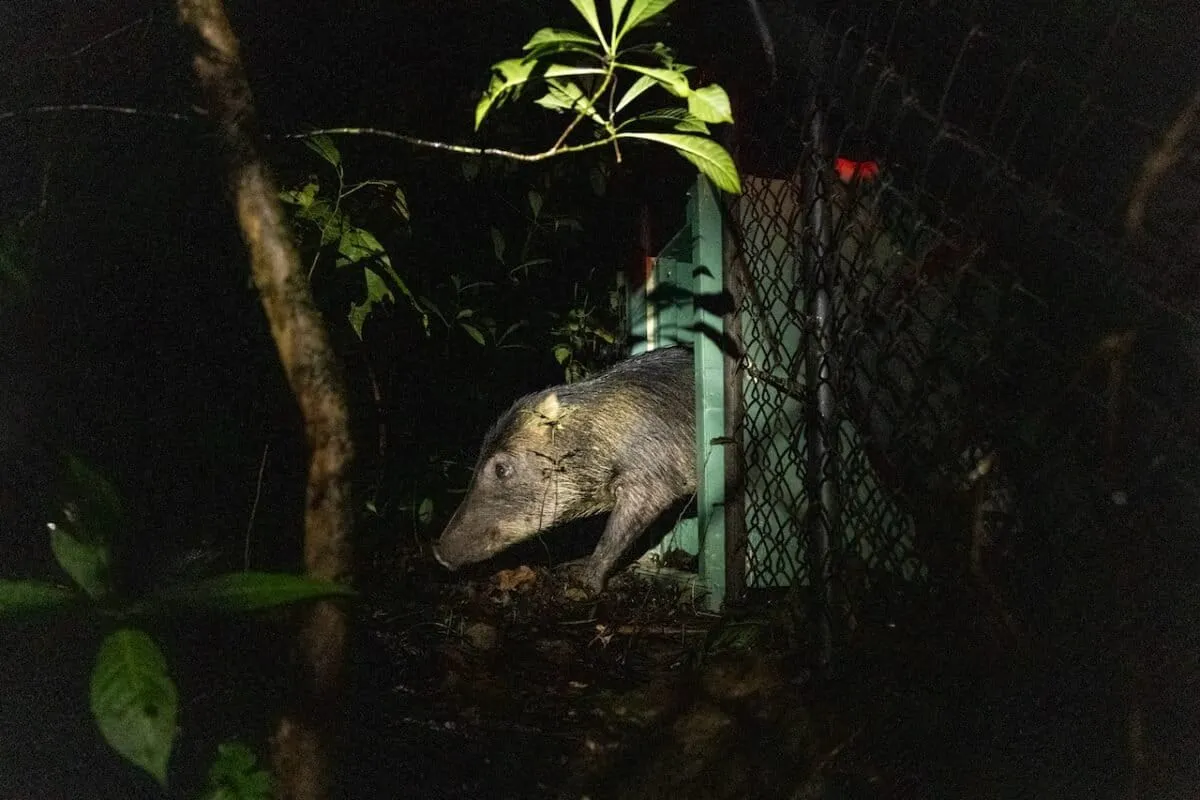
Imagine this: It's past midnight. You're on a boat, surrounded by a bioluminescent sea and shooting stars, feeling like you've stumbled onto the set of Life of Pi. Oh, and you're also sharing this magical moment with 13 wild, boar-like animals.
This was the scene for veterinarian Dennise Ortiz Angulo, halfway through a very unusual journey. After years of planning, a long truck ride, and some last-minute scrambling, she and her peculiar passengers — 13 white-lipped peccaries — were finally crossing Costa Rica's Golfo Dulce. Their destination: Piedras Blancas National Park, a place these animals hadn't called home in nearly two decades.

The Forest's Missing Architects
These particular peccaries were carefully captured on the Osa Peninsula, where their populations still thrive. But in Piedras Blancas, hunters had wiped them out about 18 years ago. Why go to such lengths to bring them back? Because these aren't just any forest dwellers; they're essentially the forest's architects.
We're a new kind of news feed.
Regular news is designed to drain you. We're a non-profit built to restore you. Every story we publish is scored for impact, progress, and hope.
Start Your News DetoxPeccaries are formidable creatures, often announced by their musky, garlicky scent before they're seen. They travel in tight, boisterous groups that can number anywhere from 70 to a hundred in Costa Rica, and up to 300 elsewhere. They're like a natural roto-tiller for the jungle floor, digging and rooting, which helps spread seeds and aerate the soil. Basically, they're the unpaid labor force keeping the ecosystem humming.
As the boat docked and the peccaries cautiously explored their new surroundings, one couldn't help but think about the sheer audacity of it all. Rescuing 13 smelly, tusked animals, giving them a scenic boat ride under the stars, all to mend a broken forest. It's a reminder that sometimes, the most effective conservation efforts look less like a lab experiment and more like a midnight adventure.