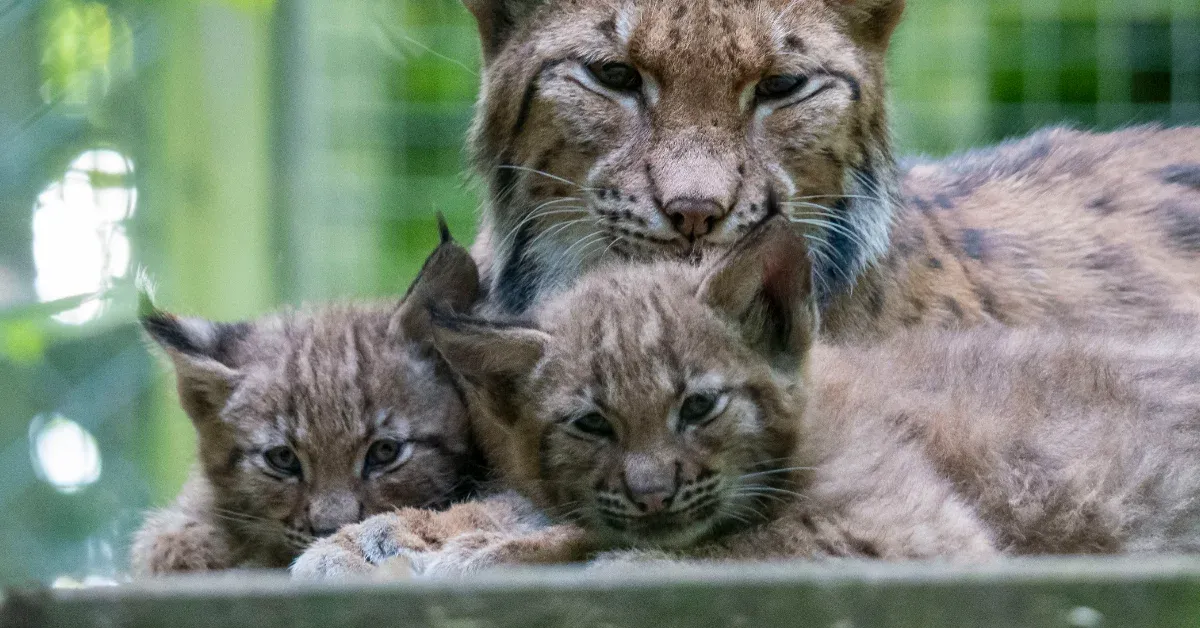
In news that will immediately improve your day, a trail camera in Colorado recently captured something truly special: a mama lynx and her kitten, just hanging out. This isn't just a cute animal video; it's a fuzzy, four-legged victory lap for a species that was almost entirely wiped out of the state.
The footage, released by Colorado Parks and Wildlife, shows the pair on August 7th. Because apparently, even elusive wild cats can't resist a good selfie opportunity. Lynx typically breed in late winter, with kittens arriving in May or June. They stick with mom for about nine months, learning the ropes, before venturing out on their own to become fabulous, solitary hunters.
These aren't your average house cats, unless your house cat weighs 30 pounds, is three feet long, has giant paws, a short black-tipped tail, and ear tufts that look like they belong on a very fancy hat. Which, if you think about it, is both impressive and slightly terrifying.
We're a new kind of news feed.
Regular news is designed to drain you. We're a non-profit built to restore you. Every story we publish is scored for impact, progress, and hope.
Start Your News DetoxThe Return of the Tufted Ear
Lynx were declared endangered in Colorado back in 1976. Fur trapping and habitat loss had done a number on their population. But in the late 90s, Colorado Parks and Wildlife decided that wasn't going to stand. They launched a seven-year project, bringing lynx from Alaska and Canada to the San Juan Mountains.
In 1999, 96 lynx were released near Creede and north of Durango. Let that satisfying number sink in. Fast forward to today, and Colorado boasts at least 100 lynx. That's 30 years of reintroduction efforts working exactly as planned, turning a near-extinction into a thriving comeback story.
Giving Them Room to Roam
This success story isn't just about bringing the cats back; it's about making sure they have somewhere to live. In November 2024, the U.S. Fish and Wildlife Service proposed new protected areas for Canada lynx, and for the first time ever, those areas include parts of the southern Rockies. Which is a pretty big deal.
Matthew Bishop, a senior attorney, pointed out that protecting their habitat is crucial, especially with a warming climate. Peter Hart, legal director at Wilderness Workshop, called the lynx a "keystone species" and noted that Colorado's high mountains are becoming increasingly vital safe havens. Essentially, the more space these magnificent, tufted-ear felines have, the better their chances of continuing their impressive comeback.
So, next time you're scrolling, remember the lynx. A species that went from practically gone to starring in its own trail cam footage. All it took was a little human intervention, a lot of dedication, and probably a few very confused cats wondering why they were suddenly in Colorado.