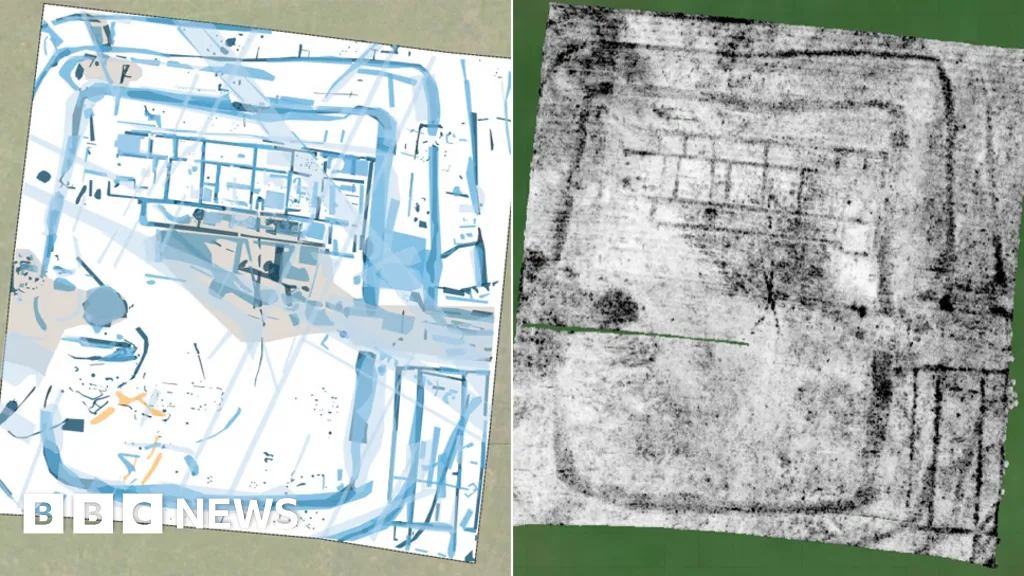
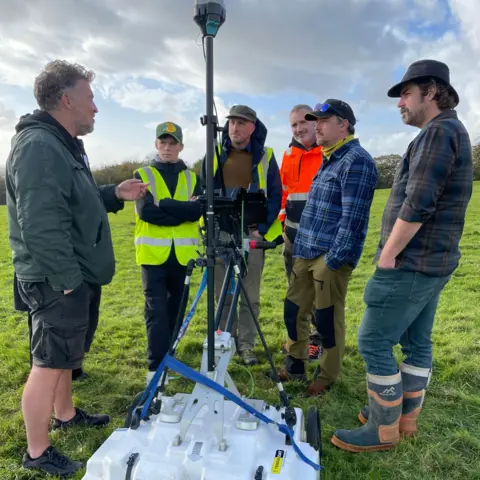
Beneath the grass of Margam Country Park lies something that rewrites what we thought we knew about Roman Wales. Archaeologists using ground-penetrating radar have found the largest Roman villa ever discovered in the country—a 572-square-meter structure that suggests this corner of south Wales wasn't a rough frontier outpost, but a place of real wealth and sophistication.
The villa sits within what was once a defensive enclosure, alongside what may have been a barn or meeting hall. Dr. Alex Langlands from Swansea University's Centre for Heritage Research and Training describes it as "really impressive and prestigious"—the kind of building that would have featured fine mosaics and statues, the sort of luxury you'd expect to find in the agricultural heartlands of southern England, not tucked away in Wales.
What makes this different
The real gift here is the site's condition. Margam's long history as a private deer park means the villa has sat undisturbed, less than a meter below the surface. No ploughing, no development—just preservation by accident. That means the team could be looking at something closer to a Welsh Pompeii: layers of history sealed in place, ready to tell stories about everyday Roman life in ways that excavated and disturbed sites simply can't.
We're a new kind of news feed.
Regular news is designed to drain you. We're a non-profit built to restore you. Every story we publish is scored for impact, progress, and hope.
Start Your News Detox"This part of Wales isn't some sort of borderland, the edge of empire," Langlands says. "There were buildings here just as sophisticated and as high status as those we get in the agricultural heartlands of southern England." It's a quiet correction to centuries of assumptions about how the Romans valued different parts of Britain.
For now, the exact location is being kept secret—a practical measure against looting. The team's immediate focus is conservation, then further surveys, then the hunt for funding to actually dig. But there's already talk of community excavation, the kind where locals get their hands dirty and connect directly with the 1,800-year-old story beneath their feet.
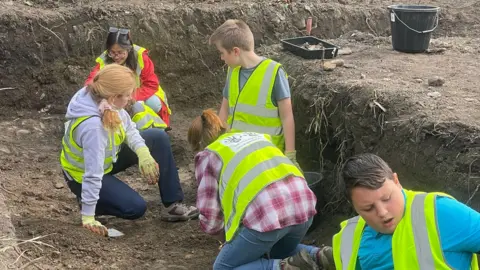
Local enthusiasm is already running high. Harriet Eaton, Heritage Education Officer for Neath Port Talbot council, sees the potential: "It would be fantastic if there was a community excavation here, [offering people] that hands on connection to the history unveiling beneath us." Park manager Michael Wynne expects the discovery to bring visitors and reshape how people understand Welsh and local history.
What happens next depends on funding and permissions, but the groundwork is done. Somewhere under Margam's rolling parkland, a Roman family's home is waiting to be properly seen for the first time in nearly two millennia.